
 EN
EN



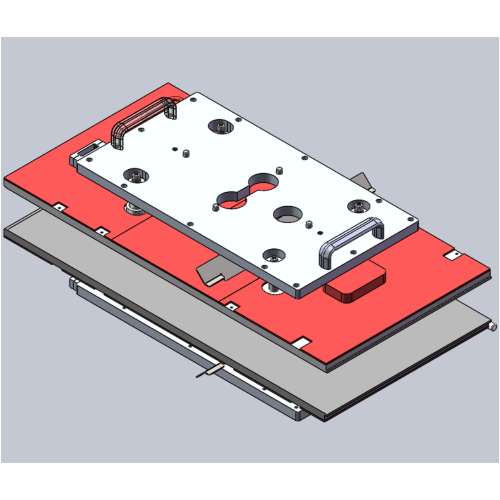
In high-volume pharmaceutical and consumer goods manufacturing, every second on the production line carries real cost. When facilities look for ways to accelerate output without compromising quality, the conversation almost always returns to the same foundational element: Blister Packing Tooling. The tooling is not simply a mechanical component — it is the precision infrastructure that dictates how fast, how consistently, and how reliably a blister packaging line can operate. Understanding exactly how it drives production speed requires a close look at its engineering principles, design logic, and integration role within the broader packaging system.
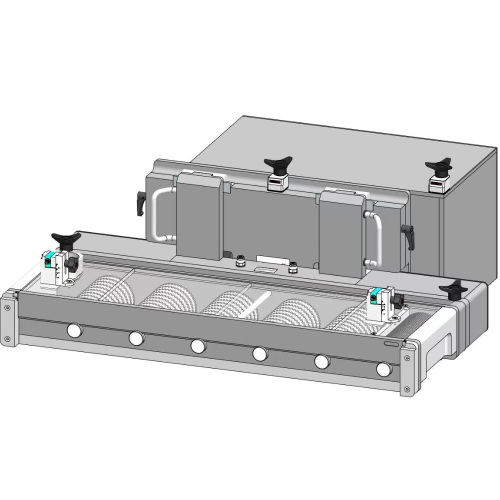
The relationship between Blister Packing Tooling and production speed is direct, measurable, and often underestimated by operations teams that focus only on machine speed ratings. A blister packaging line may have the mechanical capacity to run at 400 blisters per minute, but if the tooling introduces even marginal forming inconsistencies, misalignment, or excessive changeover time, that theoretical speed becomes unachievable in practice. High-performance Blister Packing Tooling closes the gap between machine capability and real-world output — and that gap is where production speed is actually won or lost.
The Mechanical Role of Tooling in Line Speed
Forming Stations and Cycle Time Reduction
The forming station is where the base film is shaped into cavities that will hold the product. The speed at which this step completes determines the fundamental cycle time of the entire line. Blister Packing Tooling engineered with precision-matched forming dies ensures that heat and pressure are applied uniformly across every cavity in every cycle. When the contact surfaces are machined to tight tolerances, the forming step requires less dwell time to achieve full cavity depth, directly shortening each cycle.
In contrast, poorly fitted or worn tooling forces operators to extend dwell time to compensate for uneven heat transfer or incomplete cavity formation. This is one of the most common hidden causes of reduced production speed in blister packaging operations. Investing in high-quality Blister Packing Tooling with optimized thermal conductivity and surface finish eliminates this compensation time, restoring the line to its designed cycle rate.
The geometry of the forming tool also matters considerably. A forming die engineered to match the exact product cavity profile reduces the amount of material drawn during forming, which in turn reduces stress on the film and minimizes the likelihood of forming defects that would trigger stoppages for quality inspection or rejection. Fewer stoppages mean more continuous runtime — a direct driver of effective production speed.
Sealing Station Precision and Throughput Consistency
After forming and filling, the sealing station applies the lidding foil to the base blister with heat and pressure. The sealing tool must maintain consistent contact across the full sealing surface to achieve a reliable hermetic seal in a single press cycle. Blister Packing Tooling with properly engineered sealing plates distributes heat evenly, allowing the line to seal at maximum speed without requiring double-pass operations or reduced feed rates.
When sealing tooling is mismatched or degraded, operators typically respond by reducing line speed to extend the sealing dwell time. This manual compensation can reduce output by 10 to 25 percent compared to designed capacity. High-precision Blister Packing Tooling eliminates this need entirely, keeping the sealing station operating at designed throughput rates and maintaining seal integrity simultaneously.
The material of the sealing plate also influences speed. Tooling manufactured from materials with appropriate thermal properties reaches operating temperature faster after startup and maintains stable temperature under continuous high-speed operation. Faster thermal stabilization reduces startup waste time and allows the line to reach full production speed earlier in each shift.
Tooling Design Features That Accelerate Changeover
Quick-Release and Modular Tooling Systems
Production speed is not only measured while the line is running — changeover time between product formats is a critical component of overall equipment effectiveness (OEE). Blister Packing Tooling designed with quick-release mechanisms, standardized mounting interfaces, and modular construction can reduce format changeover time from several hours to under thirty minutes in well-organized facilities. This reduction directly translates to more available production time per shift.
Modular Blister Packing Tooling allows operators to swap individual tooling components — such as a specific forming insert or a sealing plate section — without removing and remounting the entire tooling assembly. This approach is especially valuable in multi-product facilities where the same packaging line handles several different blister formats. The time saved across hundreds of annual changeovers adds up to substantial increases in annual production capacity.
Additionally, tooling designed with repeatable positioning features — such as precision-ground locating pins and reference surfaces — eliminates the need for time-consuming manual alignment adjustments after each changeover. When the tooling locates precisely and repeatedly, operators can restore the line to validated production conditions faster and with greater confidence, reducing qualification time after each format change.
Standardization Across Tooling Sets
Facilities that standardize their Blister Packing Tooling across multiple machines gain a significant speed advantage in their changeover and maintenance workflows. When tooling components share common interfaces, fastener specifications, and adjustment mechanisms, maintenance technicians become proficient with the system much faster. This accumulated expertise reduces the time required for both planned changeovers and unplanned maintenance interventions.
Standardized Blister Packing Tooling also simplifies spare parts management. When facilities maintain a lean inventory of interchangeable components rather than a large collection of machine-specific parts, technicians can locate and install the correct replacement part in a fraction of the time. This responsiveness directly reduces unplanned downtime, which is one of the most damaging factors to average production speed over time.
Surface Engineering and Its Impact on Running Speed
Low-Friction Coatings and Film Flow Dynamics
The surface condition of Blister Packing Tooling has a measurable effect on how quickly the packaging film moves through the forming and sealing stations. Tooling surfaces with appropriate finish specifications and low-friction coatings allow the film to flow into cavity geometry more readily, requiring less forming pressure and less dwell time to achieve the target cavity shape. This reduced resistance enables faster forming cycles without increasing the risk of film thinning or breakage.
Anti-stick surface treatments on forming tooling also reduce the tendency for the formed blister to adhere momentarily to the die during the retraction stroke. This adhesion, even when minor, can introduce micro-delays in the line rhythm that accumulate into meaningful speed reductions at high cycle rates. Well-coated Blister Packing Tooling releases cleanly and consistently with each cycle, maintaining uninterrupted rhythm throughout the production run.
Beyond forming, the surface condition of the cutting and scoring tooling affects the cleanness and consistency of the final blister card separation. Sharp, properly maintained cutting edges produce clean cuts in a single stroke, avoiding the need for reduced cutting speed or secondary trimming operations. Maintaining the cutting surface of Blister Packing Tooling in optimal condition is therefore directly linked to maintaining full-speed operation at the end of the production process.
Thermal Management in High-Speed Applications
At high production speeds, heat management within the tooling becomes a critical performance variable. Blister Packing Tooling designed with optimized thermal channels maintains consistent temperature distribution across the full forming and sealing surface, even during extended high-speed production runs. Consistent temperature prevents the gradual formation of hot spots or cold zones that would require speed reduction to compensate.
Thermal expansion behavior of the tooling material must also be accounted for in high-speed applications. Tooling engineered to maintain dimensional stability at operating temperatures avoids the progressive misalignment that can develop during long production runs at speed. Dimensionally stable Blister Packing Tooling sustains its designed performance characteristics throughout the entire production window, not just during initial operation when temperatures are still stabilizing.
Tooling Maintenance and Its Long-Term Effect on Speed
Planned Maintenance Intervals and Speed Preservation
Even the highest quality Blister Packing Tooling requires a structured maintenance program to sustain its speed-enabling properties over time. Forming die surfaces experience gradual wear from repeated contact with packaging films, and sealing plate surfaces accumulate material deposits that alter heat transfer characteristics. Planned maintenance — including inspection, cleaning, surface reconditioning, and wear measurement — preserves the tooling's ability to support full production speed across thousands of operating hours.
Facilities that defer tooling maintenance often experience a slow degradation of production speed that goes unnoticed until the performance gap becomes significant. Regular maintenance of Blister Packing Tooling prevents this gradual decline, keeping the tooling in the condition necessary to sustain designed line speeds and reduce the frequency and duration of unplanned stoppages caused by tooling-related defects.
Tooling that is maintained to a documented standard also makes troubleshooting faster when issues do arise. When maintenance records confirm that tooling is within specification, production teams can quickly rule out tooling condition as a cause of speed loss and focus their investigation on other system variables. This structured diagnostic approach reduces the average time spent resolving speed-related production issues.
Condition Monitoring and Predictive Replacement
Advanced facilities integrate condition monitoring practices into their Blister Packing Tooling management programs. By tracking measurable indicators such as cavity depth consistency, seal integrity data, and forming pressure trends over time, quality and engineering teams can predict when tooling will require reconditioning or replacement before it begins to limit production speed. This predictive approach prevents the unplanned downtime events that cause the most severe impacts on production throughput.
Predictive replacement of Blister Packing Tooling also allows facilities to schedule tooling maintenance or changeover during planned downtime windows rather than during active production shifts. This scheduling discipline maximizes the proportion of available time that the line spends at full production speed, directly improving overall equipment effectiveness and weekly output capacity.
FAQ
How does Blister Packing Tooling directly affect the cycle time of a packaging line?
The precision of Blister Packing Tooling determines how long each forming and sealing cycle must dwell to achieve consistent results. Accurately machined tooling with optimal thermal properties completes each cycle in the minimum required time, while worn or imprecisely fitted tooling forces operators to extend dwell time to compensate — effectively slowing the line below its designed capacity.
What role does tooling changeover design play in improving production speed?
Changeover time is a direct component of overall production speed across a working period. Blister Packing Tooling designed with quick-release mechanisms, modular components, and repeatable positioning features reduces format changeover from hours to minutes, freeing more of each shift for active production. Over a year of operations, this time saving can represent a substantial increase in total output capacity.
How does surface condition of the tooling influence running speed?
Surface finish and coating condition affect how smoothly the packaging film moves through the forming station and how cleanly the formed blister releases from the die. Blister Packing Tooling with well-maintained, low-friction surfaces allows faster cycle rates by reducing the resistance and adhesion forces that would otherwise require the line to slow down or dwell longer at each station.
How often should Blister Packing Tooling be maintained to preserve production speed?
Maintenance frequency depends on production volume, film type, and operating temperatures, but most facilities establish inspection and service intervals based on cycle count rather than calendar time. Proactive maintenance of Blister Packing Tooling — including surface reconditioning, dimensional verification, and coating renewal — preserves the tooling's performance characteristics and prevents the gradual speed decline that occurs when wear is allowed to accumulate unaddressed.
Table of Contents
- The Mechanical Role of Tooling in Line Speed
- Tooling Design Features That Accelerate Changeover
- Surface Engineering and Its Impact on Running Speed
- Tooling Maintenance and Its Long-Term Effect on Speed
-
FAQ
- How does Blister Packing Tooling directly affect the cycle time of a packaging line?
- What role does tooling changeover design play in improving production speed?
- How does surface condition of the tooling influence running speed?
- How often should Blister Packing Tooling be maintained to preserve production speed?