High-Performance Packaging Line Parts for Precision, Flexibility, and Efficiency

Get a Free Quote

Our representative will contact you soon.
Email
Name
Company Name
Message
0/1000

packaging line parts

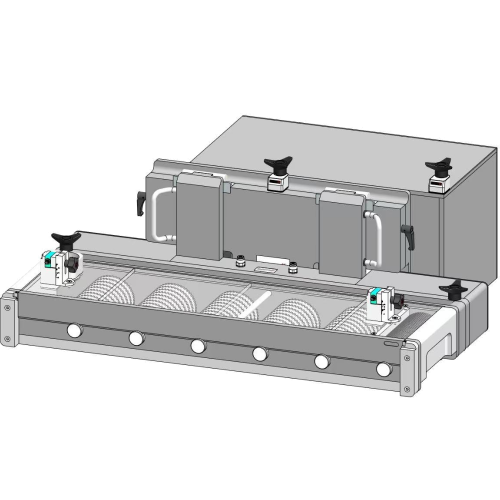
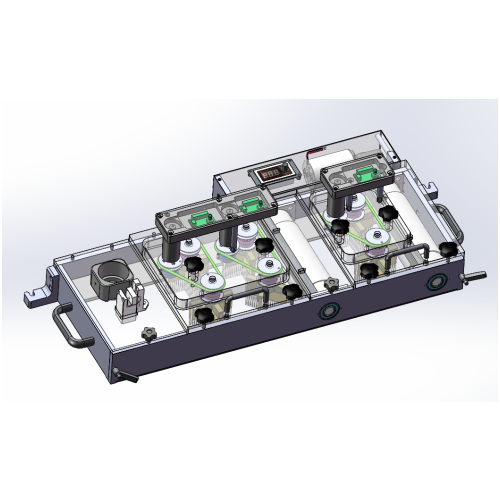
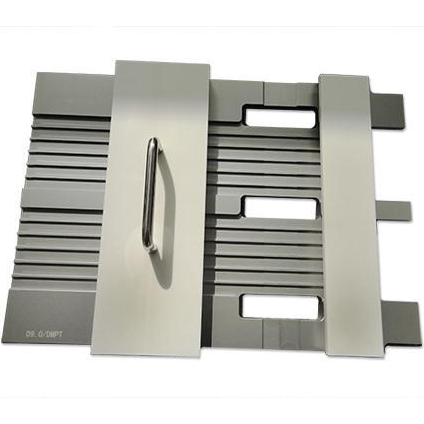
Packaging line parts are the essential components that form the backbone of any modern production and packaging operation. These parts work together seamlessly to ensure that products are handled, filled, sealed, labeled, and dispatched with precision and consistency. From conveyor systems and filling machines to sealing units, labeling stations, and inspection equipment, each packaging line part plays a critical role in maintaining the flow and integrity of the entire production process. The main functions of packaging line parts include product transportation, accurate dosing and filling, secure sealing, clear labeling, quality inspection, and final output sorting. Each function is designed to minimize human error, reduce material waste, and maximize throughput. Technologically, modern packaging line parts are built with advanced automation capabilities, integrating programmable logic controllers (PLCs), human-machine interfaces (HMIs), and servo-driven mechanisms that allow operators to monitor and adjust operations in real time. Many packaging line parts now support Industry 4.0 connectivity, enabling data collection, remote diagnostics, and predictive maintenance that significantly reduce unplanned downtime. The materials used in manufacturing packaging line parts are selected for durability, hygiene compliance, and compatibility with a wide range of products, including food, beverages, pharmaceuticals, cosmetics, and industrial goods. Stainless steel construction, food-grade coatings, and IP-rated enclosures are standard features that ensure longevity and regulatory compliance. Applications for packaging line parts span virtually every manufacturing sector. In the food and beverage industry, these parts handle everything from liquid filling to carton sealing. In pharmaceuticals, precision and sterility are paramount, and specialized packaging line parts meet strict GMP standards. In cosmetics and personal care, packaging line parts accommodate diverse container shapes and sizes. Whether you operate a small-scale facility or a high-volume industrial plant, investing in quality packaging line parts is a strategic decision that directly impacts productivity, product quality, and customer satisfaction.

New Products

Choosing the right packaging line parts gives your operation a real competitive edge, and the benefits show up immediately on the production floor. Here is a straightforward look at what quality packaging line parts actually do for your business. First, they dramatically increase production speed. When every component of your packaging line is engineered to work together, products move through each stage faster and with fewer interruptions. Packaging line parts designed for high-speed operation can process hundreds or even thousands of units per hour, allowing you to meet growing customer demand without adding extra labor or floor space. Second, packaging line parts reduce costly errors and waste. Manual packaging processes are prone to inconsistencies, whether that means overfilling containers, misaligning labels, or failing to seal packages correctly. Precision-engineered packaging line parts eliminate these problems by delivering the same result every single cycle. That consistency protects your brand reputation and cuts down on product recalls, rework, and material waste, all of which eat directly into your profit margins. Third, modern packaging line parts are built to last. Manufacturers use robust materials like stainless steel and hardened alloys that withstand continuous operation in demanding environments. This durability means fewer breakdowns, lower maintenance costs, and a longer service life for your equipment investment. When packaging line parts are reliable, your entire production schedule becomes more predictable, and you can commit to delivery timelines with confidence. Fourth, packaging line parts give you flexibility. Today's production environments require quick changeovers between different product sizes, container types, and packaging formats. Well-designed packaging line parts feature tool-free adjustment mechanisms and modular configurations that let your team switch from one product run to another in minutes rather than hours. This agility helps you respond to market changes and customer requests without disrupting your overall output. Fifth, packaging line parts support compliance and safety. In regulated industries like food, pharmaceuticals, and cosmetics, meeting hygiene and safety standards is non-negotiable. Quality packaging line parts are designed with smooth surfaces, minimal crevices, and easy-clean features that satisfy the strictest sanitation requirements. They also incorporate safety guards, emergency stop systems, and sensor-based detection to protect your workforce. Sixth, investing in high-quality packaging line parts delivers a strong return on investment. The upfront cost is offset quickly by gains in throughput, reductions in waste, lower labor requirements, and fewer maintenance interventions. Over the lifetime of the equipment, the savings compound significantly. Businesses that upgrade their packaging line parts consistently report higher output volumes, better product quality scores, and improved customer satisfaction ratings. In short, quality packaging line parts are not just mechanical components. They are strategic assets that drive efficiency, protect your products, support your team, and strengthen your bottom line every single day.

Latest News

What are cardboard packing boxes and how do they work?

25

May

What are cardboard packing boxes and how do they work?

When businesses and individuals need a reliable, cost-effective, and versatile solution for protecting goods during storage or transit, cardboard packing boxes consistently emerge as the go-to choice. These containers are constructed from layers of p...
View More
How does a mini tablet press machine improve production?

25

May

How does a mini tablet press machine improve production?

In pharmaceutical manufacturing, nutraceutical production, and even chemical processing, the ability to compress powders into uniform, consistent tablets at scale is a foundational requirement. A mini tablet press machine has emerged as a transformat...
View More
How Does Press Tooling Design Impact Production Efficiency?

25

May

How Does Press Tooling Design Impact Production Efficiency?

In high-volume manufacturing environments, the design of Press Tooling is one of the most consequential engineering decisions a production team can make. From cycle time to scrap rate, from die longevity to operator safety, the geometry, material sel...
View More
How Does Press Tooling Quality Affect Final Product Results?

25

May

How Does Press Tooling Quality Affect Final Product Results?

In precision manufacturing, the quality of Press Tooling is one of the most consequential variables in determining whether a final product meets its dimensional, structural, and aesthetic specifications. Every stamped, formed, or punched component th...
View More

Get a Free Quote

Our representative will contact you soon.
Email
Name
Company Name
Message
0/1000

packaging line parts

Precision Engineering That Ensures Consistent Product Quality

Precision Engineering That Ensures Consistent Product Quality

One of the most valuable qualities of modern packaging line parts is the level of precision built into every component. When you are running a production line at scale, even a small deviation in filling volume, seal integrity, or label placement can result in significant product losses, customer complaints, and regulatory issues. Precision-engineered packaging line parts are designed to eliminate these deviations entirely, delivering repeatable, accurate results across every single unit produced. The engineering behind high-quality packaging line parts starts at the design stage. Components are manufactured to tight tolerances using CNC machining, laser cutting, and advanced forming techniques. This means that every gear, cam, nozzle, belt, and sensor fits and functions exactly as intended, with no slack, misalignment, or inconsistency. When packaging line parts are built to this standard, the entire line operates as a unified system rather than a collection of individual machines. Servo-driven mechanisms are a key feature of precision packaging line parts. Unlike older pneumatic or mechanical systems, servo drives respond instantly to control signals and can be programmed to deliver exact movements with sub-millimeter accuracy. This is especially important in filling operations, where the difference between the correct fill volume and an overfill can mean the difference between profit and loss at scale. Servo-based packaging line parts also allow for rapid parameter adjustments without physical retooling, saving time and reducing the risk of setup errors. Sensor integration further enhances the precision of packaging line parts. Vision systems, weight sensors, proximity detectors, and barcode readers work continuously to verify that each product meets specification before it moves to the next stage. If a package is incorrectly sealed, a label is missing, or a fill level is outside tolerance, the system flags or rejects that unit automatically. This closed-loop quality control means that defective products rarely reach the end of the line, protecting your brand and reducing waste. For businesses in pharmaceuticals, food, and premium consumer goods, this level of precision is not optional. It is a fundamental requirement. Packaging line parts that deliver consistent, verified results give you the confidence to scale production without sacrificing quality, and they give your customers the assurance that every product they receive meets the same high standard.
Modular Design That Adapts to Your Changing Production Needs

Modular Design That Adapts to Your Changing Production Needs

The modern manufacturing environment is defined by change. Consumer preferences shift, product lines expand, and market demands evolve faster than ever before. Packaging line parts built with modular design principles give your operation the flexibility to adapt quickly without requiring a complete equipment overhaul every time your production requirements change. Modular packaging line parts are engineered as self-contained units that can be added, removed, repositioned, or reconfigured with minimal effort. This architecture means that when you introduce a new product size, a different container format, or an additional packaging step, you can modify your line by swapping or adding specific packaging line parts rather than replacing the entire system. The cost savings and operational continuity this provides are substantial. Changeover time is one of the most significant productivity factors in any packaging operation. Every minute your line is stopped for a format change is a minute of lost output. Modular packaging line parts address this directly by incorporating tool-free adjustment systems, quick-release clamps, and standardized connection points that allow your team to complete changeovers in a fraction of the time required by traditional fixed-design equipment. Some advanced packaging line parts can even be reconfigured automatically through software commands, eliminating manual intervention entirely. Scalability is another major advantage of modular packaging line parts. If your business grows and you need to increase throughput, you can add parallel modules or upgrade specific stations without disrupting the rest of the line. This incremental investment model is far more cost-effective than purchasing entirely new equipment, and it allows you to align capital expenditure with actual business growth rather than speculative future needs. Integration with upstream and downstream systems is also simplified by modular packaging line parts. Standardized interfaces and communication protocols mean that new modules connect seamlessly with existing conveyors, filling systems, labelers, and inspection units. This interoperability reduces installation time, minimizes compatibility issues, and ensures that the entire packaging line continues to operate as a cohesive, efficient system. For manufacturers who need to stay competitive in a fast-moving market, modular packaging line parts are not just a convenience. They are a strategic capability that keeps your production agile, your costs controlled, and your output aligned with whatever your customers need next.
Advanced Automation and Smart Connectivity for Maximum Operational Efficiency

Advanced Automation and Smart Connectivity for Maximum Operational Efficiency

Automation is no longer a luxury in modern manufacturing. It is a necessity, and packaging line parts that incorporate advanced automation and smart connectivity are the foundation of any efficient, future-ready production operation. Today's leading packaging line parts are designed not just to perform mechanical tasks but to communicate, self-monitor, and optimize performance continuously. At the core of automated packaging line parts is the programmable logic controller, or PLC. This industrial computer manages the timing, sequencing, and coordination of every action across the packaging line. When packaging line parts are governed by a well-programmed PLC, the entire system operates with a level of synchronization that no manual process can match. Cycle times are optimized, transitions between stations are smooth, and the risk of mechanical conflicts or timing errors is virtually eliminated. Human-machine interfaces, or HMIs, give operators direct visibility and control over packaging line parts without requiring specialized technical knowledge. Through intuitive touchscreen displays, operators can monitor line speed, check fill volumes, review alarm histories, and make parameter adjustments in real time. This accessibility reduces the skill barrier for operating complex packaging line parts and empowers your team to respond quickly to any situation that arises on the production floor. Smart connectivity takes the capabilities of packaging line parts even further. Industry 4.0-compatible packaging line parts can transmit operational data to centralized management systems, cloud platforms, or enterprise resource planning software. This data stream enables detailed performance analysis, helping you identify bottlenecks, track overall equipment effectiveness, and make informed decisions about maintenance schedules and production planning. Predictive maintenance is one of the most impactful benefits of connected packaging line parts. By continuously monitoring vibration, temperature, motor load, and other parameters, smart sensors can detect early signs of wear or impending failure before they cause a breakdown. Maintenance teams receive alerts and can schedule interventions during planned downtime rather than reacting to unexpected stoppages. This shift from reactive to predictive maintenance dramatically reduces unplanned downtime and extends the service life of your packaging line parts. Remote diagnostics capabilities mean that technical support teams can access your packaging line parts data from anywhere in the world, diagnosing issues and guiding your operators through solutions without the delay and cost of an on-site visit. For global manufacturers and businesses in remote locations, this connectivity is a game-changing advantage. Investing in packaging line parts with advanced automation and smart connectivity is an investment in the long-term efficiency, resilience, and competitiveness of your entire operation.

Get a Free Quote

Our representative will contact you soon.
Email
Name
Company Name
Message
0/1000