
 EN
EN



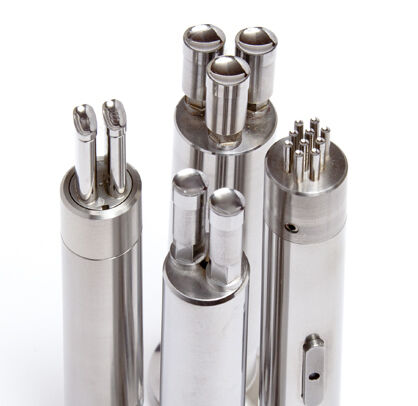
In pharmaceutical manufacturing, nutraceutical production, and even chemical processing, the ability to compress powders into uniform, consistent tablets at scale is a foundational requirement. A mini tablet press machine has emerged as a transformative tool that directly addresses the efficiency, flexibility, and cost challenges faced by small-to-mid-scale operations. Whether you are scaling up a new formulation, running pilot batches, or managing multi-product production lines, this compact piece of equipment introduces tangible improvements at every stage of the manufacturing workflow.
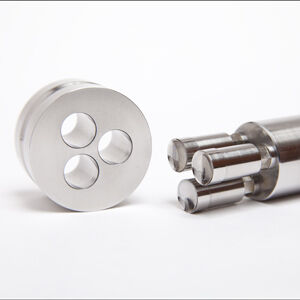
Understanding how a mini tablet press machine improves production requires looking beyond the machine's physical footprint and examining its operational mechanics, the workflow advantages it delivers, and the strategic value it offers to production managers and formulation teams. This article breaks down those mechanisms clearly, so manufacturers can make informed decisions about incorporating this equipment into their existing or planned production environments.
The Core Mechanism Behind Production Improvement
How Compression Efficiency Drives Output Quality
The fundamental process improvement offered by a mini tablet press machine starts with its compression mechanism. Unlike manual methods or rudimentary pressing tools, a mini tablet press machine applies controlled, repeatable force to granulated or powdered material through precision-engineered upper and lower punches. This means every tablet produced meets the same hardness, thickness, and weight specifications, batch after batch.
Consistent compression directly reduces reject rates, which is one of the most significant hidden costs in pharmaceutical and nutraceutical production. When tablets deviate from specification, entire batches may need to be reprocessed or discarded. The mechanical consistency of a mini tablet press machine eliminates most of the variation that leads to these costly outcomes.
Additionally, this compression precision supports better dissolution profiles in pharmaceuticals, which is critical not just for regulatory compliance but for patient outcomes. Production teams that previously relied on inconsistent manual processes gain a measurable quality advantage the moment they integrate a mini tablet press machine into their workflow.
Cycle Speed and Throughput Optimization
Beyond consistency, cycle speed is where a mini tablet press machine delivers a clear throughput advantage. Modern machines in this category are designed to produce hundreds to thousands of tablets per hour depending on the tooling configuration and die count. This level of output is disproportionately high given the machine's compact size, making it an efficient choice for operations that cannot justify or house a full-scale rotary press.
The mini tablet press machine achieves this through an automated feed mechanism that continuously supplies material to the die table while the punches cycle without interruption. Operators spend less time managing individual compression events and more time on quality monitoring and downstream processing. This shift in labor allocation improves overall production efficiency without increasing headcount.
Furthermore, many mini tablet press machine models support rapid die changeover, allowing a single machine to serve multiple product lines within the same production shift. This versatility directly multiplies the effective output capacity of the equipment without requiring additional capital investment.
Flexibility and Scalability in Production Environments
Adapting to Multiple Formulations Without Downtime
One of the most significant production improvements a mini tablet press machine delivers is formulation flexibility. In environments where a manufacturer produces multiple SKUs or is actively developing new tablet formulations, the ability to switch between product runs quickly is a major operational advantage. The interchangeable punch and die system on most mini tablet press machine models allows operators to adapt the machine's output profile — tablet shape, diameter, and thickness — without extensive reconfiguration time.
This flexibility is particularly valuable during product development and scale-up phases. Research and development teams can use a mini tablet press machine to validate compression parameters before committing those settings to a larger production run. Any adjustments needed — such as changes to compression force or dwell time — can be tested quickly, reducing the iterative cost of formulation optimization.
For contract manufacturers handling diverse client portfolios, the mini tablet press machine's adaptability means fewer dedicated machines per product and more efficient use of floor space. A single well-configured machine can handle multiple clients' formulations across a production week without significant downtime between runs.
Scaling from Pilot to Full Production
A critical pathway through which a mini tablet press machine improves production is its role in bridging the gap between laboratory development and commercial-scale manufacturing. Many manufacturers face a scale-up dilemma: lab-scale equipment is too small to generate meaningful batch data, but full-scale presses are too costly and inflexible for early production runs.
The mini tablet press machine occupies the optimal position in this continuum. It generates batch sizes large enough to support quality testing, stability studies, and initial market supply, while maintaining the operational simplicity that development teams require. This positions the mini tablet press machine as a production accelerator, not merely a testing device.
As production demands grow, the data and parameters established on a mini tablet press machine translate directly to larger rotary press configurations, since the core compression physics remain consistent. This continuity shortens the qualification time required during scale-up, which can represent weeks or even months of saved development time.
Cost Control and Resource Efficiency
Reducing Material Waste During Production Runs
Raw material costs represent a major portion of production expenses in pharmaceutical and nutraceutical manufacturing. A mini tablet press machine contributes to cost control primarily through its ability to minimize material waste. By consistently delivering tablets within specified weight tolerances, the machine prevents overfilling and underfilling of dies, both of which lead to wasted active ingredient or filler material.
The precise feed systems incorporated into modern mini tablet press machine designs also reduce the powder spillage and segregation that commonly occur with less controlled compression methods. Less spillage means more of the prepared batch is converted into acceptable finished product, improving the overall yield per production run.
For manufacturers working with expensive APIs or specialty nutraceutical ingredients, even small improvements in yield have substantial financial implications. A mini tablet press machine that improves batch yield by a few percentage points can represent significant savings over the course of a full production year, particularly in high-volume or high-cost ingredient applications.
Lower Capital and Operating Costs Compared to Full-Scale Equipment
The acquisition cost of a mini tablet press machine is substantially lower than that of a large-scale rotary press, making it accessible to startups, small manufacturers, and research institutions that cannot justify a multi-hundred-thousand-dollar capital investment. This lower entry cost allows organizations to begin producing commercial-quality tablets much earlier in their growth cycle.
Operating costs are also proportionally lower. A mini tablet press machine consumes less energy, requires fewer consumable replacement parts, and demands less operator expertise to run safely and efficiently. Maintenance intervals are often simpler to manage, and tooling replacement costs are lower due to the smaller number of punches and dies in use at any given time.
These combined cost advantages mean that a mini tablet press machine often delivers a faster return on investment than larger equipment alternatives, particularly when the production volume is modest or variable. The machine earns its place on the production floor without placing a disproportionate burden on the capital budget.
Operational Control and Quality Assurance
Precision Settings That Support Regulatory Compliance
Modern pharmaceutical and nutraceutical production must meet rigorous quality standards, and the mini tablet press machine supports regulatory compliance through its built-in precision controls. Operators can set and monitor compression force, turret speed, and tablet ejection parameters with a level of accuracy that manual methods cannot replicate. This creates a documented, reproducible production process — a fundamental requirement for GMP-compliant manufacturing environments.
The ability to record and reproduce exact compression parameters means that every production batch can be traced back to validated process settings. For manufacturers subject to regulatory inspections, this traceability is not just beneficial — it is essential. The mini tablet press machine's operational architecture naturally supports the kind of process documentation that auditors expect to see.
Some mini tablet press machine configurations also incorporate inline weight monitoring and rejection systems that automatically detect and remove tablets that fall outside specified parameters. This automated quality check reduces reliance on manual sampling and significantly improves the statistical reliability of the finished batch.
Ergonomics and Ease of Cleaning Between Batches
Cross-contamination between product runs is a serious risk in multi-product manufacturing facilities. The mini tablet press machine is designed with cleanability in mind, featuring accessible compression zones, smooth internal surfaces, and tool-free disassembly of key components. Operators can thoroughly clean the machine between batches quickly, maintaining product integrity and regulatory compliance without extended downtime.
The compact scale of the mini tablet press machine also means that cleaning is physically less demanding than servicing a full-size rotary press. Operators can access all critical contact surfaces without specialized equipment or extended cleaning protocols. This ergonomic advantage translates directly into shorter changeover times and more productive use of shift hours.
Manufacturers that produce allergen-containing formulations or highly potent active ingredients particularly benefit from the mini tablet press machine's cleanability, as thorough cross-contamination prevention is a non-negotiable safety and regulatory requirement in these environments.
FAQ
What types of products can a mini tablet press machine produce?
A mini tablet press machine is capable of producing a wide range of compressed tablet products, including pharmaceutical tablets, vitamin and supplement tablets, veterinary tablets, chemical reagent tablets, and confectionery tablets. The versatility depends on the tooling configuration and the material's compressibility characteristics. Granulated powders generally yield the best results in terms of tablet hardness and consistency.
How does a mini tablet press machine compare to manual tablet pressing in terms of output?
A mini tablet press machine significantly outperforms manual tablet pressing in both volume and consistency. While manual pressing may produce dozens of tablets per hour with variable quality, a mini tablet press machine can produce hundreds to several thousand tablets per hour with uniform weight, hardness, and thickness. This difference becomes critical when moving from laboratory research into commercial or semi-commercial production.
Is a mini tablet press machine suitable for GMP-compliant pharmaceutical manufacturing?
Yes, many mini tablet press machine models are designed to meet GMP requirements. They feature stainless steel contact surfaces, cleanable construction, and parameter monitoring capabilities that support validated manufacturing processes. However, it is important to verify that the specific model selected meets the regulatory standards applicable to your production environment and product category before beginning commercial operations.
How often does a mini tablet press machine require maintenance?
Maintenance frequency for a mini tablet press machine depends on production volume and the materials being processed. Abrasive materials may accelerate wear on punches and dies, requiring more frequent inspection. Generally, routine lubrication and inspection of compression tooling should be performed at regular intervals as specified by the manufacturer. Proactive maintenance significantly extends the operational life of the machine and reduces the risk of unexpected production downtime.
Table of Contents
- The Core Mechanism Behind Production Improvement
- Flexibility and Scalability in Production Environments
- Cost Control and Resource Efficiency
- Operational Control and Quality Assurance
-
FAQ
- What types of products can a mini tablet press machine produce?
- How does a mini tablet press machine compare to manual tablet pressing in terms of output?
- Is a mini tablet press machine suitable for GMP-compliant pharmaceutical manufacturing?
- How often does a mini tablet press machine require maintenance?