
 EN
EN



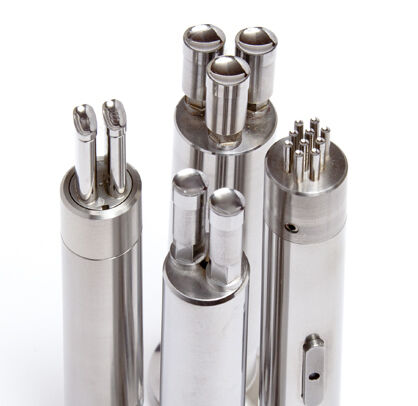
In high-volume manufacturing environments, the design of Press Tooling is one of the most consequential engineering decisions a production team can make. From cycle time to scrap rate, from die longevity to operator safety, the geometry, material selection, and structural logic embedded within press tooling determine how effectively a production line can perform over time. Poor design choices made during the tooling development phase do not simply create minor inconveniences — they compound into costly inefficiencies that affect every shift, every batch, and every delivery deadline downstream.
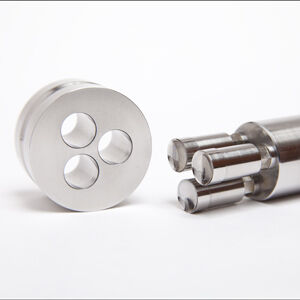
Understanding precisely how press tooling design influences production efficiency requires examining several interconnected factors: the mechanical behavior of tooling under load, the engineering logic of die clearances and material flow, the role of standardization in reducing setup time, and the maintenance implications of initial design decisions. This article provides a structured, expert-level analysis of each dimension, giving engineers, production managers, and procurement specialists the clarity they need to make better tooling decisions from the outset.
The Mechanical Foundations of Press Tooling Design
Load Distribution and Structural Integrity
Every press tooling assembly is subjected to significant mechanical forces during each press stroke. The way those forces are distributed across the die structure directly influences how quickly tooling wears, how consistently parts are formed, and how often unplanned downtime occurs. A well-engineered press tooling design accounts for load concentration points from the very beginning, ensuring that stresses are channeled through robust structural sections rather than thin or unsupported zones that are prone to fatigue cracking.
When press tooling designers neglect load path analysis, the consequences typically manifest as premature die fractures, dimensional inconsistency in finished parts, and vibration-induced misalignment. These issues may not appear immediately after tooling commissioning, but they inevitably surface during sustained production runs when cumulative stress cycles overwhelm improperly designed geometries. Investing in finite element analysis (FEA) and simulation during the design phase is one of the most effective ways to avoid these failure modes before they cost production hours.
The relationship between structural integrity and efficiency is direct. When press tooling holds its dimensional accuracy across thousands of cycles, downstream quality checks are faster, rejections are fewer, and the production line maintains a predictable, measurable output rate. Structural design is not merely a durability concern — it is fundamentally an efficiency concern.
Material Selection and Its Efficiency Implications
The materials used in the fabrication of press tooling have a profound effect on how efficiently a production line runs over its service life. Tool steels with appropriate hardness ratings, toughness values, and wear resistance characteristics allow press tooling to maintain dimensional accuracy across extended production runs without requiring frequent regrinding or replacement. When material selection is optimized for the specific application — considering the workpiece material, press tonnage, and production volume — the tooling delivers consistent output quality with minimal intervention.
Conversely, under-specified materials lead to accelerating surface wear at cutting edges and forming radii. As these surfaces degrade, part quality deteriorates progressively, requiring operators to perform more frequent in-process inspections, adjust process parameters, or halt production for tooling changes. Each of these interventions represents a direct hit to production efficiency that could have been avoided through more deliberate material selection at the design stage.
Advanced surface treatments — including physical vapor deposition coatings, nitriding, and hard chrome applications — can further extend the service life of press tooling and reduce friction-related wear. When these surface engineering strategies are incorporated during the design phase rather than added reactively after wear is observed, they deliver compounding efficiency benefits across the full production lifecycle of the tooling assembly.
Die Clearance, Tolerancing, and Part Quality Control
The Precision Logic Behind Clearance Design
Die clearance — the intentional gap between the punch and die cutting or forming edges — is one of the most technically sensitive parameters in press tooling design. Clearance values must be carefully calibrated based on material thickness, tensile strength, ductility, and the required edge quality of the finished part. When clearance is set correctly, the workpiece shears cleanly with minimal burr formation, and the press tooling experiences balanced lateral forces that do not accelerate sidewall wear.
Insufficient clearance causes excessive punch-to-die contact forces, accelerating wear on both components and generating heat that can alter the metallurgical properties of tool steel over time. Excessive clearance, on the other hand, produces ragged shear zones with large burrs that require secondary deburring operations — adding labor, cycle time, and material handling steps to the production process. Both conditions reduce production efficiency, and both stem directly from clearance design decisions made before the tooling is ever cut.
For forming operations, proper clearance and radii design governs how material flows during drawing, bending, or embossing. Incorrect flow geometry leads to material thinning, springback variability, and wrinkling — all of which drive up scrap rates and demand more frequent press tooling adjustments. A systematic approach to clearance specification, validated through prototyping or simulation, eliminates much of this variability before production begins.
Tolerancing Strategy and Dimensional Consistency
Beyond clearance, the broader tolerancing strategy applied to a press tooling design governs the statistical consistency of produced parts. Tight, functionally justified tolerances ensure that every part produced within a production run conforms to the same geometric specification, enabling predictable assembly downstream and reducing the need for selective fitting or rework. However, tolerances that are tighter than the application actually requires impose unnecessary manufacturing costs on the tooling itself and make the tooling harder to re-sharpen or re-condition during maintenance intervals.
Efficient press tooling design balances precision with practicality. It applies tight tolerances where functional requirements demand them and relaxes tolerances in non-critical zones to reduce both initial tooling cost and ongoing maintenance complexity. This approach requires close collaboration between tooling designers, process engineers, and quality teams to ensure that functional requirements are accurately translated into dimensional targets — rather than inherited from overly conservative legacy specifications.
Modular Design, Standardization, and Setup Time Reduction
How Modular Press Tooling Architecture Improves Throughput
One of the most impactful but often underappreciated aspects of press tooling design is the choice between bespoke, single-purpose tooling and modular or standardized tooling architectures. Modular press tooling systems use interchangeable components — punch holders, die shoes, guide pillars, and insert assemblies — that can be reconfigured between production runs without the need to build entirely new tooling assemblies. This approach dramatically reduces changeover time on the press and enables production lines to respond faster to demand changes or new product introductions.
When press tooling is designed with standardized interfaces and common mounting configurations, setup technicians can exchange active cutting or forming inserts in minutes rather than hours. This reduction in setup time directly increases the effective uptime of the press, which is one of the most valuable metrics in any stamping or forming operation. The efficiency gains from modular design are particularly significant in environments where short production runs and frequent product changeovers are the norm rather than the exception.
Standardization also simplifies spare parts management. When press tooling assemblies share common components across a family of tools, the facility needs to stock fewer unique spare parts, reducing inventory holding costs and ensuring that critical replacement components are available when unplanned tooling damage occurs. The operational resilience this creates is a genuine competitive advantage in high-volume production environments.
Design for Quick Die Change Principles
Quick die change (QDC) methodology has become a widely adopted operational philosophy in lean manufacturing environments, and press tooling design plays a central enabling role in whether QDC principles can actually be implemented. Die designs that incorporate standardized shut heights, integrated locating features, hydraulic clamping compatibility, and accessible maintenance points allow QDC procedures to function as intended. When press tooling is designed without considering how it will be changed, adjusted, or serviced on the press, QDC programs fail to deliver their theoretical efficiency benefits.
Press tooling designers who embed QDC-compatible features into their designs from the outset create tooling that naturally supports faster changeovers, easier alignment, and more reliable setup repeatability. The time savings achieved — often reducing changeover events from several hours to under thirty minutes — translate directly into additional production capacity without requiring any capital investment in additional equipment or press assets.
Maintenance Accessibility and Lifecycle Efficiency
Design Decisions That Determine Maintenance Frequency
The design of press tooling fundamentally determines how frequently that tooling will require maintenance intervention and how easily those maintenance tasks can be performed. Tooling designed with accessible punch retention systems, easily removable stripper plates, and clear visual indicators of wear zones allows maintenance technicians to assess tooling condition quickly during scheduled inspection intervals. This accessibility reduces the time and effort required per maintenance event, keeping press downtime as short as possible.
Press tooling that incorporates adequate stripper force, robust guidance systems, and appropriately sized shank diameters experiences fewer in-cycle failures — such as punch breakage or die chipping — that result in unplanned press stoppages. These unplanned stoppages are significantly more disruptive to production efficiency than scheduled maintenance events because they occur without warning, often during peak production periods, and require immediate diagnostic work before production can resume.
A preventive maintenance schedule that is properly matched to tooling design parameters allows production teams to maintain press tooling in a known, controlled condition. This predictability is the foundation of stable, efficient production — and it begins with design decisions that anticipate the maintenance lifecycle rather than treating it as an afterthought.
Regrind and Reconditioning Planning in Tooling Design
Press tooling designed with adequate regrind stock — the extra material depth built into punch and die profiles to allow for repeated sharpening — extends the operational life of the tooling assembly significantly. When designers specify insufficient regrind stock to save initial material cost, the tooling may require full replacement after relatively few sharpening cycles, driving up the total cost of tooling per produced part and introducing the efficiency disruption of new tooling qualification each time a replacement set enters service.
Thoughtful regrind planning also considers how each regrind cycle affects critical die clearances. As punch and die cutting edges are ground back, the relationship between their heights changes, and if not properly accounted for in the design, clearances may drift outside acceptable limits after a small number of regrind cycles. Press tooling designs that include documentation-ready regrind tables and built-in adjustment protocols give maintenance teams a clear, repeatable process for restoring tooling to specification — maintaining consistent part quality across the full service life of the tooling.
Progressive and Compound Die Design Strategies for Efficiency Gains
Progressive Die Design and Its Impact on Output Rate
For high-volume production of complex stamped components, progressive die press tooling represents one of the most effective strategies for maximizing output efficiency. In a progressive die, multiple operations — blanking, piercing, forming, embossing, and cutoff — are performed in sequence across a series of stations within a single press stroke, transforming strip stock into finished components at press cycle speeds. The elimination of separate operations, material handling steps, and inter-operation staging dramatically increases throughput while simultaneously reducing labor content per part.
The design of progressive press tooling requires careful strip layout planning to ensure that material utilization is maximized, that carrier bridges maintain adequate strength throughout the progression, and that each station performs its assigned operation without interfering with adjacent features. When the strip layout is well-engineered, the die runs with minimal scrap generation and consistent part quality. A poorly planned layout, by contrast, produces high scrap rates, carrier breakage, and frequent press stoppages for strip threading — all of which destroy the efficiency advantage that progressive tooling is designed to deliver.
Compound Die Efficiency for High-Precision Applications
Compound press tooling, which performs multiple operations simultaneously within a single die station in a single press stroke, offers particular efficiency advantages when parts require very tight positional relationships between pierced features and the blank periphery. By performing both the blanking and piercing operations simultaneously, compound tooling eliminates the positional error accumulation that occurs when these operations are performed in separate stations or separate presses. This inherent precision reduces downstream quality problems and eliminates the need for separate inspection or correction steps.
While compound press tooling is typically more complex and expensive to manufacture than single-operation tooling, its efficiency benefits are substantial in applications where dimensional precision and production rate are both critical requirements. The design investment in a well-engineered compound die is typically recovered quickly through reduced scrap, eliminated secondary operations, and higher press utilization — making it a strategically sound choice for the right production contexts.
FAQ
How directly does press tooling design affect scrap rate in stamping operations?
Press tooling design has a direct and measurable impact on scrap rate. Clearance errors, incorrect forming radii, insufficient stripper force, and poor strip layout in progressive dies are all design-originated causes of part defects. When these parameters are correctly engineered from the start, scrap rates can be reduced dramatically compared to tooling that was designed without rigorous validation. Scrap reduction is one of the most financially significant efficiency gains available through better press tooling design.
At what stage of the product development process should press tooling design begin?
Press tooling design should ideally begin during the product design phase, not after the part design has been finalized. When tooling engineers are involved early, they can provide input on part features — such as bend radii, hole locations, and material transitions — that significantly affect tooling complexity, cost, and lifecycle efficiency. Late-stage tooling design that must accommodate an already-frozen part design frequently results in compromises that reduce both tooling life and production efficiency.
How does press tooling design influence changeover time between production runs?
Changeover time is heavily influenced by how the press tooling was designed. Tools built to standardized shut heights, with consistent mounting interfaces and integrated locating features, can be changed over in a fraction of the time required for non-standardized tooling. Design decisions that prioritize QDC compatibility — such as hydraulic clamp interfaces, accessible fastener locations, and pre-set adjustments — directly translate into shorter changeover events and higher overall equipment effectiveness (OEE) scores for the press.
What role does press tooling design play in long-term maintenance cost control?
Press tooling design determines the baseline maintenance demand of the tooling throughout its service life. Designs that incorporate adequate regrind stock, robust guidance systems, accessible wear components, and appropriate material selections naturally require less frequent and less invasive maintenance interventions. This reduces both the direct cost of maintenance labor and spare parts and the indirect cost of production downtime associated with each maintenance event. Lifecycle cost modeling during the tooling design phase is a highly effective strategy for controlling long-term maintenance expenditure.
Table of Contents
- The Mechanical Foundations of Press Tooling Design
- Die Clearance, Tolerancing, and Part Quality Control
- Modular Design, Standardization, and Setup Time Reduction
- Maintenance Accessibility and Lifecycle Efficiency
- Progressive and Compound Die Design Strategies for Efficiency Gains
-
FAQ
- How directly does press tooling design affect scrap rate in stamping operations?
- At what stage of the product development process should press tooling design begin?
- How does press tooling design influence changeover time between production runs?
- What role does press tooling design play in long-term maintenance cost control?