
 EN
EN



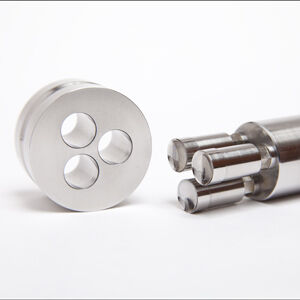
In modern manufacturing, precision, repeatability, and efficiency are not optional — they are the foundation of competitive production. Press Tooling sits at the heart of this foundation, enabling manufacturers across industries to form, cut, shape, and assemble materials with remarkable accuracy and speed. Whether you are producing automotive components, electronic housings, aerospace brackets, or consumer goods, understanding what press tooling is and how it functions in a manufacturing environment is essential to making informed decisions about your production process.
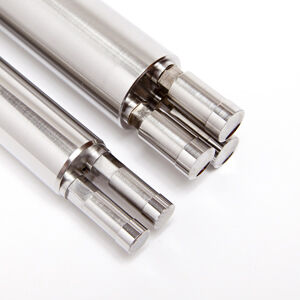
Press Tooling refers to the specialized dies, punches, and tool sets mounted within a press machine to perform specific forming or cutting operations on raw materials — most commonly sheet metal, though plastics and composites are also processed this way. The quality, design, and material of the press tooling directly determines the quality of every single part produced. This article breaks down the definition, core components, operating principles, application scenarios, and selection considerations for press tooling in manufacturing, giving engineers, procurement specialists, and production managers a complete picture of this critical manufacturing resource.
Defining Press Tooling in a Manufacturing Context
The Core Concept Behind Press Tooling
Press tooling is the physical tooling assembly — comprising upper and lower tool halves, typically called the punch and die — installed in a press machine to transform raw material into a finished or semi-finished part. When the press cycle is activated, the punch descends and forces the material against or through the die, causing plastic deformation, shearing, or a combination of both. The result is a precisely shaped component that conforms to the geometry encoded in the tooling design.
The term press tooling is broad and encompasses many subtypes, including blanking tools, piercing tools, bending tools, deep drawing tools, progressive dies, and compound dies. Each subtype is engineered for a specific manufacturing operation, and the choice among them depends on the part geometry, material type, production volume, and tolerance requirements. Press tooling is not a single item but rather a system of precisely engineered components working in concert to produce consistent results across thousands or even millions of cycles.
What distinguishes high-quality press tooling from lower-grade alternatives is the precision of the engineering, the hardness and wear resistance of the tool steel used, and the quality of the surface finishes on the working faces. Even a small deviation in die clearance or punch geometry can result in burrs, dimensional inconsistencies, or premature tool wear — all of which translate into production costs and quality failures downstream.
How Press Tooling Differs from General Tooling
General tooling in manufacturing refers to a wide range of cutting, holding, and forming devices. Press tooling is specifically associated with press machines — hydraulic presses, mechanical presses, pneumatic presses, and servo presses — and is designed to operate under significant compressive force. Unlike machining tooling, which removes material through cutting, press tooling primarily reshapes material through force, making it fundamentally different in both design philosophy and material requirements.
The forces involved in pressing operations are substantial, often measured in tens or hundreds of tonnes. This means that press tooling must be manufactured from materials that can withstand repeated high-load cycles without deforming or cracking. Tool steels such as D2, H13, and various carbide grades are commonly used precisely because they offer the hardness, toughness, and wear resistance needed for sustained press tooling performance.
Core Components of a Press Tooling Assembly
The Punch and Die Relationship
The punch and die are the two primary working components of any press tooling system. The punch is the male component, typically attached to the ram of the press, while the die is the female component, seated in the lower bolster plate. As the press cycles, the punch enters the die cavity with controlled clearance, and this interaction determines the type of operation performed on the workpiece material placed between them.
Clearance — the gap between the punch and die walls — is one of the most critical parameters in press tooling design. For shearing operations like blanking and piercing, clearance is typically expressed as a percentage of the material thickness, often ranging from 5% to 15% per side depending on the material type and desired edge quality. Too little clearance causes excessive tool wear and rough edges; too much clearance produces a large rollover zone and dimensional inaccuracy. Getting this parameter right is fundamental to press tooling performance.
For forming operations such as bending and deep drawing, the punch and die geometry defines the shape of the finished part. Engineers use springback compensation — intentional over-bending — to ensure the part returns to the desired angle after the press load is released. This requires precise calculation and often iterative testing during the press tooling development and tryout phase.
Die Sets, Backing Plates, and Guiding Systems
Beyond the punch and die themselves, a complete press tooling assembly includes die sets (upper and lower shoe assemblies), backing plates, stripper plates, pilots, and guiding systems. The die set provides the structural framework that holds the punch and die in precise alignment throughout each press stroke. Guide posts and bushings within the die set ensure repeatable alignment, which is critical for maintaining tight tolerances over millions of cycles.
The stripper plate serves a practical but essential function: it strips the workpiece or scrap material off the punch after the pressing operation is complete. Without an effective stripper, material would lift with the punch on the return stroke, causing jams, damage, and interruptions in production flow. Strippers can be fixed or spring-loaded, with the spring-loaded type providing better control over material hold-down and reducing distortion in thin materials during the cutting phase.
Backing plates distribute the compressive load evenly across the shoe, preventing localized deformation of the die set structure under repeated press impacts. In high-speed progressive press tooling applications, these supporting components are just as important as the cutting or forming elements, because fatigue failure in any part of the assembly can bring production to a halt and require costly repairs or replacements.
How Press Tooling Works During a Production Cycle
The Sequence of Operations in a Press Stroke
Understanding how press tooling works during an actual production cycle helps clarify why precision engineering matters so much at every stage. The sequence begins with material feeding — either manually or through an automated coil feed system — which positions the raw material (typically a sheet or strip) between the open upper and lower tooling halves. The press then closes, driving the punch into contact with the material and completing the forming or cutting operation.
In a progressive press tooling setup, the strip of material advances through multiple stations within a single tool, with each station performing a different operation — blanking, piercing, bending, coining, or forming. By the time the strip exits the tool, each pitch of material has been transformed into a near-complete component. This progressive approach dramatically increases throughput and reduces the number of separate press operations required, making it a preferred solution for high-volume production runs.
Compound press tooling, by contrast, performs multiple operations simultaneously at a single station within one press stroke. A compound blanking and piercing tool, for example, cuts the outer blank profile and punches interior holes at the same time, resulting in excellent flatness and positional accuracy between features. This makes compound press tooling highly suitable for parts where hole-to-edge tolerances are critical, such as electrical contacts and precision brackets.
The Role of Material Properties in Press Tooling Performance
The interaction between the workpiece material and the press tooling is dynamic. Different materials — mild steel, stainless steel, aluminum, copper, brass, and high-strength alloys — respond differently to press forces due to variations in yield strength, ductility, work hardening rate, and springback tendency. Press tooling must be designed with full knowledge of the workpiece material to achieve the desired output quality.
High-strength steels, increasingly common in automotive manufacturing, place exceptional demands on press tooling because they require higher forming forces and cause accelerated wear on tool surfaces. In these applications, coated tool steels or carbide inserts are often specified to extend press tooling service life. Surface treatments such as titanium nitride (TiN) or titanium carbonitride (TiCN) coatings reduce friction and improve wear resistance, allowing press tooling to maintain dimensional accuracy over longer production intervals without regrinding or replacement.
Lubrication also plays a significant role in press tooling performance. The right lubricant reduces friction between the tool faces and the workpiece, prevents galling on forming radii, and extends tool life. Selecting the appropriate lubricant type — whether a dry film, water-soluble fluid, or neat oil — is part of the broader press tooling setup strategy and should be considered alongside the die design itself.
Types of Press Tooling and Their Application Scenarios
Progressive Dies for High-Volume Production
Progressive die press tooling is the workhorse of high-volume stamping operations. By combining multiple sequential operations into a single tool, progressive press tooling reduces handling time, improves part-to-part consistency, and enables very high production rates — often thousands of parts per hour when paired with a high-speed stamping press. The investment in a well-engineered progressive die is substantial, but the per-piece cost drops dramatically at high volumes, making it the economically rational choice for mass production.
Industries that rely heavily on progressive press tooling include automotive (brackets, clips, terminals), electronics (connectors, shields, heat sinks), appliance manufacturing (panels, frames), and telecommunications (antenna components, chassis parts). The ability to hold tight dimensional tolerances across all features simultaneously is a key advantage of progressive press tooling, especially when downstream assembly processes require precise mating of components.
Transfer and Single-Stage Tools for Complex Parts
Transfer press tooling uses a different approach: rather than keeping the part connected to a material strip throughout the process, individual blanks are transferred from station to station by mechanical fingers or suction cups within the press. This enables forming of three-dimensional parts with complex geometries that cannot be maintained on a continuous strip, such as deep-drawn housings, cylindrical shells, and asymmetrical structural components.
Single-stage press tooling — where one tool performs one operation per stroke — remains the most flexible type and is often used for prototype production, low-volume runs, or large parts where multi-station tooling is impractical. While throughput per hour is lower than progressive setups, single-stage press tooling allows rapid tool changes and is well-suited to environments where product variety is high and batch sizes are small.
The selection between progressive, transfer, compound, or single-stage press tooling is a strategic manufacturing decision that should be guided by part complexity, annual production volume, tolerance requirements, and available press equipment. A thorough analysis at the design stage prevents costly tooling changes after production has launched.
Factors That Affect Press Tooling Longevity and Maintenance
Tool Steel Selection and Heat Treatment
The service life of press tooling is strongly influenced by the grade of tool steel used and how it has been heat-treated. High-carbon, high-chromium steels like D2 are widely used for blanking and piercing tools because they offer excellent wear resistance while maintaining adequate toughness. Shock-resistant grades like S7 are preferred in applications where impact loads are particularly high, such as coining or heavy forming operations where the risk of chipping is elevated.
Heat treatment — including hardening, tempering, and in some cases cryogenic treatment — develops the final mechanical properties of press tooling components. Incorrect heat treatment is one of the most common causes of premature press tooling failure, either through excessive brittleness leading to cracking or insufficient hardness leading to rapid wear. Partnering with a press tooling manufacturer that controls its own heat treatment processes provides better traceability and quality assurance.
Maintenance Schedules and Reconditioning
Even the best press tooling requires periodic maintenance to sustain dimensional accuracy and cutting edge sharpness. Punches and die inserts wear gradually during operation, and as the cutting edge radius increases, burr height on parts grows and breakthrough force increases. Establishing a preventive maintenance schedule based on hit count, part quality inspection data, and visual tool inspection is essential to keeping press tooling in optimal condition.
Regrinding is the most common reconditioning activity: punch tips and die faces are ground flat to restore sharp cutting edges. The amount of material removed per regrind must be carefully tracked because each regrind reduces the overall height of the tool, eventually requiring shim adjustments or full replacement of the component. Maintaining a detailed press tooling maintenance log — recording hit counts, regrind depths, and dimensional checks — allows manufacturers to predict tool life accurately and plan replacements without unexpected production interruptions.
Proper storage and handling also extend press tooling life significantly. Tools should be stored in clean, dry conditions with protective coatings applied to working surfaces to prevent rust and corrosion. Handling tooling with bare hands can introduce moisture and acids from skin contact, leading to surface pitting that accelerates wear during production. These seemingly minor maintenance details accumulate into measurable differences in press tooling performance and cost over time.
FAQ
What materials are most commonly processed using press tooling?
Press tooling is most frequently used to process metals such as mild steel, stainless steel, aluminum, copper, and brass, as these materials respond predictably to forming and shearing forces. High-strength and ultra-high-strength steels are increasingly common in automotive applications. Some press tooling systems are also designed for engineering plastics and composite materials where flat blanking or trimming operations are required.
How long does press tooling typically last before requiring replacement?
The service life of press tooling varies widely depending on the material being processed, tool steel grade, die clearance settings, lubrication practice, and maintenance discipline. A well-maintained progressive die cutting mild steel might last several million strokes before major reconditioning is needed. Tools processing abrasive or hard materials may require attention after a few hundred thousand cycles. Regular inspection and preventive maintenance are the most effective ways to maximize press tooling service life.
What is the difference between a progressive die and a compound die in press tooling?
A progressive die performs multiple different operations at sequential stations as the material strip advances through the press tooling with each stroke, producing a completed or nearly completed part by the end of the strip travel. A compound die performs two or more operations simultaneously at a single station within one press stroke — most commonly blanking and piercing together. Compound dies offer superior flatness and positional accuracy, while progressive dies offer higher throughput for complex multi-feature parts.
How is press tooling designed and validated before full production?
Press tooling design begins with a detailed engineering review of the part drawing, including material specifications, tolerances, and production volume targets. Computer-aided design (CAD) and simulation software are used to model the forming or cutting process and predict potential issues such as springback, thinning, or wrinkling before the tool is built. Once manufactured, press tooling undergoes a tryout phase where sample parts are produced, measured, and compared against the part specification. Adjustments are made to die clearances, forming radii, or blank sizes until the tooling consistently produces parts within tolerance.