
 EN



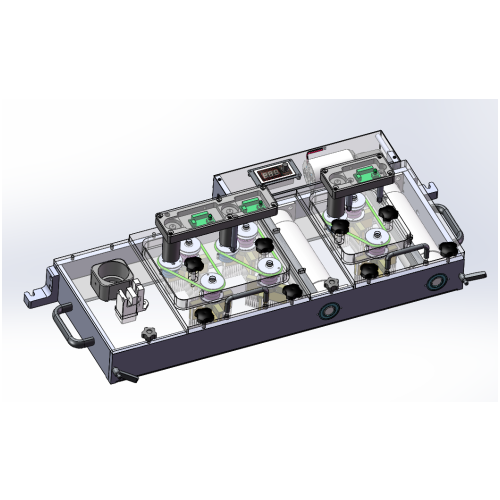
Industrial tablet production demands precision, speed, and reliability at every stage of manufacturing. The introduction of multi tip tooling has fundamentally transformed how manufacturers approach tablet compression and processing. This advanced approach to press tooling enables simultaneous production of multiple tablets per cycle, dramatically improving throughput while maintaining strict quality standards. Understanding how multi tip tooling works and why it has become essential for modern tablet producers is critical for any manufacturing facility looking to remain competitive in today's fast-paced market.
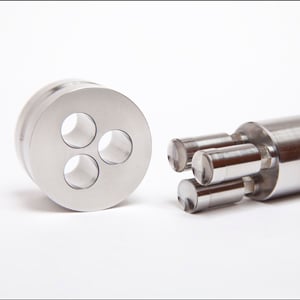
The evolution of tablet production technology has consistently prioritized efficiency without compromising quality. Multi tip tooling represents a significant leap forward by enabling manufacturers to produce more tablets per press stroke, reduce cycle times, and optimize material utilization. Industrial facilities that have adopted multi tip tooling report substantial improvements in productivity metrics, cost per unit, and equipment uptime. The technology has become an industry standard for high-volume tablet production, from pharmaceutical manufacturing to nutritional supplement production.
Understanding Multi Tip Tooling Architecture
Core Components and Design Principles
Multi tip tooling consists of multiple punches and dies arranged to work simultaneously within a single tablet press. Each tip operates independently yet in perfect synchronization with others, allowing a single press cycle to produce multiple finished tablets. The design of multi tip tooling requires precision engineering to ensure uniform compression force distribution across all tips, preventing variations in tablet weight, hardness, and appearance. Modern multi tip tooling incorporates advanced materials and manufacturing techniques that enhance durability and reduce maintenance requirements.
The structural integrity of multi tip tooling is paramount to production success. Each individual tip must maintain exact dimensional tolerances to ensure consistent product output and prevent tooling wear or breakage. Multi tip tooling systems are engineered with redundancy in mind, allowing continued operation even if one tip requires temporary replacement. This design philosophy minimizes production downtime and extends the overall service life of the equipment investment.
Material and Manufacturing Standards
Multi tip tooling must withstand enormous compressive forces repeatedly throughout a production shift. Manufacturers select high-grade tool steels and specialized alloys specifically formulated to resist wear, fatigue, and deformation. The surface treatments applied to multi tip tooling, such as hardening and specialized coatings, further enhance performance and longevity. Quality control processes for multi tip tooling involve rigorous testing and measurement to verify that each component meets exact specifications before deployment on production lines.
Productivity and Performance Gains from Multi Tip Tooling
Increased Output and Cycle Efficiency
The most immediate benefit of implementing multi tip tooling is the dramatic increase in tablet production output per unit time. A tablet press equipped with multi tip tooling can produce 2, 4, 6, or more tablets per compression cycle, depending on the specific tool configuration and press specifications. This multiplicative effect on production volume means that facilities can meet significantly higher demand without proportionally increasing floor space or energy consumption. Multi tip tooling essentially amplifies the productivity of existing press equipment, making it an attractive upgrade for manufacturers seeking rapid production scaling.
Cycle time reduction represents another critical advantage of multi tip tooling implementation. By compressing multiple tablets simultaneously, production lines equipped with multi tip tooling require fewer overall press cycles to reach target production volumes. This efficiency gain translates directly into lower per-unit manufacturing costs, improved equipment utilization rates, and reduced labor hours needed to supervise press operations. Manufacturers using multi tip tooling consistently report 40 percent to 70 percent improvements in throughput compared to traditional single-tip tooling systems.
Cost Reduction and Return on Investment
While the initial investment in multi tip tooling requires capital expenditure, the rapid payback period makes this upgrade economically compelling for most industrial producers. The increased output per press cycle reduces per-unit production costs, directly improving profit margins on each tablet sold. Multi tip tooling also reduces energy consumption per tablet produced, as the press requires fewer cycles to manufacture the same volume of finished product. The combination of higher output, lower per-unit costs, and reduced operational expenses creates a compelling financial case for adopting multi tip tooling in tablet manufacturing facilities.
Beyond direct cost savings, multi tip tooling provides strategic flexibility that enables manufacturers to respond quickly to market demand fluctuations. Production capacity can be scaled up or down by adjusting press settings and material feed rates, without requiring expensive equipment modifications or additional floor space. This operational flexibility makes multi tip tooling an essential tool for contract manufacturers and producers serving multiple customer bases with varying volume requirements.
Quality, Consistency, and Compliance Advantages
Precision Tablet Specifications and Batch Uniformity
Multi tip tooling delivers exceptional precision in tablet weight, diameter, thickness, and hardness specifications. The synchronized compression action ensures that every tablet produced meets identical quality standards regardless of which tip performs the compression. This level of consistency is particularly critical in pharmaceutical applications where regulatory agencies mandate strict uniformity within each production batch. Multi tip tooling manufacturing systems can maintain compression force variations of less than 1 percent across all tips, ensuring that every tablet meets specifications.
The consistent performance of multi tip tooling reduces product defects, rejects, and rework requirements throughout the production cycle. Pharmaceutical manufacturers especially benefit from the high uniformity achieved with multi tip tooling, as tablets that meet exact specifications reduce product returns, improve patient outcomes, and enhance regulatory compliance. Quality assurance teams can implement streamlined inspection protocols when using multi tip tooling, as batch variation is minimal and predictable.
Regulatory Compliance and Traceability
Multi tip tooling supports comprehensive traceability and documentation requirements mandated by regulatory bodies such as the FDA and EMA. Each tablet produced by multi tip tooling can be linked to specific production parameters, batch numbers, and equipment logs. This detailed traceability capability simplifies compliance audits and enables rapid response to any product quality concerns that may arise. Multi tip tooling systems integrate seamlessly with modern production data collection systems, supporting real-time monitoring and historical record maintenance.
Investing in multi tip tooling demonstrates commitment to quality and regulatory excellence that strengthens manufacturer credibility with regulatory agencies and end customers. The precision and consistency delivered by multi tip tooling reduces the likelihood of product recalls or compliance violations. For facilities operating under GMP (Good Manufacturing Practice) requirements, multi tip tooling represents best-practice equipment that supports long-term regulatory success and market confidence.
FAQ
What is the primary advantage of multi tip tooling in tablet production?
The primary advantage of multi tip tooling is the dramatic increase in production output per press cycle. By compressing multiple tablets simultaneously, multi tip tooling enables manufacturers to produce 2 to 6 or more tablets in a single compression event, multiplying production capacity without requiring additional press equipment or floor space. This efficiency multiplier reduces per-unit manufacturing costs and improves overall equipment utilization.
How does multi tip tooling ensure consistent tablet quality?
Multi tip tooling incorporates synchronized compression mechanisms that apply identical force to each tip simultaneously, ensuring every tablet meets the same weight, hardness, and dimension specifications. The precision engineering of multi tip tooling minimizes variation between tablets, supporting consistent batch quality and regulatory compliance. Advanced material selection and surface treatments further enhance the precision and durability of multi tip tooling systems.
Is multi tip tooling suitable for small-scale tablet producers?
Multi tip tooling scalability depends on production volume requirements and available capital investment. While multi tip tooling delivers maximum ROI at higher production volumes, modular configurations and customized multi tip tooling designs can serve smaller producers who anticipate volume growth. Manufacturers should evaluate their production forecasts, market demand, and financial capacity before deciding whether multi tip tooling investment aligns with their long-term business strategy.