
 EN
EN



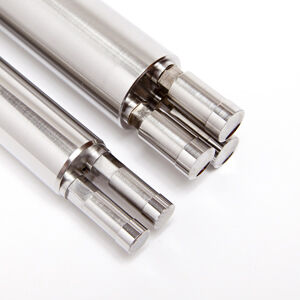
A mini tablet press machine is a compact, precision-driven piece of equipment designed to compress powdered or granulated materials into uniform tablet forms. Whether used in pharmaceutical research, nutraceutical development, or small-scale chemical manufacturing, this type of machine delivers consistent results in a footprint that suits laboratories, pilot production lines, and small batch operations alike. Understanding what this machine is and how it functions is essential for anyone involved in tablet formulation, product development, or quality control processes.
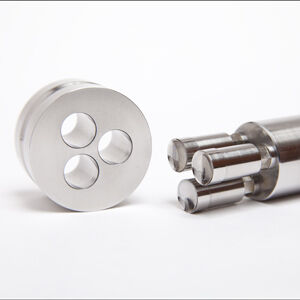
The mini tablet press machine occupies a critical space between manual hand-operated tools and large industrial rotary presses. It brings professional-grade compression capability to environments where space, budget, and batch volume do not justify full-scale production machinery. This article explains the definition, core components, working principles, and key application areas of a mini tablet press machine, giving you a clear and practical understanding of how this equipment operates and where it delivers the most value.
Defining the Mini Tablet Press Machine
What Sets It Apart From Standard Tablet Presses
A mini tablet press machine is essentially a scaled-down version of a conventional single-punch or rotary tablet press. The primary distinction lies in its compact dimensions, reduced throughput capacity, and suitability for smaller batch sizes. While industrial-scale presses can produce hundreds of thousands of tablets per hour, a mini tablet press machine typically targets output volumes suitable for research, development, and limited commercial runs.
The compactness of a mini tablet press machine is not simply about physical size. It also reflects a design philosophy that prioritizes flexibility, ease of cleaning, and rapid changeover. Researchers and formulators who work with multiple compounds often need a machine that can be disassembled, cleaned, and reconfigured with minimal downtime. The mini tablet press machine is engineered with exactly this workflow in mind.
Despite its smaller scale, a mini tablet press machine maintains the same fundamental compression mechanics as its larger counterparts. It applies controlled force to compact material between upper and lower punches inside a die cavity, producing tablets that meet defined hardness, weight, and dimension specifications. The scaled-down form does not compromise the engineering precision required for reliable tablet production.
Common Formats and Configurations
Mini tablet press machines are available in two primary configurations: single-punch and rotary. A single-punch mini tablet press machine operates using one set of tooling, making it ideal for early-stage formulation testing and very small sample batches. A rotary mini tablet press machine uses a turret with multiple punch stations, allowing slightly higher output while still maintaining the compact profile that defines this equipment category.
The tooling used in a mini tablet press machine, including the punches and dies, is typically interchangeable. This allows operators to switch between tablet shapes and sizes without replacing the entire machine. Standard tooling configurations such as B-type and D-type punches are widely compatible, making a mini tablet press machine easy to integrate into existing development workflows that may already use standardized tooling sets.
Some mini tablet press machines also include features such as adjustable compression force settings, fill depth controls, and digital displays for monitoring output parameters. These features bring laboratory-level precision control to a compact machine format, which is why the mini tablet press machine has become a staple in pharmaceutical R&D environments globally.
Core Components of a Mini Tablet Press Machine
The Punch and Die Assembly
The most critical mechanical components of a mini tablet press machine are the upper punch, lower punch, and die. Together, these three elements form the compression tooling assembly that determines the shape, size, and surface characteristics of every tablet produced. The die holds the powder fill, while the upper and lower punches apply opposing compressive force to bind the material into a solid tablet form.
The material quality of these components is crucial to the performance of a mini tablet press machine. Punches and dies are typically manufactured from hardened stainless steel or tool steel alloys that can withstand repeated compression cycles without deformation. High-quality tooling ensures dimensional accuracy, extends service life, and reduces the risk of tablet defects such as capping, lamination, or sticking.
For a mini tablet press machine used in pharmaceutical applications, tooling must also meet hygiene and material compatibility standards. Polished surfaces on punches and dies reduce powder adhesion and make cleaning more thorough. Operators working with potent or moisture-sensitive compounds benefit significantly from tooling designs that prioritize cleanliness and material containment.
The Hopper, Feed Frame, and Cam System
The hopper is the material inlet of a mini tablet press machine, serving as the reservoir from which powder or granules are fed into the die cavities. Proper hopper design ensures consistent material flow and minimizes segregation of blended powders, which is important for tablet-to-tablet weight uniformity. The hopper in a mini tablet press machine is typically removable for easy filling and cleaning.
The cam system is the mechanical heart of a mini tablet press machine. A series of precision-machined cams guide the punches through their vertical movement sequences, controlling when the die is filled, when compression is applied, and when the finished tablet is ejected. The cam tracks are engineered to deliver smooth, controlled punch motion that prevents tooling wear and ensures consistent tablet quality across each compression cycle.
In rotary mini tablet press machines, a turret housing multiple punch stations rotates continuously while the cams remain stationary. This rotation-cam interaction drives the fill, compress, and eject sequence in a continuous loop. In single-punch designs, the same sequence is performed in a reciprocating up-and-down motion. Both approaches are effective, and the choice between them depends on the required output volume and the complexity of the formulation being compressed.
How a Mini Tablet Press Machine Works Step by Step
The Filling Stage
The working cycle of a mini tablet press machine begins with the filling stage. During this phase, the lower punch descends to a preset position within the die cavity, creating a defined volume for powder to enter. The powder or granulated material flows from the hopper into the die under gravity or with the assistance of a feed frame mechanism that sweeps material evenly across the die openings.
Accurate fill depth control is a fundamental feature of any well-designed mini tablet press machine. The lower punch position at the time of filling determines how much material enters the die cavity, directly affecting the final tablet weight. Operators set this parameter during machine setup based on the target tablet weight and the bulk density of the formulation being processed.
Consistent filling is one of the most important factors in producing tablets with acceptable weight variation. A mini tablet press machine designed for laboratory or pilot use typically includes adjustment mechanisms that allow fine-tuning of the fill depth. This is especially important when working with formulations that have variable flow characteristics or when transitioning between different compound types.
The Compression Stage
Once the die is filled, the mini tablet press machine enters the compression stage. The upper punch descends into the die while the lower punch simultaneously applies upward counterpressure. The combined force compacts the powder into a coherent tablet with defined hardness and structural integrity. Compression force can typically be adjusted on a mini tablet press machine, allowing operators to dial in the correct level for each specific formulation.
The amount of compression force applied by a mini tablet press machine directly influences tablet hardness, friability, and disintegration behavior. Too little compression results in soft, friable tablets that may break during handling. Too much compression can cause lamination, capping, or reduced disintegration rates. Finding the correct compression force for a given formulation is an essential part of the tablet development process and is made easier by the fine adjustment capabilities of a good mini tablet press machine.
In some mini tablet press machines, a pre-compression step is incorporated before the main compression event. This brief initial contact between the punches and the powder helps expel entrapped air from the die cavity, which reduces the risk of tablet defects caused by air pockets. Pre-compression is particularly valuable when working with dry, fluffy powders that have a high tendency to trap air during filling.
The Ejection Stage
After compression is complete, the mini tablet press machine moves into the ejection stage. The lower punch rises to the top of the die, pushing the finished tablet upward and out of the die cavity. A scraper or deflector then directs the ejected tablet away from the tooling and into a collection container. The speed and smoothness of ejection are important for preventing tablet damage and maintaining surface finish quality.
Ejection force requirements vary depending on the formulation and tablet shape. Formulations that contain insufficient lubricant may bind to the die wall during ejection, increasing ejection force and potentially causing surface damage. Monitoring ejection force on a mini tablet press machine is a useful quality indicator that can signal formulation problems before they escalate into larger batch failures.
Once ejected, tablets from a mini tablet press machine are typically collected and sampled for in-process quality checks including weight, hardness, thickness, and appearance. This feedback loop allows operators to make real-time adjustments to machine settings, ensuring the output meets the required specification throughout the production run.
Key Applications of the Mini Tablet Press Machine
Pharmaceutical Research and Development
The pharmaceutical industry represents the most prominent application domain for the mini tablet press machine. During drug development, formulators must test multiple formulations with varying binder ratios, lubricant concentrations, and active pharmaceutical ingredient loads. A mini tablet press machine allows this iterative testing to happen efficiently with small material quantities, saving both raw material costs and development time.
Regulatory submissions often require data from physical tablet testing performed under realistic compression conditions. A mini tablet press machine provides a reproducible and controlled compression environment that generates meaningful data applicable to scale-up decisions. The results obtained from a mini tablet press machine can guide choices about excipient selection, granulation method, and target compression force for larger production equipment.
Clinical trial manufacturing is another area where a mini tablet press machine is widely used. Early-phase clinical batches are small by design, and a full-scale production press would be both impractical and economically unjustifiable for such volumes. The mini tablet press machine fills this need precisely, producing clinical tablets with the same quality attributes required for patient administration and regulatory review.
Nutraceuticals, Cosmetics, and Industrial Uses
Beyond pharmaceuticals, the mini tablet press machine is also used extensively in nutraceutical manufacturing for producing dietary supplement tablets, vitamin formulations, and herbal extract tablets at small to medium scales. The flexibility of the mini tablet press machine to handle a wide range of excipients and active ingredients makes it well-suited to the diverse and rapidly changing nutraceutical product landscape.
Cosmetic manufacturers use mini tablet press machines to produce compressed powder compacts, effervescent bath tablets, and solid perfume tablets. The ability to control tablet hardness and dissolution behavior makes the mini tablet press machine a versatile tool across personal care product development. Industrial applications include the production of catalyst pellets, dye tablets, cleaning tablets, and agricultural product tablets.
Educational institutions and training facilities also rely on the mini tablet press machine to introduce students to tablet compression technology in a hands-on and accessible format. The manageable scale of a mini tablet press machine makes it practical for classroom and laboratory settings where safety, cost, and space are important considerations.
FAQ
What materials can be processed in a mini tablet press machine?
A mini tablet press machine can process a wide range of powdered and granulated materials including pharmaceutical active ingredients and excipients, nutraceutical powders, herbal extracts, chemical compounds, and industrial materials. The key requirement is that the material must have sufficient flow properties and compressibility to form a coherent tablet under compression force. Pre-processing steps such as granulation or the addition of binders and lubricants may be needed to optimize the material for use in a mini tablet press machine.
How much output can a mini tablet press machine produce?
Output capacity varies by model and configuration. A single-punch mini tablet press machine typically produces hundreds to a few thousand tablets per hour, while a rotary mini tablet press machine may achieve output in the range of several thousand tablets per hour. These figures are significantly lower than industrial-scale presses but are entirely appropriate for research, development, clinical trial manufacturing, and small commercial batch production where a mini tablet press machine is most commonly deployed.
How do you maintain a mini tablet press machine?
Regular maintenance of a mini tablet press machine involves cleaning all product-contact surfaces after each batch, inspecting punches and dies for wear or damage, lubricating moving mechanical components as specified by the manufacturer, and checking compression force calibration periodically. Tooling should be stored properly when not in use to prevent corrosion or surface damage. Keeping a maintenance log helps track service intervals and identify recurring issues before they cause production problems.
Is a mini tablet press machine suitable for GMP-compliant production?
Many mini tablet press machines are designed and manufactured to comply with Good Manufacturing Practice standards, featuring smooth surfaces, minimal dead zones, full disassembly for cleaning validation, and documentation support for qualification activities. When selecting a mini tablet press machine for GMP environments, it is important to verify that the machine meets the applicable regulatory and engineering standards for your specific industry and product type. Proper installation qualification, operational qualification, and performance qualification protocols should be followed to establish GMP compliance.