Custom Punch and Die Solutions | Precision Tooling for Metal Forming and Stamping

Get a Free Quote

Our representative will contact you soon.
Email
Name
Company Name
Message
0/1000

custom punch and die

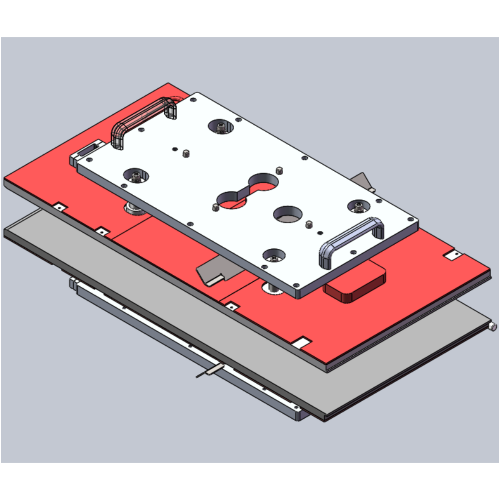
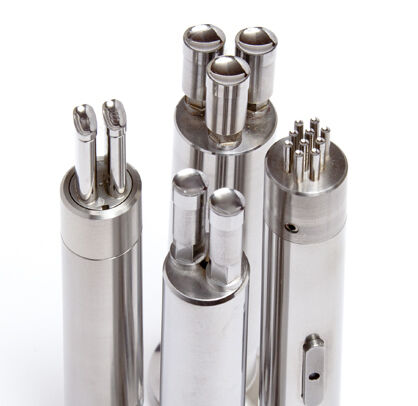
A custom punch and die represents specialized tooling designed to meet specific manufacturing requirements in metal forming, stamping, and fabrication processes. These precision-engineered components work together as a matched set, where the punch applies force to deform material while the die provides the necessary support and shape definition. Manufacturing facilities across automotive, aerospace, electronics, medical device, and consumer goods industries rely on custom punch and die solutions to produce parts with exact specifications that standard tooling cannot achieve. The customization process begins with detailed analysis of the part geometry, material properties, production volume, and tolerance requirements. Engineers then design the custom punch and die to optimize material flow, minimize waste, and ensure consistent quality across production runs. Modern custom punch and die fabrication utilizes advanced technologies including computer-aided design software, precision CNC machining, wire EDM cutting, and heat treatment processes to achieve exceptional dimensional accuracy and surface finish. The punch component typically features hardened tool steel construction with coatings to enhance wear resistance and extend service life. Meanwhile, the die incorporates precisely machined cavities, guide systems, and stripper mechanisms to facilitate smooth material processing and part ejection. Custom punch and die assemblies can accommodate various operations including blanking, piercing, forming, drawing, embossing, and coining depending on application needs. These tools enable manufacturers to produce complex shapes with tight tolerances that would be impossible or economically unfeasible using alternative methods. The investment in custom punch and die tooling delivers long-term value through reduced per-part costs, improved production efficiency, enhanced product quality, and greater design flexibility. Whether producing simple washers or intricate multi-feature components, custom punch and die solutions provide the precision and reliability that modern manufacturing demands.

New Product Recommendations

Investing in a custom punch and die offers manufacturers significant competitive advantages that directly impact their bottom line and operational efficiency. First and foremost, these specialized tools enable production of parts that perfectly match your unique specifications without compromise. Unlike off-the-shelf tooling that forces design modifications to fit available options, a custom punch and die adapts to your exact requirements, preserving the integrity of your original design vision. This precision translates to superior part quality with consistent dimensional accuracy across thousands or millions of production cycles. Your manufacturing operation gains remarkable flexibility to innovate and differentiate products in the marketplace without tooling constraints limiting creativity. The economic benefits become apparent quickly as custom punch and die systems dramatically reduce per-part production costs compared to alternative fabrication methods like laser cutting or machining individual pieces. High-speed stamping operations using custom tooling can produce hundreds of parts per minute, significantly lowering labor costs and accelerating time to market. Material utilization improves substantially because engineers optimize the custom punch and die layout to minimize scrap, reducing raw material expenses and supporting sustainability initiatives. Quality improvements extend beyond dimensional accuracy to include superior edge finish, consistent bend angles, and reliable feature placement that reduces downstream assembly problems and warranty claims. Production efficiency increases as custom punch and die designs incorporate features like automatic part ejection, pilot holes for precise registration, and progressive staging that combines multiple operations in a single press stroke. Maintenance costs decrease when you specify premium materials and coatings during the custom punch and die fabrication process, extending tool life and reducing downtime for replacement. Your production team experiences fewer setup challenges because custom tooling accounts for your specific press equipment, available tonnage, and operational workflows. The ability to produce complex geometries that would require multiple operations using standard tools means faster throughput and reduced work-in-process inventory. Custom punch and die solutions also provide crucial risk mitigation by ensuring reliable supply of critical components without dependence on external suppliers who may face capacity constraints or quality issues. These tools become valuable assets that support business growth, enabling rapid scaling of production volumes without proportional increases in manufacturing costs or quality concerns that plague less optimized processes.

Practical Tips

What are cardboard packing boxes and how do they work?

25

May

What are cardboard packing boxes and how do they work?

When businesses and individuals need a reliable, cost-effective, and versatile solution for protecting goods during storage or transit, cardboard packing boxes consistently emerge as the go-to choice. These containers are constructed from layers of p...
View More
How does a mini tablet press machine improve production?

25

May

How does a mini tablet press machine improve production?

In pharmaceutical manufacturing, nutraceutical production, and even chemical processing, the ability to compress powders into uniform, consistent tablets at scale is a foundational requirement. A mini tablet press machine has emerged as a transformat...
View More
What is Press Tooling and How Does It Work in Manufacturing?

25

May

What is Press Tooling and How Does It Work in Manufacturing?

In modern manufacturing, precision, repeatability, and efficiency are not optional — they are the foundation of competitive production. Press Tooling sits at the heart of this foundation, enabling manufacturers across industries to form, cut, s...
View More
Which Materials Work Best with Blister Packing Tooling?

25

May

Which Materials Work Best with Blister Packing Tooling?

Selecting the right material for Blister Packing Tooling is one of the most consequential decisions a pharmaceutical or consumer goods manufacturer can make. The material determines not only how well the tooling performs during forming, sealing, and ...
View More

Get a Free Quote

Our representative will contact you soon.
Email
Name
Company Name
Message
0/1000

custom punch and die

Precision Engineering for Exact Specifications

Precision Engineering for Exact Specifications

The primary distinguishing feature of a custom punch and die lies in its ability to deliver absolute precision tailored to your exact manufacturing requirements. This precision begins during the design phase where experienced tooling engineers collaborate closely with your team to understand every nuance of the parts you need to produce. They analyze material properties including thickness, hardness, grain direction, and spring-back characteristics to ensure the custom punch and die accounts for how your specific material behaves during forming operations. Computer-aided design systems enable visualization of the complete tool assembly, simulation of material flow during stamping, and identification of potential issues before any metal cutting begins. This thorough planning prevents costly mistakes and ensures the finished custom punch and die performs flawlessly from the first production run. The fabrication process employs state-of-the-art CNC machining centers capable of holding tolerances within ten-thousandths of an inch, creating punch and die surfaces that mate perfectly for clean shearing and accurate forming. Wire EDM technology allows creation of complex profiles and intricate details that conventional machining cannot achieve, expanding design possibilities for your parts. Precision grinding operations produce mirror-smooth surfaces on critical areas of the custom punch and die, reducing friction and extending tool life while improving part finish quality. Heat treatment processes transform raw tool steel into hardened components with optimal toughness and wear resistance, ensuring your custom punch and die maintains dimensional stability through millions of cycles. Quality verification happens at multiple stages using coordinate measuring machines, optical comparators, and surface finish analyzers to confirm every dimension meets specifications. This meticulous attention to detail throughout the custom punch and die creation process guarantees you receive tooling that produces parts matching your drawings exactly, eliminating the dimensional variations and quality inconsistencies that plague production using inadequate tooling solutions.
Enhanced Durability and Extended Service Life

Enhanced Durability and Extended Service Life

A well-engineered custom punch and die represents a long-term investment that delivers value through exceptional durability and extended operational life. The foundation of this durability starts with material selection, where tooling specialists recommend specific grades of tool steel based on your application demands, production volumes, and material being processed. High-carbon, high-chromium steels offer excellent wear resistance for abrasive materials, while shock-resistant grades better suit applications involving impact loads or interrupted cuts. The custom punch and die manufacturing process includes precision heat treatment that develops optimal hardness throughout the tool while maintaining core toughness to prevent catastrophic failure. Advanced coating technologies further enhance performance by applying thin films of titanium nitride, titanium carbonitride, or diamond-like carbon that reduce friction, prevent material adhesion, and multiply wear resistance several times over uncoated tools. These surface treatments prove especially valuable when your custom punch and die processes challenging materials like stainless steel, high-strength alloys, or abrasive composites that rapidly wear conventional tooling. Design features incorporated into your custom punch and die also contribute significantly to longevity, such as optimized clearances that prevent excessive side loading, robust guide systems that maintain alignment under repeated cycling, and appropriate relief angles that reduce friction during material penetration. Maintenance accessibility receives careful consideration during the design phase, with tooling engineers incorporating features like quick-change punch holders, easily replaceable wear components, and inspection points that simplify routine maintenance procedures. This thoughtful design approach minimizes downtime when service becomes necessary and reduces the skill level required for maintenance tasks. Many custom punch and die systems include provisions for sharpening worn cutting edges multiple times before replacement becomes necessary, effectively multiplying tool life and spreading the initial investment across even larger production quantities. Regular maintenance programs combined with quality construction enable a properly designed custom punch and die to produce millions of parts while maintaining tight tolerances and consistent quality, providing years of reliable service that justifies the initial tooling investment many times over through reduced per-part costs and eliminated production interruptions.
Operational Efficiency and Cost Optimization

Operational Efficiency and Cost Optimization

The implementation of a custom punch and die system transforms manufacturing operations by dramatically improving efficiency and optimizing costs across multiple dimensions of your production process. Speed advantages emerge immediately as stamping operations using properly designed custom tooling execute in fractions of a second compared to minutes required for alternative fabrication methods. This acceleration enables production of thousands of parts during a single shift, maximizing equipment utilization and labor productivity. The custom punch and die design process includes careful analysis of your production volume requirements and press capabilities to ensure optimal cycle times without compromising quality or tool life. Progressive die designs take efficiency further by incorporating multiple forming operations within a single press stroke, eliminating material handling between operations and reducing labor requirements. Your custom punch and die can integrate features like automatic part ejection systems, scrap choppers that prevent material bridging, and sensors that detect misfeeds or tool malfunctions before defects occur. These intelligent design elements reduce operator intervention requirements, minimize scrap from defective parts, and protect expensive tooling from damage due to abnormal conditions. Material efficiency improvements contribute substantially to cost optimization as engineers nest part layouts to maximize the number of components produced from each sheet or coil. The precision of custom punch and die operations enables tighter nesting patterns than possible with less accurate methods, directly reducing raw material consumption and associated costs. Consistency represents another crucial efficiency factor, as custom punch and die systems produce virtually identical parts throughout production runs without the dimensional drift common to processes requiring frequent adjustments. This consistency eliminates sorting operations, reduces inspection requirements, and prevents costly downstream assembly problems caused by out-of-specification components. Setup time reductions occur when your custom punch and die incorporates standardized mounting interfaces compatible with your existing press equipment and includes clear identification marks for proper orientation. The combination of faster cycle times, reduced material waste, lower labor requirements, minimal quality issues, and decreased setup intervals creates a compelling economic case where custom punch and die investments typically achieve payback within months for medium to high volume production applications while providing years of continued cost advantages.

Get a Free Quote

Our representative will contact you soon.
Email
Name
Company Name
Message
0/1000