
 EN
EN



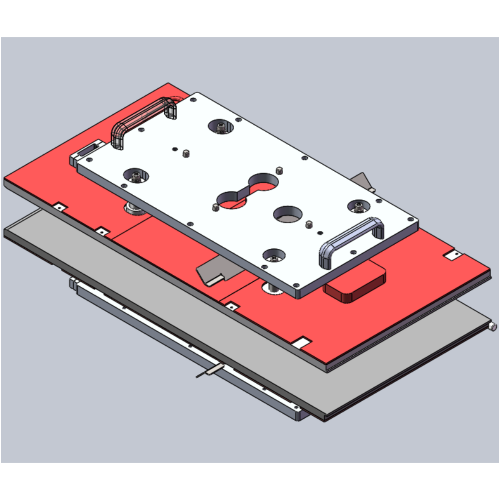
In pharmaceutical and consumer goods manufacturing, precision packaging is not just about aesthetics — it is a fundamental requirement for product safety, shelf life, and regulatory compliance. Blister Packing Tooling sits at the heart of this process, serving as the engineered set of mechanical components that forms, fills, and seals blister cavities with accuracy and repeatability. Whether you are packaging tablets, capsules, medical devices, or small consumer products, understanding what blister packing tooling is and how it operates is essential for anyone involved in production planning, quality assurance, or equipment procurement.
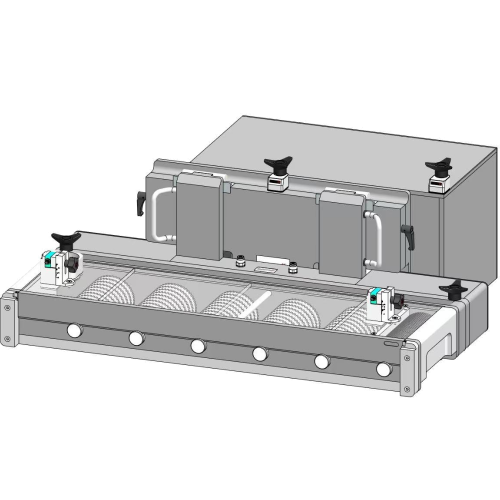
Blister packing tooling is more complex than it may appear from the outside. It encompasses a system of precisely machined parts — including forming stations, sealing dies, cutting tools, and guide components — each engineered to specific tolerances to ensure consistent output across high-speed production runs. The performance of the entire blister packaging line depends directly on the quality, compatibility, and condition of this tooling. This article explains what blister packing tooling is, breaks down its core components, and walks through exactly how it works from the first forming step to the final punched blister card.
Defining Blister Packing Tooling in the Manufacturing Context
The Core Concept and Industry Role
Blister packing tooling refers to the complete set of precision-engineered mechanical components installed on a blister packaging machine to shape, seal, and cut the final blister package. It is not a single tool but a coordinated system of interchangeable parts that work in sequence. Each component in the tooling set serves a specific function within the packaging workflow, and their combined performance determines the dimensional accuracy, cavity integrity, and seal quality of every blister produced.
In the pharmaceutical industry, blister packing tooling must comply with strict quality and dimensional standards because every cavity must hold a precise dose of medication. In consumer goods applications, the tooling must produce visually clean, structurally sound packaging that protects the product during transit and display. Regardless of the end application, blister packing tooling is always custom-designed or configured to match the specific product, film material, and machine platform in use.
Understanding the role of blister packing tooling requires recognizing that it defines the geometry of the final package. The cavity size, shape, and depth — as well as the sealing area dimensions and cutting profile — are all determined by the tooling design. This means that when a manufacturer changes a product or a packaging format, updating the blister packing tooling is typically necessary.
Tooling Format Types Used in Industry
Blister packing tooling is generally produced in two broad format categories depending on the type of blister machine: flat-bed tooling and rotary tooling. Flat-bed tooling uses reciprocating motion, where the forming and sealing stations open and close in a linear, press-like action. This type is common on intermittent-motion machines and is valued for its simplicity, ease of changeover, and suitability for complex or irregular cavity shapes.
Rotary blister packing tooling, by contrast, uses rotating drums or cylinders that continuously form and seal the film as it moves through the machine. Rotary tooling is associated with high-speed continuous-motion machines and is preferred for large-volume production of standard pharmaceutical formats such as round or oval tablets. The tooling design philosophy differs significantly between the two formats, with rotary systems demanding tighter machining tolerances due to the continuous contact mechanics involved.
Both formats of blister packing tooling share the same fundamental components — forming tools, sealing tools, and cutting tools — but their geometry, mounting method, and operational dynamics differ. Selecting the right format is part of the broader tooling specification process that manufacturers must undertake before committing to a production configuration.
Core Components of Blister Packing Tooling
The Forming Station and Its Function
The forming station is the first active component in any blister packing tooling system. Its purpose is to transform a flat roll of thermoplastic film — typically PVC, PVDC, or a laminate — into a series of precisely shaped cavities that will eventually contain the product. This transformation is achieved either through thermoforming, where heat softens the film before a forming tool presses or draws it into shape, or through cold forming, where aluminum foil is mechanically pressed into the cavity geometry without heat.
In thermoforming configurations, the forming station includes a heating plate and a forming die. The heating plate softens the film to the correct temperature and pliability, while the forming die — which is a precision-machined cavity plate — shapes the softened film using either compressed air, vacuum, or a combination of both. The dimensional accuracy of the forming die directly determines whether each cavity will hold the correct product without excessive play or deformation.
Cold-form blister packing tooling uses a male plug and a female cavity die that work together under mechanical pressure to draw the aluminum foil into shape. This process demands higher tooling rigidity and tighter surface finishes because the material deformation is entirely mechanical rather than thermally assisted. Cold-form tooling is widely used in pharmaceutical applications where maximum moisture and light barrier protection is required.
The Sealing Station and Lidding Die
After the product is loaded into the formed cavities, the sealing station closes the blister by bonding a flat lidding material — typically aluminum foil coated with heat-seal lacquer — over the open face of the formed web. The sealing station in blister packing tooling consists of a heated sealing plate and a corresponding backing plate. Together, these components apply controlled temperature, pressure, and dwell time to create a hermetic seal around each cavity.
The sealing die pattern is machined with a network of sealing lands — raised areas that contact the film and lidding material during sealing. The geometry of these lands must precisely match the cavity layout to ensure that every cavity receives a complete seal with no gaps. Incomplete or weak seals are a common quality failure in blister packaging, and they are frequently traced back to worn, misaligned, or poorly maintained sealing tooling.
Temperature uniformity across the sealing plate is a critical performance factor. Blister packing tooling with internal heating channels is designed to distribute heat evenly across the entire sealing surface, preventing hot spots or cold zones that would compromise seal integrity. This is why sealing tooling is often considered the most technically demanding component in the entire blister packing tooling assembly.
The Cutting and Perforating Station
The final stage in the mechanical sequence involves separating the continuous sealed web into individual blister cards or strips. This is the function of the cutting station, which in blister packing tooling typically includes a punching die and a corresponding counter die or anvil. The punching die is precision-ground to the exact outer profile of the finished blister card, and it applies shear force to stamp out each unit cleanly and consistently.
Perforating tools may also be included in this station, particularly for strip packs or blister formats where the consumer is expected to separate individual doses from a larger card. Perforation tooling must create clean, consistent tear lines without weakening the seal integrity of adjacent cavities. Achieving this balance requires careful calculation of perforation pitch, blade geometry, and cutting force during the tooling design phase.
Cutting tooling is subject to significant wear over time, particularly at the blade edges, and it must be maintained or replaced according to the manufacturer's production volume guidelines. Edge degradation in cutting blister packing tooling manifests as rough or jagged card edges, increased particulate generation, and dimensional drift in the finished package — all of which are quality failure indicators that trigger tooling maintenance cycles.
How Blister Packing Tooling Works: The Process Sequence
Film Unwind and Pre-Heating
The blister packaging process begins as a roll of flat forming film is unwound from a reel and fed into the blister machine. The film passes through a pre-heating zone where it is brought to a uniform working temperature before reaching the forming station. In thermoforming configurations, this pre-heating is critical to ensuring that the film deforms consistently across its full width when it enters the blister packing tooling forming zone.
Consistent film temperature is one of the first process variables that blister packing tooling design must account for. If the film arrives at the forming die with temperature variation across its width or from cycle to cycle, the resulting cavity geometry will vary, potentially causing products to fit too loosely or too tightly. Modern blister packaging machines use temperature-controlled heating plates and feedback systems to maintain the narrow temperature windows that precision blister packing tooling requires.
Cavity Formation, Filling, Sealing, and Cutting
Once the film is conditioned, it enters the forming station where the blister packing tooling creates the cavities. In an intermittent-motion machine, the film stops briefly at each station while the tooling operates — the forming die closes and forms the cavities, then the film advances by one pitch length to the next station. In a continuous-motion rotary system, the tooling remains in constant contact with the film as both move forward simultaneously.
After forming, the web of filled cavities advances to the sealing station, where the lidding foil is introduced from a separate reel and positioned precisely over the formed web. The sealing tooling closes under controlled pressure and temperature, creating the hermetic bond that protects the product inside each cavity. This sealing step is where the integrity of the blister packing tooling's sealing die geometry becomes most critical, as the seal quality cannot be corrected downstream.
The sealed web then advances to the cutting station, where the punching die in the blister packing tooling assembly stamps out individual cards or strips. Finished blister packs are ejected from the machine for downstream inspection, coding, and cartoning. The waste film skeleton left after punching is typically wound onto a reel or chopped for disposal. Throughout this entire sequence, every action is defined by the geometry and condition of the blister packing tooling installed on the machine.
Changeover, Validation, and Tooling Qualification
One of the most operationally significant aspects of blister packing tooling is the changeover process — the procedure of removing one set of tooling and installing another when switching between products or packaging formats. Changeover time directly impacts production efficiency, and well-designed blister packing tooling systems incorporate features such as quick-release clamps, locating pins, and tooling identification codes to streamline this process and reduce the risk of assembly errors.
In regulated industries such as pharmaceuticals, every installation of blister packing tooling must be followed by a qualification and validation process. This involves running sample packs, measuring cavity dimensions against specification, performing seal integrity tests, and verifying that the tooling produces output within the defined quality limits. This documentation requirement means that blister packing tooling is not just a mechanical asset but a quality-critical component subject to formal lifecycle management.
Tooling qualification records must be maintained and linked to batch production documentation in many regulatory environments. This creates a strong incentive for manufacturers to invest in high-quality, dimensionally stable blister packing tooling that retains its specifications across its rated service life, reducing the frequency and cost of re-qualification events.
Material Selection and Tooling Design Considerations
Materials Used in Blister Packing Tooling Construction
The materials used to manufacture blister packing tooling must withstand the combined demands of repeated thermal cycling, high contact pressures, and continuous mechanical wear. Tool steels, often hardened and surface-treated, are the most common base materials for forming dies, sealing plates, and cutting punches. The choice of steel grade and heat treatment protocol significantly influences tooling dimensional stability, surface hardness, and fatigue resistance.
For sealing components that operate at elevated temperatures, thermal conductivity and dimensional stability under heat are additional selection criteria. Some blister packing tooling manufacturers use copper alloys or thermally enhanced steel compositions in heating zones to improve temperature uniformity across the sealing surface. Insulating materials are used in adjacent components to direct heat precisely where it is needed and prevent thermal dissipation into surrounding machine structures.
Cavity surfaces in blister packing tooling are often finished to very low roughness values to ensure clean film release and prevent surface defects on the formed cavities. Surface treatments such as hard chrome plating, nitriding, or physical vapor deposition coatings are applied to extend wear resistance and maintain the surface integrity that dimensional accuracy demands across millions of forming cycles.
Dimensional Tolerancing and Engineering Precision
The dimensional tolerances applied to blister packing tooling components are typically in the range of a few micrometers to hundredths of a millimeter, depending on the application and product sensitivity. For pharmaceutical applications where cavity volume directly relates to dosing accuracy, forming tooling tolerances must be tightly controlled and verified against calibrated measurement standards before tooling is approved for production use.
Sealing land widths are another dimension that receives close attention during blister packing tooling design. Too narrow a land reduces seal strength by limiting the bonding area; too wide a land can interfere with adjacent cavities or make it difficult to open the pack. The balance between seal width, cavity pitch, and overall card format is worked out during the tooling design phase using both calculation and prototype testing.
Cutting die clearances — the gap between the punch and the die aperture — are critical to achieving clean, particle-free cuts. Excessive clearance causes torn or fibrous edges; insufficient clearance leads to premature tool wear and potential jamming. Blister packing tooling engineers calculate optimal clearances based on the specific lidding and forming film combinations used in production, and these clearances are verified and documented as part of the tooling qualification record.
Maintenance, Wear Management, and Tooling Lifecycle
Wear Patterns and Inspection Protocols
All blister packing tooling is subject to wear over its operational life, and understanding how and where wear occurs allows maintenance teams to intervene before quality failures appear in production. Forming tools wear primarily on the cavity edges and surfaces where film contact is most intense. Over time, this wear causes dimensional drift in the formed cavity, which may result in loose-fitting products or incomplete seals if the cavity depth changes significantly.
Sealing tooling wear manifests as erosion of the sealing land surfaces and, in heating-zone components, as loss of thermal efficiency due to oxidation or contamination of heating elements and channels. Regular inspection of blister packing tooling using optical comparators, coordinate measuring machines, and seal integrity testers is standard practice in quality-conscious manufacturing environments. These inspections generate the data needed to make evidence-based decisions about when to refurbish or replace tooling components.
Cutting tooling undergoes the most visually obvious wear, with blade edge degradation appearing as burrs, edge chipping, or increased cutting force. Predictive maintenance programs for blister packing tooling typically establish a maximum acceptable edge wear tolerance and a corresponding re-sharpening or replacement schedule based on production volume, material type, and observed wear rates from historical data.
Storage, Handling, and Tooling Management Systems
Proper storage and handling of blister packing tooling between production runs is as important as its on-machine performance. Precision tooling components are vulnerable to corrosion, impact damage, and contamination during storage. Dedicated tooling cabinets with identification labeling, protective covers, and desiccant control are standard in well-managed manufacturing environments. Each set of blister packing tooling should have a unique identifier linked to its qualification records, maintenance history, and current dimensional status.
Tooling management software or ERP-linked tooling modules allow production teams to track the service life, last-use date, maintenance status, and qualification validity of every set of blister packing tooling in the facility. This system-level visibility is particularly valuable in multi-product facilities where many tooling sets may be in circulation at any given time. It also supports regulatory compliance by ensuring that only qualified, within-specification tooling is used in production batches.
Handling protocols should require that blister packing tooling components be transported in padded carriers and that forming and sealing surfaces never come into direct, unprotected contact with hard surfaces or other metal objects. Even minor surface damage to a forming cavity or sealing land can compromise the quality of thousands of packages before the defect is detected, making careful handling one of the most cost-effective quality assurance practices available.
FAQ
What materials are typically used in pharmaceutical blister packing tooling?
Pharmaceutical blister packing tooling is most commonly manufactured from hardened tool steels, sometimes with surface treatments such as nitriding, hard chrome plating, or PVD coatings to enhance wear resistance and surface quality. The specific material selection depends on the tooling component — forming dies typically require high hardness and surface finish quality, while sealing components may use thermally conductive alloys to ensure uniform heat distribution across the sealing surface.
How often should blister packing tooling be inspected or replaced?
Inspection frequency for blister packing tooling depends on production volume, material type, and the quality standards in use. In high-volume pharmaceutical production, tooling is typically inspected at scheduled intervals defined in the maintenance plan — often after a set number of machine cycles or production hours. Replacement decisions are based on measured dimensional wear against defined tolerance limits rather than on fixed time schedules, ensuring that tooling is neither replaced prematurely nor kept in service past its useful life.
Can blister packing tooling be used across different machine platforms?
Blister packing tooling is generally machine-specific, as the mounting interfaces, pitch dimensions, and station geometries vary between different machine makes and models. However, some tooling suppliers design adaptable tooling systems with standardized base plates that allow cavity inserts to be transferred across compatible machine formats. Any cross-platform use of blister packing tooling should be validated against the quality and dimensional requirements of the target machine before production use.
What is the difference between thermoforming and cold-form blister packing tooling?
Thermoforming blister packing tooling uses heat to soften a plastic film before forming cavities using compressed air, vacuum, or a plug-assist mechanism. It is suitable for PVC, PVDC, and similar thermoplastic films and is widely used in both pharmaceutical and consumer goods applications. Cold-form blister packing tooling, by contrast, mechanically presses aluminum foil into shape without heat, producing packages with superior moisture and light barrier properties. Cold-form tooling requires greater mechanical strength and tighter tolerances due to the higher forming forces involved.