
 EN
EN



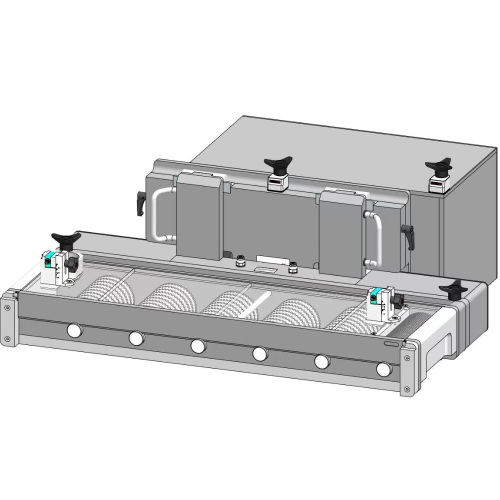
When manufacturers evaluate blister packing tooling, one of the first technical questions they ask is how precise the tooling actually is. Precision is not a vague promise in this industry — it is a measurable, verifiable characteristic that directly affects forming consistency, seal integrity, and overall product safety. Understanding what precision level blister packing tooling offers helps procurement teams, packaging engineers, and quality managers make better decisions about equipment investment and production standards.
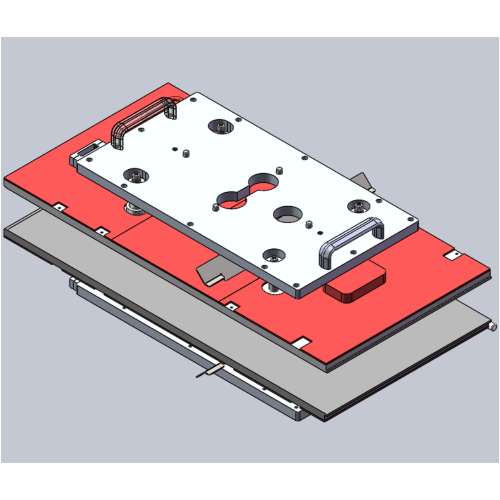
Blister packing tooling is used across pharmaceutical, nutraceutical, medical device, and consumer goods industries. In each of these sectors, dimensional tolerances, cavity geometry, and surface finish play a critical role in how reliably a blister pack performs. Blister packing tooling typically achieves tolerances in the range of ±0.01 mm to ±0.05 mm depending on the tooling type, material, and manufacturing process. This level of precision is what separates high-performance blister packing tooling from standard mechanical tooling used in less demanding applications.
Dimensional Tolerance in Blister Packing Tooling
What Tolerance Ranges Are Standard
In professional manufacturing environments, blister packing tooling is engineered to tight dimensional tolerances. Forming tools, sealing plates, and cutting dies in blister packing tooling are typically machined to tolerances between ±0.01 mm and ±0.03 mm for critical dimensions. These tolerances ensure that each cavity in the blister packing tooling forms a consistent pocket, which is essential for uniform drug dosing in pharmaceutical applications. When blister packing tooling tolerance drifts beyond specification, pockets may be too shallow or too deep, causing filling inaccuracies or seal failures.
Blister packing tooling designed for high-speed pharmaceutical lines demands even tighter consistency. In these cases, blister packing tooling components are measured and verified using coordinate measuring machines to confirm that each feature meets the design blueprint. Repeatable tolerance control in blister packing tooling is what allows production lines to run at high speeds without interruption or rework.
Surface Finish and Its Role in Precision
Precision in blister packing tooling is not limited to dimensional accuracy alone. Surface finish quality on forming cavities and sealing surfaces of blister packing tooling directly influences how cleanly a blister film forms and seals. High-quality blister packing tooling uses polished or coated cavity surfaces to minimize drag on the forming film, reduce residue buildup, and ensure the formed pocket release is clean and consistent. When blister packing tooling has a rough or uneven surface, it introduces micro-variations in pocket depth and film thickness that accumulate over a production run.
Factors That Influence Blister Packing Tooling Precision
Material Selection for Tooling Components
The precision achievable by blister packing tooling is heavily influenced by the materials from which it is made. High-grade tool steel and aluminum alloys are the most common base materials for blister packing tooling because they offer dimensional stability under thermal cycling. When blister packing tooling is used in thermoforming applications, the tooling is exposed to repeated heating and cooling cycles. If the material expands and contracts unevenly, precision degrades over time. Quality blister packing tooling is therefore engineered with materials that have low thermal expansion coefficients and predictable mechanical behavior.
Some blister packing tooling components use surface hardening treatments such as nitriding or PVD coating to improve wear resistance without changing the machined dimensions. This extends the service life of blister packing tooling while maintaining the original tolerance spec throughout thousands of production cycles. Material choice in blister packing tooling is therefore a strategic precision decision, not only a cost consideration.
Machining Process and Quality Control
The manufacturing method used to produce blister packing tooling has a direct impact on achievable precision. CNC machining centers with multi-axis capability allow blister packing tooling manufacturers to cut complex cavity geometries with sub-millimeter accuracy. After initial machining, blister packing tooling components go through inspection steps including surface profilometry, dimensional verification, and functional testing on a press simulator. Blister packing tooling that passes these checks reliably replicates the cavity geometry across every cycle. This level of quality control is what allows blister packing tooling to be validated in regulated pharmaceutical environments where each tooling set requires formal qualification documentation.
Precision Impact on Blister Pack Performance
Seal Integrity and Cavity Consistency
The precision of blister packing tooling has a direct downstream effect on the performance of the finished blister pack. When blister packing tooling maintains tight tolerances, the sealing surface contacts the lidding foil uniformly across all cavities. This uniform contact pressure produces consistent hermetic seals that pass peel and integrity tests. In contrast, blister packing tooling with worn or imprecise sealing plates creates localized pressure variations that lead to weak seals or incomplete bonding. For pharmaceutical products, a failed seal means potential contamination or moisture ingress, which is a regulatory and safety concern.
Cavity consistency in blister packing tooling also determines how securely a tablet or capsule fits within its pocket. If the pocket is too large, the product shifts during handling and transport. If the cavity is too tight, it can damage fragile dosage forms. Precision blister packing tooling is designed around the exact product dimensions to create a fit that protects the product without deformation.
Long-Term Dimensional Stability
Blister packing tooling must maintain its precision not just at first use, but over a validated service life spanning millions of cycles. High-quality blister packing tooling is designed with this durability in mind. Dimensional measurements are taken at scheduled maintenance intervals to verify that blister packing tooling has not drifted from its original specification. If a component of the blister packing tooling shows wear beyond allowable limits, it is replaced before it begins to affect product quality. This proactive maintenance model is only possible when the original blister packing tooling was built to documented and measurable precision standards.
FAQ
What is the typical dimensional tolerance of blister packing tooling?
Blister packing tooling typically holds dimensional tolerances between ±0.01 mm and ±0.05 mm depending on the component function and industry application. Pharmaceutical-grade blister packing tooling tends to use the tighter end of this range to support regulatory validation requirements.
How does blister packing tooling precision affect pharmaceutical compliance?
Blister packing tooling precision directly supports GMP compliance because consistent cavity dimensions and seal quality are required for validated pharmaceutical packaging processes. Regulatory audits may review tooling qualification records, making documented precision specifications an important part of the compliance file for blister packing tooling.
How often should blister packing tooling be measured for precision?
Blister packing tooling should be dimensionally verified at scheduled preventive maintenance intervals, typically after a defined number of production cycles or hours of operation. High-speed pharmaceutical lines often inspect blister packing tooling components every few million cycles to catch wear before it affects product quality or seal integrity.