
 EN
EN



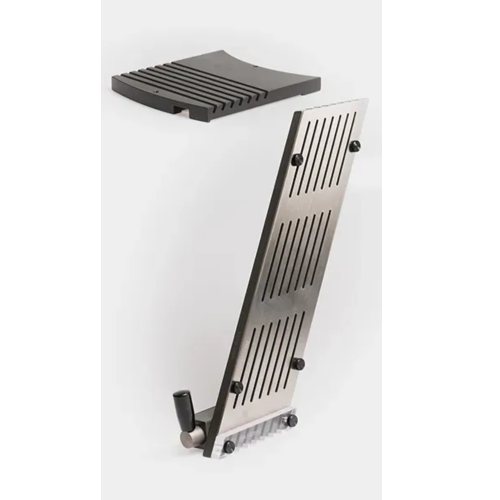
Selecting the right material for Blister Packing Tooling is one of the most consequential decisions a pharmaceutical or consumer goods manufacturer can make. The material determines not only how well the tooling performs during forming, sealing, and cutting operations, but also how long the tooling lasts, how consistently it produces cavities, and how reliably it protects the product inside. When the wrong material is chosen, the consequences range from premature tool wear and dimensional drift to failed seals and product recalls—all of which translate directly into increased costs and production downtime.
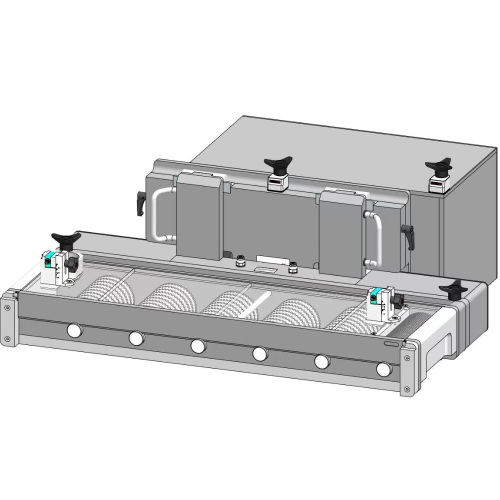
Understanding which materials perform best with Blister Packing Tooling requires examining both the tooling components themselves—forming plates, sealing dies, cutting punches, and guide rails—and the packaging substrate materials that the tooling must process. Different pharmaceutical films, foil laminates, and cold-form materials each impose unique thermal, mechanical, and chemical demands on the tooling. This article breaks down the most suitable material combinations, explains why they perform well, and helps you make informed decisions when specifying or upgrading your Blister Packing Tooling.
The Role of Material Selection in Blister Packing Tooling Performance
Why Tooling Material Directly Influences Output Quality
Blister Packing Tooling operates under continuous thermal and mechanical stress. Forming stations apply heat and pressure repeatedly to shape cavities in plastic films, while sealing stations bond lidding foil to the formed web under controlled temperature and dwell time. The tooling components that execute these functions must be dimensionally stable, thermally conductive or resistant depending on their role, and hard enough to resist wear without becoming brittle. A tooling material that fails to meet these requirements will degrade cavity geometry over time, leading to inconsistent product containment and moisture ingress.
The interaction between the tooling material and the packaging substrate is equally critical. When a hardened steel forming plug contacts a PVC film at elevated temperature, the thermal and mechanical interface must be well-matched to achieve clean cavity formation without tearing or whitening the film. Similarly, sealing dies must maintain flat, polished contact surfaces without expansion or warping that would compromise the hermetic seal. Material selection for Blister Packing Tooling is therefore not a secondary concern—it is a foundational engineering decision that determines the entire performance envelope of the packaging line.
Key Material Properties That Define Tooling Suitability
Several material properties govern whether a given tooling material will succeed in blister packaging applications. Hardness determines wear resistance during repeated contact with abrasive film or foil edges. Thermal conductivity controls heat transfer during forming and sealing, affecting cycle time and cavity consistency. Dimensional stability under temperature cycling prevents accumulation of registration errors across a production shift. Corrosion resistance is essential when processing moisture-sensitive pharmaceutical products or when tooling is cleaned with aggressive solvents.
Machinability also matters significantly for Blister Packing Tooling. High-precision cavity arrays must be machined to tight tolerances, and materials that resist cutting tools or produce poor surface finishes add cost and lead time to tooling manufacture. The ideal tooling material balances hardness and machinability, delivering precision cavities with polished internal surfaces that release formed film cleanly without adhesion or drag. Understanding these properties helps packaging engineers evaluate material options systematically rather than relying on habit or tradition.
Tool Steel Grades and Their Fit for Blister Packing Tooling
Through-Hardened Tool Steels for Forming and Cutting Components
Through-hardened tool steels remain the industry standard for the most demanding components within Blister Packing Tooling, particularly forming plugs, cutting punches, and die plates. Grades such as D2 and equivalent high-carbon, high-chromium tool steels offer exceptional wear resistance and the ability to hold sharp cutting edges through millions of machine cycles. Their high hardness—typically in the 58–62 HRC range after heat treatment—makes them suitable for cutting through multi-layer foil laminates, cold-form aluminum films, and reinforced laminate structures without edge rounding or burr formation.
The primary limitation of through-hardened tool steels is their relatively lower toughness compared to lower-hardness alternatives. In applications where tooling is subject to impact loading or where misfeeds cause sudden mechanical shock, very hard steels can chip or crack. For this reason, Blister Packing Tooling designers often use through-hardened steels selectively, reserving them for cutting and trimming stations where wear resistance is paramount and using tougher materials elsewhere in the tool set.
Pre-Hardened Steels for Moderate-Demand Tooling Applications
Pre-hardened steels, typically supplied in the 28–36 HRC range, offer a practical balance between wear resistance, toughness, and machinability. They are widely used for sealing die bodies, forming plate frames, and guide components within Blister Packing Tooling where precision geometry is required but the wear demands are less severe than at cutting edges. Because these steels do not require post-machining heat treatment, the risk of dimensional distortion during hardening is eliminated, which simplifies production of large or complex tooling assemblies.
For pharmaceutical Blister Packing Tooling that must comply with GMP requirements, pre-hardened steels are often finished with hard chrome plating or electroless nickel plating to improve surface hardness, reduce friction, and provide a degree of corrosion protection. These surface treatments extend service life significantly while preserving the dimensional accuracy achieved during precision machining. Pre-hardened steels are also a cost-effective choice when shorter tooling lead times are needed, as they can be machined directly to final dimensions without a hardening cycle.
Aluminum Alloys in Blister Packing Tooling: Opportunities and Limitations
Where Aluminum Delivers Genuine Advantages
Aluminum alloys, particularly aerospace-grade variants such as 7075-T6, have found a legitimate place in Blister Packing Tooling for specific applications. Their primary advantage is low density—aluminum weighs approximately one-third as much as steel—which reduces the reciprocating mass of forming and sealing stations. Lower reciprocating mass allows machines to operate at higher speeds while reducing vibration and mechanical stress on the packaging line's drive systems. For high-speed blister packaging operations producing hundreds of thousands of blisters per hour, this weight advantage translates into measurable gains in throughput and equipment longevity.
Aluminum also offers excellent thermal conductivity, which is advantageous in heated forming plates where uniform temperature distribution is essential for consistent cavity depth and geometry. A forming plate machined from high-grade aluminum alloy can distribute heat more evenly across a large cavity array than an equivalent steel plate, reducing the thermal gradient between cavities at the center and periphery of the forming station. This uniformity is especially valuable when processing thermally sensitive films that exhibit visible stress marks or optical hazing when formed unevenly.
Understanding the Wear Limitations of Aluminum Tooling
Despite its processing advantages, aluminum is substantially softer than tool steel, making it unsuitable for cutting and trimming components within Blister Packing Tooling. Aluminum forming plates used in direct contact with abrasive film materials will show measurable wear after relatively few production cycles, leading to cavity dimension drift and increased flash or burr formation at cavity edges. This wear behavior limits aluminum tooling primarily to prototype runs, clinical trial batches, or low-volume production where tooling replacement costs and cycle times are more tolerant than in continuous high-volume manufacturing.
Hard anodizing aluminum tooling components extends their service life considerably by creating a hard aluminum oxide surface layer with hardness approaching 50–65 HRC equivalent. However, even hard-anodized aluminum Blister Packing Tooling cannot match the durability of properly hardened tool steel in forming applications processing filled PVC, PVDC-coated films, or cold-form aluminum foil. Engineering teams must be realistic about service life expectations when specifying aluminum tooling for production environments.
Substrate Materials That Interact with Blister Packing Tooling
Thermoformable Films and Their Tooling Requirements
The forming substrate—the material that is shaped into blister cavities—has a direct bearing on what tooling materials perform best. Standard PVC films, which remain among the most widely used pharmaceutical blister substrates, are relatively forgiving during thermoforming and place moderate demands on Blister Packing Tooling. Pre-hardened steel or hard-anodized aluminum forming tooling typically provides acceptable service life when processing plain PVC at standard forming temperatures of 100–130°C.
PVDC-coated films and PVC/PVDC laminates impose higher demands because the PVDC coating is abrasive and can cause accelerated wear on forming plug surfaces. For these substrates, through-hardened tool steel forming plugs or plugs with titanium nitride (TiN) or diamond-like carbon (DLC) surface coatings are preferred. These hard coatings reduce surface wear dramatically and also lower the coefficient of friction between the plug and the film, improving cavity release and reducing the incidence of film whitening in deep-draw cavity applications.
Cold-Form Aluminum Foil and the Demands It Places on Tooling
Cold-form blister packaging—where aluminum laminate is formed at room temperature without heating—places the most severe mechanical demands on Blister Packing Tooling of any substrate type. Because the foil is not softened by heat, forming requires much higher forces than thermoforming, and the tooling components—particularly the forming punch and die—must withstand these forces without deflection, fatigue, or premature wear. Through-hardened tool steels with surface hardness of 60 HRC or above are typically required for cold-form tooling punches to maintain cavity geometry over long production runs.
Cold-form Blister Packing Tooling also benefits from precision surface finishing of the forming die cavity surfaces. A mirror-polished die surface reduces the friction experienced by the aluminum foil during drawing, minimizing the risk of foil fracture or pinhole formation at cavity corners. Tooling designers often specify ground and lapped surfaces for cold-form components, achieving roughness values of Ra 0.2 µm or better to ensure repeatable, defect-free cavity formation across the full width of the packaging web.
Surface Treatments and Coatings That Extend Blister Packing Tooling Service Life
Physical Vapor Deposition Coatings for Wear-Critical Components
Physical vapor deposition (PVD) coatings such as titanium nitride (TiN), titanium aluminum nitride (TiAlN), and diamond-like carbon (DLC) have become standard enhancements for high-performance Blister Packing Tooling components. Applied as thin films typically 2–5 µm thick, these coatings dramatically increase surface hardness to 2,000–3,500 HV while maintaining the dimensional accuracy of the underlying precision-machined component. For forming plugs that undergo millions of insertion cycles, PVD-coated surfaces show wear rates several orders of magnitude lower than uncoated steel.
DLC coatings are particularly well suited for applications where film adhesion to the forming plug causes drag or whitening defects. The extremely low coefficient of friction characteristic of DLC-coated surfaces—comparable to PTFE in many contact conditions—allows the film to release cleanly from the plug after forming, even in deep-draw geometries where retention forces would otherwise be problematic. This non-stick behavior makes DLC-coated Blister Packing Tooling highly effective when processing PVDC-coated films, PET/PE laminates, and polypropylene-based blister substrates.
Chemical Nickel and Hard Chrome Plating for Corrosion and Wear Resistance
Electroless nickel plating provides a corrosion-resistant, moderately hard surface finish for Blister Packing Tooling components that must resist chemical attack from cleaning agents, moisture, or pharmaceutical actives that might interact with exposed steel surfaces. With hardness values of approximately 65–70 HRC achievable after post-plate heat treatment, electroless nickel-plated components offer a practical upgrade over bare pre-hardened steel, particularly in GMP-regulated environments where tooling cleanliness and chemical inertness are regulatory requirements.
Hard chrome plating remains a widely used alternative for sealing die surfaces and guide components, offering high hardness, good corrosion resistance, and a low-friction surface that facilitates smooth foil feeding. However, environmental regulations in many jurisdictions are restricting hexavalent chromium processes, prompting increasing adoption of trivalent chrome alternatives and PVD coatings as replacements. Tooling procurement teams should factor regulatory compliance into material and surface treatment selection when specifying Blister Packing Tooling for facilities operating under REACH, RoHS, or equivalent environmental frameworks.
FAQ
Which tooling material is most commonly used for high-volume pharmaceutical blister packaging?
Through-hardened and pre-hardened tool steels are the most widely used materials for high-volume pharmaceutical Blister Packing Tooling. They offer the combination of wear resistance, dimensional stability, and machinability required for sustained production of millions of blister packs. Surface treatments such as hard chrome plating, electroless nickel, or PVD coatings are frequently applied to extend service life further in abrasive or chemically aggressive processing conditions.
Can aluminum tooling be used for cold-form blister packaging?
Aluminum tooling is generally not suitable for cold-form blister packaging applications because cold-form aluminum foil requires significantly higher forming forces than thermoformed substrates. These forces exceed the mechanical strength and wear resistance of aluminum alloys, leading to rapid cavity dimension drift and tool fatigue. Cold-form Blister Packing Tooling should be manufactured from through-hardened tool steel with precision-polished surfaces to ensure dimensional integrity and defect-free cavity formation over extended production runs.
How do PVD coatings improve the performance of Blister Packing Tooling?
PVD coatings such as TiN, TiAlN, and DLC significantly enhance Blister Packing Tooling performance by increasing surface hardness, reducing wear rates, and lowering the coefficient of friction between the tooling and the packaging substrate. DLC coatings are especially effective at preventing film adhesion to forming plugs, reducing drag-related defects such as whitening and cavity distortion. Because PVD coatings are applied at low temperatures and in very thin layers, they do not alter the precise dimensions of the machined tooling components.
What should I consider when choosing substrate materials compatible with existing Blister Packing Tooling?
When selecting substrate materials for use with existing Blister Packing Tooling, consider the forming temperature range of the film relative to your tooling's heating capacity, the abrasiveness of any coatings on the film surface, the draw depth required to contain your product, and the barrier properties needed for product stability. PVDC-coated films and cold-form foils place higher demands on tooling than plain PVC, so if you plan to switch substrates, assess whether your current Blister Packing Tooling material and surface finish are adequate for the new substrate's requirements before committing to a production trial.
Table of Contents
- The Role of Material Selection in Blister Packing Tooling Performance
- Tool Steel Grades and Their Fit for Blister Packing Tooling
- Aluminum Alloys in Blister Packing Tooling: Opportunities and Limitations
- Substrate Materials That Interact with Blister Packing Tooling
- Surface Treatments and Coatings That Extend Blister Packing Tooling Service Life
-
FAQ
- Which tooling material is most commonly used for high-volume pharmaceutical blister packaging?
- Can aluminum tooling be used for cold-form blister packaging?
- How do PVD coatings improve the performance of Blister Packing Tooling?
- What should I consider when choosing substrate materials compatible with existing Blister Packing Tooling?