
 EN
EN



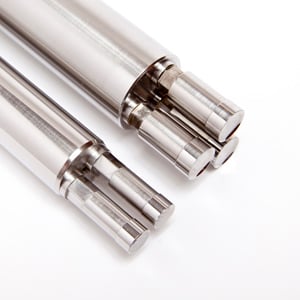
Press tooling is one of the most fundamental elements in modern industrial manufacturing. It refers to the specialized set of tools, dies, and mechanical components used in pressing operations to shape, cut, form, or stamp raw materials — most commonly metals — into precise, repeatable parts. Whether you are working in automotive production, electronics assembly, or heavy industrial fabrication, press tooling plays a central role in converting flat sheet material or blanks into finished functional components with tight dimensional tolerances.
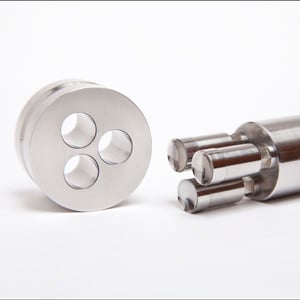
Understanding press tooling is critical for engineers, procurement specialists, and production managers who need to select the right tooling setup for their process requirements. Press tooling directly determines product accuracy, production speed, material yield, and overall manufacturing cost. A well-designed press tooling system can dramatically reduce cycle times and scrap rates, while poorly matched press tooling can lead to excessive downtime and inconsistent output. This article explains what press tooling is, how it works mechanically, and where it delivers the most value across industry sectors.
The Core Definition and Components of Press Tooling
Defining Press Tooling in Industrial Context
Press tooling is the collective term for the upper and lower tool assemblies that are mounted inside a mechanical or hydraulic press machine. Each press tooling set is engineered to perform a specific operation — such as blanking, piercing, bending, deep drawing, or coining — on a workpiece. The design of the press tooling determines the geometry, force distribution, and material flow during each press stroke. Unlike general-purpose cutting tools, press tooling is largely custom-built or highly application-specific, meaning it must be precisely matched to the part design and material grade being processed.
Key Structural Components Within a Press Tooling Set
Every press tooling assembly typically includes a punch, a die, a stripper plate, guide pillars, and a backing plate. The punch is the upper active element that descends under press force, while the die is the lower fixed element that provides the cavity or edge against which the material is formed or cut. The stripper plate holds the material flat and ejects it after each stroke, ensuring consistent feeding. Guide pillars maintain alignment between the upper and lower halves of the press tooling, which is critical for dimensional accuracy and tool life. The backing plate distributes press force evenly to prevent damage to the press bed and tooling body. Each component in a press tooling set must be manufactured from hardened tool steel or carbide to withstand repeated high-load cycles without deformation.
How Press Tooling Works During a Press Operation
The Mechanical Sequence of a Press Stroke
When press tooling is installed in a press machine and production begins, each cycle follows a defined mechanical sequence. First, the raw material — typically a metal sheet, strip, or blank — is fed or positioned into the press tooling station. The press ram then descends, driving the punch element of the press tooling downward with controlled force and speed. As the punch contacts the material, it applies localized stress that causes the material to deform, shear, bend, or flow into the die cavity depending on the press tooling operation type. The ram then retracts, the stripper plate clears the workpiece from the punch, and the formed or cut part is ejected. This press tooling cycle repeats continuously, often at rates of several hundred strokes per minute in high-speed progressive press tooling configurations.
Force, Clearance, and Material Behavior in Press Tooling
The performance of press tooling depends heavily on three technical parameters: press force, die clearance, and material properties. Press force must be calibrated to the tensile strength and thickness of the workpiece material. Insufficient force leads to incomplete forming, while excessive force accelerates press tooling wear and risks cracking the die. Die clearance — the gap between the punch and die edge — is a critical press tooling design variable. Correct clearance ensures clean shear faces in cutting operations and smooth material flow in forming operations. Material behavior, including springback and work hardening, must also be accounted for in the press tooling geometry to achieve final part dimensions within tolerance. Experienced tooling engineers simulate these variables before building press tooling to reduce trial-and-error adjustment after the first production run.
Press Tooling Types and Industrial Applications
Progressive, Transfer, and Compound Press Tooling Configurations
Press tooling is categorized by its operational configuration. Progressive press tooling performs multiple operations in sequence within a single die set as the material strip advances step by step through each station. This makes progressive press tooling highly efficient for high-volume parts requiring multiple features such as holes, forms, and cutouts. Transfer press tooling moves individual blanks between separate press tooling stations using mechanical transfer fingers, allowing larger or more complex parts that cannot remain on a continuous strip. Compound press tooling completes two or more operations — typically blanking and piercing — simultaneously in a single press stroke, which improves flatness and dimensional consistency. Each press tooling configuration is selected based on part complexity, production volume, material type, and available press capacity.
Industry Sectors That Rely on Press Tooling
Press tooling is used extensively across sectors where metal parts must be produced with high repeatability and tight tolerances. The automotive industry depends on press tooling for body panels, brackets, chassis components, and structural reinforcements. Electronics manufacturers use precision press tooling to produce terminals, connectors, lead frames, and heat sink components. Appliance production relies on press tooling for housings, mounting plates, and internal structural parts. Medical device manufacturing applies press tooling to produce small, highly precise metal components with strict quality requirements. In each of these sectors, press tooling investment is justified by the combination of production speed, consistency, and low per-unit cost at scale. Selecting the right press tooling configuration for your specific application is a key engineering and commercial decision that affects long-term production economics.
FAQ
What materials are used to manufacture press tooling?
Press tooling is most commonly manufactured from hardened tool steel grades such as D2, H13, or high-speed steel, depending on the application requirements. For high-volume or abrasive material applications, carbide inserts or full carbide press tooling components are used to extend service life and reduce maintenance intervals.
How long does a set of press tooling typically last?
The service life of press tooling varies widely based on the material being pressed, press tooling material grade, operational maintenance, and press force settings. Well-maintained press tooling in standard steel stamping applications can last hundreds of thousands to several million strokes before requiring reconditioning or replacement of worn components.
What causes premature wear or failure in press tooling?
Common causes of premature press tooling failure include incorrect die clearance, misalignment of the upper and lower press tooling assemblies, insufficient lubrication during operation, and exceeding the designed press force capacity. Regular inspection, proper lubrication, and accurate press setup are the most effective ways to protect press tooling and extend its working life.