Advanced Packaging Tools for Precision, Speed, and Scalable Production

Get a Free Quote

Our representative will contact you soon.
Email
Name
Company Name
Message
0/1000

packaging tools

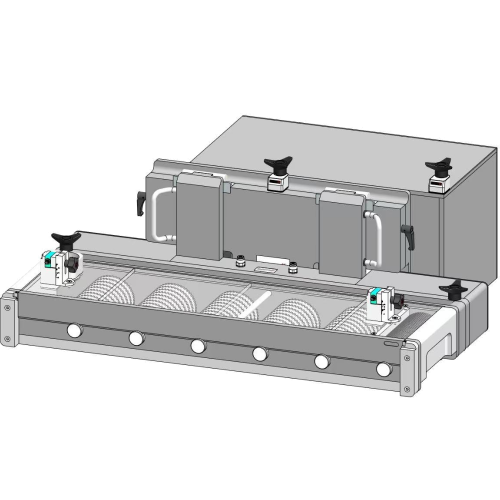
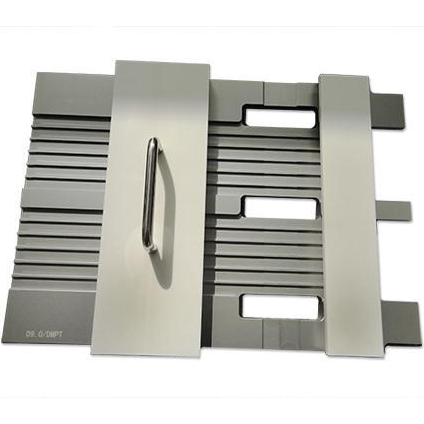
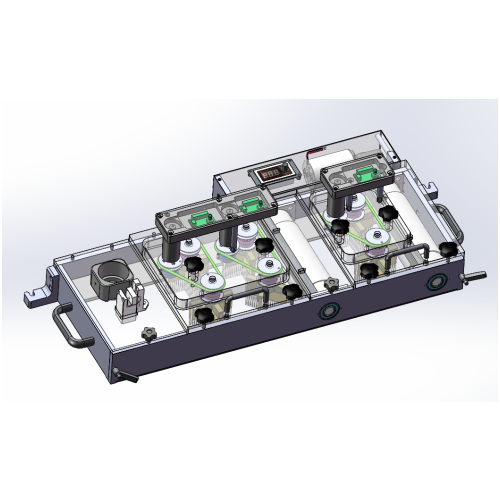
Packaging tools are essential systems and equipment used across industries to enclose, protect, and prepare products for storage, transportation, and sale. These tools span a wide range of machinery and devices, from manual hand-held instruments to fully automated production lines, each designed to meet specific packaging demands with precision and efficiency. At their core, packaging tools serve three primary functions: containment, protection, and presentation. They ensure that products reach end users in perfect condition while maintaining brand integrity and meeting regulatory standards. Modern packaging tools incorporate advanced technologies such as servo-driven motion control, programmable logic controllers (PLCs), vision inspection systems, and smart sensors that monitor performance in real time. These technological features allow operators to achieve consistent output quality, reduce material waste, and adapt quickly to changing production requirements. Many packaging tools now support integration with manufacturing execution systems (MES) and enterprise resource planning (ERP) platforms, enabling seamless data flow across the supply chain. The applications of packaging tools are remarkably diverse. In the food and beverage industry, they handle everything from filling and sealing to labeling and case packing, ensuring hygiene compliance and extended shelf life. In pharmaceuticals, packaging tools meet strict regulatory requirements by providing tamper-evident seals, precise dosage packaging, and full traceability. Consumer goods manufacturers rely on packaging tools to deliver visually appealing, retail-ready packages at high speeds. E-commerce businesses use them to automate fulfillment processes, reducing labor costs and shipping errors. Industrial sectors depend on heavy-duty packaging tools to secure large components for long-distance transport. Whether you are running a small-batch artisan operation or a high-volume manufacturing facility, packaging tools provide the scalability and flexibility needed to grow. Their role in modern supply chains is not merely functional but strategic, directly influencing cost efficiency, customer satisfaction, and competitive positioning in the marketplace.

Popular Products

Packaging tools deliver real, measurable benefits that make a direct difference to your bottom line and daily operations. Here is a straightforward look at what these tools actually do for your business. First, packaging tools dramatically increase production speed. When you automate your packaging process, you eliminate the bottlenecks that come with manual labor. A single automated packaging line can process hundreds or even thousands of units per hour, far outpacing what any team of workers could achieve by hand. This means you fulfill orders faster, meet tight deadlines with confidence, and scale output during peak seasons without scrambling for extra staff. Second, packaging tools reduce operational costs over time. The upfront investment pays back quickly because you spend less on labor, generate less material waste, and experience fewer costly errors. Automated systems apply the exact right amount of packaging material every time, cutting down on overuse and reducing your material spend month after month. Fewer mistakes also mean fewer returns, replacements, and customer complaints, all of which eat into your margins. Third, packaging tools improve product protection. Consistent, machine-applied packaging creates a uniform seal and structure that manual packing simply cannot match. Your products arrive at their destination intact, which protects your reputation and builds customer trust. Whether you are shipping fragile electronics, perishable food items, or precision industrial components, the right packaging tools ensure every item is secured properly before it leaves your facility. Fourth, packaging tools support quality control. Many modern systems include built-in inspection features such as checkweighers, metal detectors, and vision cameras that catch defects before products ship. This proactive approach to quality saves you from costly recalls and regulatory penalties, especially in industries like food, beverage, and pharmaceuticals where compliance is non-negotiable. Fifth, packaging tools give your business flexibility. Today's equipment is designed to handle multiple product sizes, shapes, and packaging formats with minimal changeover time. You can switch between product lines quickly, respond to new market demands, and introduce new packaging designs without investing in entirely new machinery. This adaptability is a genuine competitive advantage in fast-moving markets. Sixth, packaging tools enhance workplace safety. Repetitive manual packaging tasks are a leading cause of workplace injuries, including repetitive strain injuries and accidents involving sharp materials or heavy loads. Automating these tasks removes workers from hazardous conditions and lets your team focus on higher-value, more engaging work. A safer workplace also means lower insurance costs and better employee retention. Seventh, packaging tools support sustainability goals. Modern equipment is engineered to minimize energy consumption and material usage. By using only what is needed and reducing scrap, you lower your environmental footprint and align with the growing consumer demand for responsible business practices. Some packaging tools are also compatible with recyclable and biodegradable materials, giving you more options to build an eco-friendly packaging strategy. In summary, packaging tools are not just machines. They are strategic assets that help you work smarter, protect your products, satisfy your customers, and grow your business sustainably.

Latest News

What are cardboard packing boxes and how do they work?

25

May

What are cardboard packing boxes and how do they work?

When businesses and individuals need a reliable, cost-effective, and versatile solution for protecting goods during storage or transit, cardboard packing boxes consistently emerge as the go-to choice. These containers are constructed from layers of p...
View More
How does a mini tablet press machine improve production?

25

May

How does a mini tablet press machine improve production?

In pharmaceutical manufacturing, nutraceutical production, and even chemical processing, the ability to compress powders into uniform, consistent tablets at scale is a foundational requirement. A mini tablet press machine has emerged as a transformat...
View More
How Does Press Tooling Design Impact Production Efficiency?

25

May

How Does Press Tooling Design Impact Production Efficiency?

In high-volume manufacturing environments, the design of Press Tooling is one of the most consequential engineering decisions a production team can make. From cycle time to scrap rate, from die longevity to operator safety, the geometry, material sel...
View More
How Does Blister Packing Tooling Improve Production Speed?

25

May

How Does Blister Packing Tooling Improve Production Speed?

In high-volume pharmaceutical and consumer goods manufacturing, every second on the production line carries real cost. When facilities look for ways to accelerate output without compromising quality, the conversation almost always returns to the same...
View More

Get a Free Quote

Our representative will contact you soon.
Email
Name
Company Name
Message
0/1000

packaging tools

Precision Automation That Scales With Your Production Demands

Precision Automation That Scales With Your Production Demands

One of the most compelling reasons businesses invest in packaging tools is their ability to deliver precision automation that grows alongside your operation. Unlike manual processes that are inherently inconsistent and difficult to scale, modern packaging tools are engineered to perform the same task with the same level of accuracy thousands of times per shift, day after day, without fatigue or variation. This precision is not just about speed. It is about reliability. When every package is sealed, filled, labeled, or wrapped to the exact same specification, you eliminate the variability that leads to product damage, customer complaints, and costly rework. For businesses operating in regulated industries such as food production or pharmaceuticals, this consistency is not optional. It is a compliance requirement. Packaging tools equipped with servo motors and programmable controllers can be fine-tuned to handle products of different sizes and weights without sacrificing accuracy. The scalability aspect is equally important. As your business grows, your packaging tools grow with you. Many systems are modular by design, meaning you can add components, increase line speeds, or integrate new capabilities without replacing your entire setup. This protects your initial investment and gives you a clear, cost-effective path to expansion. Small and mid-sized businesses benefit enormously from this scalability because they can start with a configuration that fits their current volume and upgrade incrementally as demand increases. Large enterprises benefit from the ability to run multiple high-speed lines simultaneously, all maintaining the same output quality. The automation built into modern packaging tools also reduces your dependence on manual labor for repetitive tasks. This is not about replacing people. It is about deploying your workforce more strategically. When machines handle the repetitive, physically demanding work, your team can focus on quality oversight, process improvement, and customer service. The result is a more productive, more engaged workforce and a packaging operation that consistently delivers the quality your customers expect. Investing in precision automation through packaging tools is one of the most impactful decisions a production-focused business can make, delivering returns that compound over time through reduced waste, lower labor costs, and higher throughput.
Versatile Compatibility Across Diverse Industries and Product Types

Versatile Compatibility Across Diverse Industries and Product Types

A defining strength of today's packaging tools is their remarkable versatility. These systems are not built for a single product or a single industry. They are designed to adapt, making them valuable assets for businesses across a wide spectrum of sectors and product categories. In the food and beverage industry, packaging tools handle everything from liquid filling and gas flushing to shrink wrapping and multipack bundling. They meet strict hygiene standards, operate in washdown environments, and integrate with date coding and traceability systems to satisfy food safety regulations. In pharmaceuticals and healthcare, packaging tools provide blister packing, bottle filling, tamper-evident sealing, and serialization capabilities that comply with international regulatory frameworks. The precision and documentation these tools provide are critical for patient safety and audit readiness. Consumer goods manufacturers use packaging tools to create shelf-ready displays, apply promotional labels, and package products in a wide variety of formats including pouches, boxes, bottles, and tubes. The ability to switch between formats quickly is a major advantage in a retail environment where packaging design changes frequently to capture consumer attention. E-commerce and logistics companies rely on packaging tools to automate box erecting, void fill insertion, sealing, and labeling, dramatically reducing the time and labor required to process high volumes of individual orders. Industrial manufacturers use heavy-duty packaging tools to wrap, strap, and palletize large components, ensuring they survive long-distance transport without damage. What makes this versatility truly valuable is the ease of changeover. Modern packaging tools are designed with quick-release components, tool-free adjustments, and intuitive operator interfaces that allow production teams to switch between product lines in minutes rather than hours. This minimizes downtime and maximizes the productive use of your equipment investment. Whether your products are small and delicate or large and heavy, liquid or solid, retail or industrial, there are packaging tools specifically engineered to handle them with care, speed, and consistency. This broad compatibility makes packaging tools a universally relevant investment for any business that moves physical products.
Smart Technology Integration for Real-Time Monitoring and Continuous Improvement

Smart Technology Integration for Real-Time Monitoring and Continuous Improvement

The most advanced packaging tools available today are not just mechanical systems. They are intelligent platforms that connect your packaging operation to the broader digital infrastructure of your business. This smart technology integration is transforming how companies manage quality, efficiency, and continuous improvement on the production floor. At the heart of this capability is real-time monitoring. Modern packaging tools are equipped with sensors, cameras, and data collection modules that track every aspect of the packaging process as it happens. Line speed, fill weights, seal integrity, label placement accuracy, reject rates, and machine uptime are all captured and displayed on operator dashboards in real time. This visibility allows your team to identify and address issues immediately, before they escalate into costly downtime or quality failures. Beyond real-time monitoring, smart packaging tools generate rich historical data that supports continuous improvement initiatives. By analyzing trends in machine performance, material consumption, and defect rates, your engineering and operations teams can identify root causes of inefficiency and implement targeted improvements. Over time, this data-driven approach leads to measurable gains in overall equipment effectiveness (OEE), which is the gold standard metric for manufacturing productivity. Integration with enterprise systems takes this capability even further. When your packaging tools communicate directly with your MES or ERP platform, production data flows automatically into your business systems without manual entry. This eliminates transcription errors, accelerates reporting, and gives management accurate, up-to-date visibility into production performance at any time. Predictive maintenance is another powerful benefit of smart packaging tools. By monitoring motor temperatures, vibration levels, and cycle counts, the system can alert maintenance teams to potential failures before they occur. This shifts your maintenance strategy from reactive to proactive, reducing unplanned downtime and extending the service life of your equipment. For businesses committed to lean manufacturing, sustainability, or continuous improvement methodologies, smart packaging tools provide the data foundation that makes these programs effective. They turn your packaging line from a cost center into a source of competitive intelligence, helping you make better decisions, faster, with confidence grounded in real operational data.


Get a Free Quote

Our representative will contact you soon.
Email
Name
Company Name
Message
0/1000