Turret Systems: Precision Multi-Tool Machining Solutions for Enhanced Manufacturing Efficiency

Get a Free Quote

Our representative will contact you soon.
Email
Name
Company Name
Message
0/1000

turret

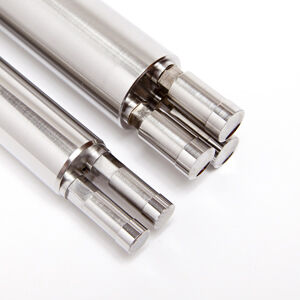
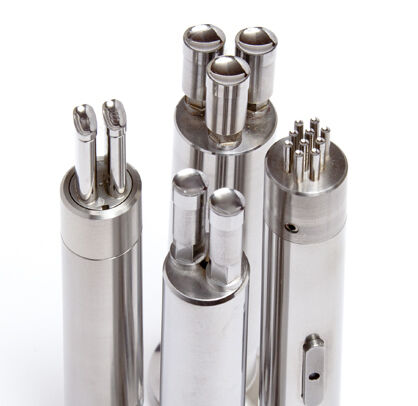
A turret represents a sophisticated rotary tooling system that revolutionizes machining operations by enabling multiple cutting tools to be mounted and indexed precisely during manufacturing processes. This mechanical device serves as a critical component in modern CNC lathes and machining centers, fundamentally transforming how manufacturers approach production efficiency and versatility. The turret functions as a rotating tool holder that can accommodate numerous cutting instruments simultaneously, allowing operators to switch between different tools rapidly without manual intervention. This automated tool-changing capability significantly reduces machine downtime and enhances overall productivity in manufacturing environments. The primary function of a turret involves securing multiple cutting tools in predetermined positions around its circumference or face, then rotating to present the required tool to the workpiece at precisely the right moment. Modern turret systems incorporate advanced indexing mechanisms that ensure each tool arrives at the cutting position with exceptional accuracy, typically within microns of the intended location. The technological sophistication of contemporary turret designs includes servo-driven positioning systems, hydraulic clamping mechanisms, and integrated coolant delivery channels that supply lubricant directly to the cutting zone. These features work in concert to maintain consistent machining quality while extending tool life and reducing operational costs. Turret applications span diverse industries including aerospace, automotive, medical device manufacturing, and general engineering where complex components require multiple machining operations. The versatility of turret-equipped machines enables manufacturers to perform drilling, boring, turning, threading, and face milling operations without repositioning the workpiece, thereby maintaining tight tolerances and reducing cumulative errors. Whether deployed in high-volume production environments or job shops handling varied custom work, the turret provides manufacturers with the flexibility to adapt quickly to changing production requirements while maintaining exceptional quality standards throughout the manufacturing process.

New Product Releases

The implementation of a turret system delivers substantial time savings that directly impact your bottom line by dramatically reducing the intervals between different machining operations. Instead of stopping production to manually change tools, the turret rotates automatically to position the next required cutting instrument, completing tool changes in mere seconds rather than minutes. This rapid tool indexing capability allows you to complete complex parts requiring multiple operations in a single setup, eliminating the need to remove and reposition workpieces between different machines. The consistency and repeatability that turret systems provide ensures every part meets your specifications with minimal variation, reducing scrap rates and rework costs that erode profitability. Your operators gain significant productivity advantages because the turret eliminates physically demanding manual tool changes, allowing them to focus on quality control and process optimization rather than repetitive mechanical tasks. The economic benefits extend beyond direct time savings, as turret-equipped machines reduce your facility's footprint requirements by consolidating multiple operations onto a single platform. You can produce intricate components that would traditionally require three or four separate machines using just one turret-equipped system, reducing capital equipment investments and maintenance overhead. The precision positioning capabilities inherent in modern turret designs ensure that dimensional accuracy remains consistent throughout production runs, building customer confidence in your manufacturing capabilities. Energy efficiency improves because you operate fewer machines to accomplish the same production volume, reducing utility costs while supporting sustainability initiatives. The flexibility of turret systems allows you to respond quickly to design changes or new product introductions without extensive retooling, providing competitive advantages in dynamic markets. Training requirements decrease as operators learn to manage one versatile machine rather than multiple specialized systems, reducing onboarding time for new employees. Your inventory management becomes simpler because tools remain mounted in the turret ready for use, rather than requiring storage systems and procedures for frequently swapped tooling. The automation capabilities of turret systems integrate seamlessly with modern manufacturing execution systems, providing real-time production data that supports informed decision-making and continuous improvement initiatives. Safety improvements emerge as operators spend less time in proximity to moving machinery during tool changes, reducing workplace injury risks and associated costs. The long-term durability of quality turret systems ensures years of reliable service with appropriate maintenance, protecting your capital investment while delivering consistent performance that supports customer satisfaction and business growth.

Latest News

What is a mini tablet press machine and how does it work?

25

May

What is a mini tablet press machine and how does it work?

A mini tablet press machine is a compact, precision-driven piece of equipment designed to compress powdered or granulated materials into uniform tablet forms. Whether used in pharmaceutical research, nutraceutical development, or small-scale chemical...
View More
How does a mini tablet press machine improve production?

25

May

How does a mini tablet press machine improve production?

In pharmaceutical manufacturing, nutraceutical production, and even chemical processing, the ability to compress powders into uniform, consistent tablets at scale is a foundational requirement. A mini tablet press machine has emerged as a transformat...
View More
How do packaging machine components work together?

25

May

How do packaging machine components work together?

Understanding how packaging machine components interact is fundamental to running efficient, reliable production lines. Every element within a packaging system—from the feeding mechanism to the sealing unit—is engineered to perform a prec...
View More
How Does Press Tooling Quality Affect Final Product Results?

25

May

How Does Press Tooling Quality Affect Final Product Results?

In precision manufacturing, the quality of Press Tooling is one of the most consequential variables in determining whether a final product meets its dimensional, structural, and aesthetic specifications. Every stamped, formed, or punched component th...
View More

Get a Free Quote

Our representative will contact you soon.
Email
Name
Company Name
Message
0/1000

turret

Exceptional Multi-Tool Capacity and Rapid Indexing Performance

Exceptional Multi-Tool Capacity and Rapid Indexing Performance

The defining characteristic that sets turret systems apart from conventional machining approaches lies in their remarkable ability to house extensive tool libraries while delivering lightning-fast access to each cutting instrument. Modern turret designs accommodate anywhere from eight to twenty-four or more individual tools depending on configuration, providing manufacturers with unprecedented operational flexibility within a compact mechanical package. This substantial tool capacity means you can dedicate specific positions to frequently used cutting tools while reserving others for specialized operations, creating a comprehensive machining solution that handles diverse part geometries without constant reconfiguration. The indexing mechanism represents the technological heart of the turret system, employing precision gear trains, servo motors, or hydraulic actuators to rotate the tool holder to exact angular positions with exceptional repeatability. Advanced turret systems achieve positioning accuracy within 0.001 degrees, ensuring that each tool arrives at the cutting position with microscopic precision that directly translates to superior part quality. The speed at which modern turret systems complete tool changes has reached impressive levels, with many designs executing full indexing movements in under one second, minimizing non-productive time and maximizing the percentage of each hour devoted to actual material removal. This rapid response capability becomes particularly valuable in high-mix manufacturing environments where parts require frequent tool changes to accommodate varying features and dimensional requirements. The mechanical robustness engineered into quality turret systems ensures reliable performance even under demanding production conditions, with heavy-duty bearings, reinforced housings, and precision-ground contact surfaces that maintain accuracy through millions of indexing cycles. Tool clamping mechanisms within the turret provide exceptional rigidity that prevents tool movement during heavy cutting operations, eliminating the vibration and chatter that compromise surface finish and dimensional accuracy. The versatility extends to accommodating various tool holder standards, allowing you to utilize existing tooling investments while gradually upgrading to more advanced cutting technologies as your operations evolve. Coolant integration directly through the turret body delivers lubricant precisely where needed, improving chip evacuation and extending tool life while reducing fluid consumption compared to flood coolant systems.
Superior Precision and Repeatability for Consistent Quality Output

Superior Precision and Repeatability for Consistent Quality Output

The engineering excellence embodied in modern turret systems fundamentally transforms manufacturing quality by delivering positioning accuracy and repeatability that consistently meet or exceed the most stringent tolerance requirements across virtually any production volume. Precision begins with the turret's indexing mechanism, which employs sophisticated sensors and control algorithms to verify that each tool arrives at the exact intended position before allowing machining operations to commence. This position verification process happens automatically within milliseconds, providing fail-safe assurance that prevents costly errors while maintaining production flow. The mechanical design of quality turret systems incorporates precision-ground locating surfaces that create positive engagement between rotating and stationary components, eliminating any possibility of positional drift during cutting operations. These carefully engineered interfaces maintain their accuracy through extended service life because they utilize hardened materials and geometric designs that distribute contact forces evenly, minimizing wear patterns that could compromise precision over time. The thermal stability engineered into advanced turret designs addresses the reality that machining operations generate substantial heat that could cause dimensional changes in less sophisticated systems. Strategic material selection, integrated cooling passages, and computer-modeled structural designs work together to minimize thermal expansion effects, ensuring that the turret maintains consistent positioning accuracy regardless of operational duty cycles or ambient temperature fluctuations. The control systems governing modern turret operations incorporate sophisticated algorithms that compensate for known variables such as tool length differences, programmed offsets, and wear patterns, automatically adjusting positioning commands to maintain dimensional accuracy throughout tool life. This intelligent compensation capability means parts produced at the beginning of a production run maintain the same dimensional consistency as those manufactured after extended operation, reducing statistical variation and improving process capability indices. The repeatability of turret positioning directly impacts your ability to achieve consistent surface finishes across production quantities, as each tool approaches the workpiece from precisely the same angle and position every time it indexes into the cutting position. This consistency eliminates the variation inherent in manual tool changes or less sophisticated automated systems, building customer confidence in your manufacturing capabilities while reducing inspection requirements and associated quality control costs throughout your operation.
Enhanced Operational Efficiency and Reduced Manufacturing Costs

Enhanced Operational Efficiency and Reduced Manufacturing Costs

The financial advantages delivered by turret-equipped machining systems extend far beyond simple productivity measurements, creating comprehensive operational improvements that enhance profitability through multiple interconnected mechanisms. Labor efficiency gains represent perhaps the most immediately visible benefit, as turret automation eliminates the need for operators to manually change tools between operations, allowing skilled personnel to oversee multiple machines simultaneously or focus attention on value-added activities such as process optimization and quality verification. This productivity multiplication means you can increase output without proportionally increasing labor costs, improving your competitive position in cost-sensitive markets while maintaining the quality standards that differentiate your products. Machine utilization rates improve dramatically because turret systems minimize non-productive time, keeping spindles cutting material for a higher percentage of available production hours compared to conventional approaches that require extended periods for manual tool changes and workpiece repositioning. The economic impact of improved utilization becomes substantial when calculated across multiple shifts and production days, as even small percentage improvements in productive time compound into significant additional capacity that can be directed toward increased sales or reduced overtime requirements. Setup time reductions emerge as another significant advantage, particularly in job shop environments handling diverse part families, because tools can remain mounted in the turret across multiple jobs, eliminating repetitive tool loading and offset verification procedures. This setup efficiency allows you to accept smaller batch sizes economically, opening opportunities in markets that value quick turnaround and flexibility while maintaining healthy profit margins on each order. Quality-related cost savings accumulate through reduced scrap and rework because the precision and repeatability of turret systems minimize dimensional variation and eliminate many common sources of manufacturing defects. The consistent positioning accuracy means fewer parts fall outside specification limits, reducing material waste and the labor costs associated with sorting, reworking, or disposing of non-conforming products. Energy consumption decreases on a per-part basis because turret-equipped machines consolidate multiple operations that would traditionally require separate equipment, each with its own power requirements for motors, hydraulics, coolant systems, and facility conditioning. Maintenance costs remain manageable because quality turret systems feature durable construction with accessible service points, allowing routine maintenance to be completed quickly during scheduled downtime rather than requiring extensive teardown procedures or specialized technician intervention for basic upkeep activities.


Get a Free Quote

Our representative will contact you soon.
Email
Name
Company Name
Message
0/1000