Blister Packing Printing Machine - Advanced Integration for Pharmaceutical and Consumer Packaging Solutions

Get a Free Quote

Our representative will contact you soon.
Email
Name
Company Name
Message
0/1000

blister packing printing machine

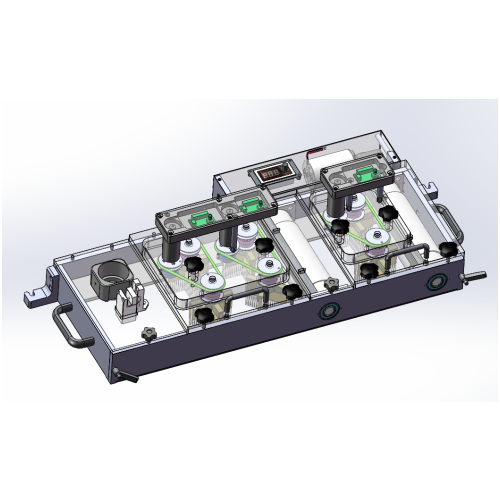
The blister packing printing machine represents a sophisticated integration of packaging and printing technologies designed to streamline pharmaceutical and consumer goods production processes. This advanced equipment combines the capabilities of forming blister cavities, filling products, sealing packages, and printing essential information directly onto the packaging material in one continuous operation. The primary functions of this machine include thermoforming plastic cavities that securely hold tablets, capsules, or small items, precisely positioning products into these formed pockets, sealing them with aluminum foil or paperboard backing, and simultaneously printing batch numbers, expiration dates, barcodes, product names, and regulatory information. The technological features that distinguish modern blister packing printing machines include servo-driven systems that ensure precise synchronization between forming, filling, sealing, and printing stations, touchscreen interfaces with programmable logic controllers that allow operators to adjust parameters quickly, high-resolution printing systems capable of producing sharp text and graphics, automatic rejection mechanisms that detect and remove defective packages, and modular designs that accommodate different blister sizes and configurations. These machines typically operate at impressive speeds, processing anywhere from 60 to 400 blisters per minute depending on the model and complexity of the packaging. Applications span multiple industries, with pharmaceutical manufacturing being the predominant sector utilizing blister packing printing machines for tablets, capsules, and medical devices. Consumer electronics companies employ these systems for packaging small components like batteries, memory cards, and accessories. The food industry uses blister packaging with printed information for items such as chewing gum, candies, and single-serve condiments. Hardware and toy manufacturers also benefit from this technology for retail-ready packaging that protects products while displaying them attractively with printed branding and instructions clearly visible to consumers at the point of sale.


New Products

Investing in a blister packing printing machine delivers substantial operational and financial benefits that directly impact your bottom line and market competitiveness. The most immediate advantage comes from the elimination of separate printing processes, as the machine completes packaging and printing in a single pass through the equipment, reducing labor costs by up to 40 percent compared to traditional methods that require manual labeling or separate printing stations. This integrated approach dramatically increases production efficiency, allowing manufacturers to achieve output rates that would require multiple standalone machines and significantly more floor space. The precision of automated printing eliminates human error in applying labels or stamps, ensuring that every package displays accurate information including batch codes, manufacturing dates, and expiration information that meets strict regulatory requirements without the risk of misplaced or illegible markings. Material waste decreases substantially because the machine calculates exact quantities needed and synchronizes printing with package formation, preventing the costly mistakes that occur when pre-printed materials become obsolete due to information changes or when separate labeling processes result in misalignment and rejected products. Quality control improves dramatically as integrated sensors continuously monitor printing quality, package seal integrity, and proper product placement, automatically rejecting any items that fail to meet specifications before they enter the distribution chain. This real-time quality assurance protects brand reputation and reduces costly recalls that damage customer trust and require expensive remediation efforts. Flexibility represents another critical advantage, as modern blister packing printing machines accommodate rapid changeovers between different products, package sizes, and printed designs through digital controls and adjustable tooling, allowing manufacturers to respond quickly to market demands and seasonal variations without lengthy downtime. The compact footprint of integrated systems frees valuable production space for other operations or additional equipment, particularly important for facilities operating in expensive urban locations or those planning expansion. Energy consumption per packaged unit drops significantly compared to running multiple separate machines, contributing to sustainability goals while reducing utility expenses. Maintenance becomes more straightforward with a single integrated system rather than coordinating service across multiple pieces of equipment, and staff training simplifies when operators learn one comprehensive machine rather than mastering several different systems. The professional appearance of directly printed packaging enhances product presentation, making items more attractive to retailers and consumers while conveying quality and attention to detail that strengthens brand positioning in competitive markets.

Tips And Tricks

How does a mini tablet press machine improve production?

25

May

How does a mini tablet press machine improve production?

In pharmaceutical manufacturing, nutraceutical production, and even chemical processing, the ability to compress powders into uniform, consistent tablets at scale is a foundational requirement. A mini tablet press machine has emerged as a transformat...
View More
What is Press Tooling and How Does It Work in Manufacturing?

25

May

What is Press Tooling and How Does It Work in Manufacturing?

In modern manufacturing, precision, repeatability, and efficiency are not optional — they are the foundation of competitive production. Press Tooling sits at the heart of this foundation, enabling manufacturers across industries to form, cut, s...
View More
How Does Press Tooling Design Impact Production Efficiency?

25

May

How Does Press Tooling Design Impact Production Efficiency?

In high-volume manufacturing environments, the design of Press Tooling is one of the most consequential engineering decisions a production team can make. From cycle time to scrap rate, from die longevity to operator safety, the geometry, material sel...
View More
How Does Blister Packing Tooling Improve Production Speed?

25

May

How Does Blister Packing Tooling Improve Production Speed?

In high-volume pharmaceutical and consumer goods manufacturing, every second on the production line carries real cost. When facilities look for ways to accelerate output without compromising quality, the conversation almost always returns to the same...
View More

Get a Free Quote

Our representative will contact you soon.
Email
Name
Company Name
Message
0/1000

blister packing printing machine

Advanced Integration Technology Maximizes Production Efficiency

Advanced Integration Technology Maximizes Production Efficiency

The revolutionary integration technology embedded within the blister packing printing machine fundamentally transforms manufacturing workflows by consolidating four traditionally separate operations into one seamless automated process. This technological advancement eliminates the bottlenecks and inefficiencies inherent in conventional production lines where forming, filling, sealing, and printing occur at different stations requiring material handling between each step. The machine employs sophisticated servo motor systems that precisely synchronize every component, ensuring that plastic film advances at exactly the right moment for heating and forming, products drop into cavities with millimeter accuracy, sealing materials apply with consistent pressure and temperature, and printing heads fire at precisely the correct instant to place information exactly where intended on every package. This synchronization happens at remarkable speeds without sacrificing accuracy, with some models processing over 300 blister cavities per minute while maintaining print resolution sharp enough for barcodes that scan reliably and text that remains legible even on small packages. The control systems utilize advanced algorithms that continuously monitor dozens of parameters including temperature zones, forming depth, sealing pressure, and print registration, making microsecond adjustments that maintain optimal performance even as environmental conditions fluctuate throughout production shifts. Operators interact with intuitive touchscreen interfaces that display real-time production data, allowing quick identification of trends and immediate response to any variations before they result in defective products. The integration extends to data management systems that connect with enterprise resource planning software, automatically recording batch information, tracking material consumption, and generating compliance documentation required by regulatory agencies. This connectivity enables complete traceability from raw materials through finished packaged products, critical for industries like pharmaceuticals where accountability requirements demand detailed records of every manufacturing step. The modular architecture of integrated blister packing printing machines allows manufacturers to configure systems that match their specific production requirements, selecting from various printing technologies including thermal transfer, inkjet, or laser marking depending on the type of information needed and substrate characteristics. Quick-change tooling systems enable transitions between different blister configurations in minutes rather than hours, dramatically improving overall equipment effectiveness by minimizing downtime and allowing economical production of smaller batch sizes that meet just-in-time inventory strategies.
Superior Print Quality and Compliance Assurance

Superior Print Quality and Compliance Assurance

The printing capabilities integrated into modern blister packing printing machines deliver exceptional quality that meets the stringent requirements of regulated industries while providing the marketing impact that drives consumer purchasing decisions. Unlike adhesive labels that can peel, smudge, or become illegible over time, direct printing onto blister packaging creates permanent markings that remain sharp and readable throughout the product lifecycle from manufacturing through distribution to end consumer use. The printing systems employ high-resolution technologies capable of producing text as small as one millimeter in height with crisp edges and consistent ink density, essential for meeting pharmaceutical regulations that mandate specific font sizes and readability standards for active ingredients, dosages, warnings, and usage instructions. Barcode printing achieves the precision necessary for reliable scanning in automated pharmacy systems and retail checkout environments, with verification systems built into the machine that confirm each code meets international standards before allowing the package to proceed through production. Variable data printing functionality allows each individual blister package to receive unique information including sequential serial numbers for track-and-trace systems, specific expiration dates calculated from actual production time, and batch codes that link back to raw material lots and quality control test results. This capability proves invaluable for product authentication programs that combat counterfeiting, particularly important for pharmaceutical products and premium consumer goods where unauthorized copies represent significant threats to brand value and consumer safety. The printing systems accommodate multiple colors when required for brand logos, color-coded dosage information, or eye-catching graphics that differentiate products on crowded retail shelves, all while maintaining registration accuracy that keeps design elements properly aligned despite the continuous high-speed motion of packaging material through the machine. Ink formulation options include food-safe compositions for edible product packaging, fade-resistant pigments for products exposed to light during extended shelf life, and specialized formulations that adhere reliably to challenging substrates like certain metallic films or textured materials. Automatic print inspection systems using high-resolution cameras compare each printed package against stored reference images, detecting missing characters, ink splatter, incorrect data, or poor print quality, then triggering rejection mechanisms that remove defective items from the production stream before they reach packaging operations.
Cost Reduction Through Operational Excellence

Cost Reduction Through Operational Excellence

The financial benefits delivered by blister packing printing machines extend far beyond the initial equipment investment, generating ongoing cost reductions that significantly improve manufacturing profitability and competitive positioning. Labor savings emerge as one of the most substantial advantages, as the automated integration of printing eliminates positions previously required for applying labels, operating separate printing equipment, inspecting printed materials, and handling products between different processing stations. A typical installation reduces staffing requirements by three to five operators per shift while simultaneously increasing throughput, creating a compelling return on investment that often achieves payback within 18 to 24 months of operation. Material cost optimization occurs through multiple mechanisms, starting with the elimination of pre-printed packaging materials that frequently become obsolete when product information changes, regulatory requirements update, or marketing campaigns shift, forcing manufacturers to write off unused inventory or continue using outdated materials that confuse customers and potentially violate regulations. Digital printing directly onto packaging means manufacturers maintain inventory of only blank substrate materials that work across multiple products, dramatically reducing warehousing costs and minimizing waste from expired or superseded printed stocks. The precision of integrated systems reduces reject rates substantially compared to manual or semi-automated processes where misaligned labels, incorrect information, or handling damage create losses that compound throughout production runs. Energy efficiency improvements result from consolidating operations that previously required multiple machines each consuming power, compressed air, and climate control resources, with modern integrated systems designed specifically to minimize energy consumption per packaged unit through optimized heating cycles, efficient motor technologies, and intelligent standby modes that reduce consumption during brief production pauses. Maintenance costs decrease when manufacturers service one integrated machine rather than maintaining multiple separate pieces of equipment, each with its own spare parts inventory, service schedules, and specialized technical requirements. Downtime costs that plague production facilities operating disconnected equipment diminish dramatically because integrated blister packing printing machines eliminate the cascading delays that occur when one machine in a multi-step process experiences problems, forcing upstream and downstream equipment to idle while waiting for repairs. Quality-related costs including customer complaints, product recalls, regulatory fines, and brand damage decrease substantially when automated systems with built-in verification eliminate the human errors and process inconsistencies that create defective products reaching the market. The flexibility of modern equipment reduces changeover costs by minimizing the time and materials wasted during transitions between different products, with some advanced systems completing full changeovers including new printing parameters in under 15 minutes compared to hours required for older technologies or separate printing operations.

Get a Free Quote

Our representative will contact you soon.
Email
Name
Company Name
Message
0/1000