Hot Foil Coder for Blister Machine - Permanent Coding Solutions for Pharmaceutical Packaging

Get a Free Quote

Our representative will contact you soon.
Email
Name
Company Name
Message
0/1000

hot foil coder for blister machine

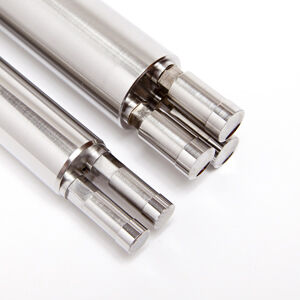
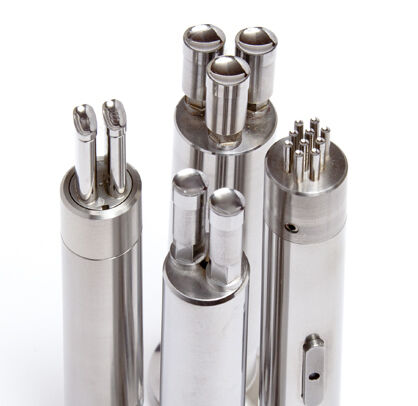
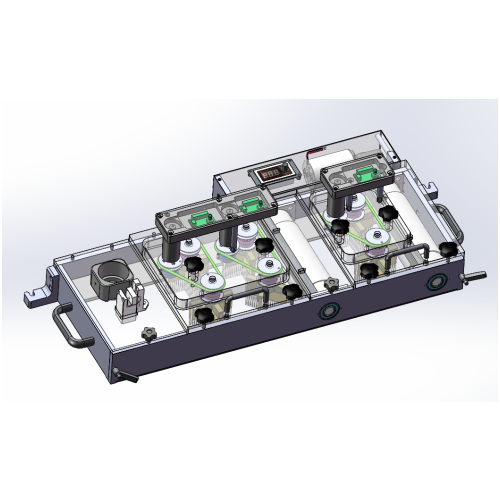
The hot foil coder for blister machine represents a critical piece of equipment in pharmaceutical and packaging industries, designed to apply permanent, high-quality codes and markings directly onto blister packaging materials. This specialized coding system utilizes heated metal type or dies that press metallic or pigmented foil onto the packaging surface, creating clear, durable impressions that include batch numbers, expiration dates, manufacturing codes, and other essential product information. The hot foil coder for blister machine operates through a precise thermal transfer process where controlled heat and pressure work together to ensure optimal foil adhesion to various substrate materials including PVC, PVDC, aluminum, and other blister packaging films. Modern hot foil coding systems integrate seamlessly with existing blister packaging lines, offering manufacturers a reliable solution for meeting regulatory compliance requirements while maintaining production efficiency. These machines feature adjustable temperature controls, customizable printing heads, and sophisticated timing mechanisms that synchronize perfectly with blister machine operations. The hot foil coder for blister machine employs advanced technology to deliver consistent, legible markings that resist smudging, fading, and abrasion throughout the product lifecycle. Typical applications span across pharmaceutical tablets, capsules, medical devices, consumer goods, and food products that require tamper-evident packaging with permanent identification marks. The system supports multiple coding formats including alphanumeric characters, logos, barcodes, and serialization numbers, providing manufacturers with comprehensive marking capabilities. Installation flexibility allows the hot foil coder for blister machine to be configured for various production speeds and packaging formats, from small-batch specialty products to high-volume commercial manufacturing. The equipment's robust construction ensures long-term reliability in demanding production environments while maintaining minimal maintenance requirements. With increasing emphasis on product traceability and anti-counterfeiting measures, the hot foil coder for blister machine has become an indispensable component of modern packaging operations, delivering authentication features that protect brand integrity and consumer safety.


New Products

Implementing a hot foil coder for blister machine brings numerous practical benefits that directly impact your production efficiency and product quality. First and foremost, this technology delivers exceptional print permanence that cannot be easily removed or altered, providing superior security against tampering and counterfeiting attempts. Unlike ink-based systems that may smudge or fade over time, the metallic foil impression created by the hot foil coder for blister machine remains clearly visible throughout the entire product shelf life, ensuring regulatory compliance and consumer confidence. The coding process requires no drying time, allowing packaged products to proceed immediately to subsequent processing stages without production delays or concerns about smearing. This instant readiness significantly improves throughput and reduces bottlenecks in your packaging line. Operating costs remain remarkably low since the system uses only foil ribbon as a consumable material, eliminating expenses associated with solvents, inks, or frequent printhead replacements common in alternative coding technologies. The hot foil coder for blister machine operates reliably across wide temperature ranges and varying humidity conditions, maintaining consistent print quality regardless of environmental factors that often compromise other marking methods. Maintenance requirements are minimal, with simple cleaning procedures and long-lasting components that reduce downtime and service costs. The equipment adapts easily to format changes, allowing quick adjustments when switching between different product lines or packaging sizes, which enhances production flexibility and reduces changeover time. Print quality remains consistently sharp and professional, enhancing brand presentation and ensuring barcode readability for automated inventory systems. The hot foil coder for blister machine produces no emissions or waste byproducts beyond used foil ribbon, making it an environmentally responsible choice that simplifies compliance with workplace safety regulations. Energy consumption stays low compared to continuous-operation systems, contributing to reduced operational expenses. The technology proves particularly valuable for pharmaceutical applications where validation and documentation are critical, as the system provides reproducible results that satisfy stringent quality control standards. Operators find the equipment intuitive to use, with straightforward controls that minimize training time and reduce operator errors. The hot foil coder for blister machine integrates smoothly with existing production line controls and can communicate with enterprise systems for automated batch tracking and production reporting. Investment protection comes through durable construction and availability of replacement parts, ensuring the equipment serves your operation reliably for many years while maintaining consistent output quality that meets evolving industry standards and customer expectations.

Practical Tips

What is a mini tablet press machine and how does it work?

25

May

What is a mini tablet press machine and how does it work?

A mini tablet press machine is a compact, precision-driven piece of equipment designed to compress powdered or granulated materials into uniform tablet forms. Whether used in pharmaceutical research, nutraceutical development, or small-scale chemical...
View More
How Does Press Tooling Design Impact Production Efficiency?

25

May

How Does Press Tooling Design Impact Production Efficiency?

In high-volume manufacturing environments, the design of Press Tooling is one of the most consequential engineering decisions a production team can make. From cycle time to scrap rate, from die longevity to operator safety, the geometry, material sel...
View More
How Does Press Tooling Quality Affect Final Product Results?

25

May

How Does Press Tooling Quality Affect Final Product Results?

In precision manufacturing, the quality of Press Tooling is one of the most consequential variables in determining whether a final product meets its dimensional, structural, and aesthetic specifications. Every stamped, formed, or punched component th...
View More
Which Materials Work Best with Blister Packing Tooling?

25

May

Which Materials Work Best with Blister Packing Tooling?

Selecting the right material for Blister Packing Tooling is one of the most consequential decisions a pharmaceutical or consumer goods manufacturer can make. The material determines not only how well the tooling performs during forming, sealing, and ...
View More

Get a Free Quote

Our representative will contact you soon.
Email
Name
Company Name
Message
0/1000

hot foil coder for blister machine

Permanent Marking Technology for Maximum Product Security

Permanent Marking Technology for Maximum Product Security

The hot foil coder for blister machine utilizes advanced thermal transfer technology that creates permanent, tamper-resistant markings essential for pharmaceutical and consumer product packaging. This sophisticated system applies metallic or pigmented foil through precisely controlled heat and pressure, resulting in impressions that become integral with the packaging substrate rather than sitting on the surface like conventional inks. The permanence of these markings provides critical protection against product counterfeiting, a growing concern across global markets where fraudulent products threaten consumer safety and brand reputation. When you implement a hot foil coder for blister machine, each coded package receives an indelible identifier that cannot be removed without obvious damage to the packaging material, immediately alerting consumers and supply chain partners to potential tampering. This security feature proves particularly valuable for high-value pharmaceuticals and regulated products where authentication throughout distribution channels is mandatory. The coding process embeds information at a molecular level through heat activation, creating bonds between foil pigments and packaging materials that resist common environmental stresses including moisture exposure, temperature fluctuations, and mechanical abrasion during shipping and handling. Testing demonstrates that markings produced by the hot foil coder for blister machine maintain full legibility even after extended exposure to harsh conditions that would completely erase ink-based codes. Regulatory agencies worldwide recognize hot foil coding as a validated permanent marking method, simplifying compliance documentation and audit processes. The technology supports serialization initiatives required by pharmaceutical track-and-trace regulations, enabling unique identification codes on individual blister packs that facilitate supply chain transparency from manufacturer to end user. Manufacturing efficiency improves significantly because the permanent nature of hot foil markings eliminates the need for verification stations to confirm code quality after application, as the physical impression provides immediate visual confirmation of successful marking. Product recalls become more manageable when every package carries permanent batch and date codes that remain readable regardless of storage conditions or package age. Brand protection extends beyond anti-counterfeiting to include premium product presentation, as the metallic appearance of hot foil codes adds perceived value and professional aesthetics that enhance consumer perception. The hot foil coder for blister machine represents an investment in long-term product integrity, delivering security features that protect your business reputation while providing consumers with confidence in product authenticity and safety.
Versatile Integration with Multiple Packaging Materials and Formats

Versatile Integration with Multiple Packaging Materials and Formats

One of the most compelling advantages of the hot foil coder for blister machine is its exceptional versatility in handling diverse packaging materials and product configurations commonly used in pharmaceutical and consumer goods industries. This adaptability stems from sophisticated temperature control systems and adjustable pressure mechanisms that automatically compensate for variations in substrate thickness, material composition, and surface characteristics. Whether your production line processes standard PVC blisters, high-barrier PVDC films, aluminum lidding materials, or specialized pharmaceutical-grade laminates, the hot foil coder for blister machine delivers consistent, high-quality markings across all substrates without requiring extensive equipment adjustments or specialized consumables for each material type. This universal compatibility eliminates the need for multiple coding systems dedicated to specific packaging materials, significantly reducing capital investment and simplifying maintenance logistics. The equipment accommodates various blister configurations including standard cavity designs, specialized shapes for tablets and capsules, and custom formats for medical devices or consumer products. Production flexibility extends to coding placement options, with the hot foil coder for blister machine capable of applying marks on flat lidding surfaces, curved blister cavities, or edge seals depending on package design requirements and regulatory specifications. Changeover procedures between different products or packaging formats take minutes rather than hours, as the system features tool-free adjustments for printing head position, temperature settings, and timing parameters that synchronize with blister machine cycle speeds. Modern hot foil coder for blister machine models incorporate digital controls with memory storage for multiple product configurations, allowing operators to recall saved settings instantly when switching production runs, which minimizes setup errors and reduces material waste during changeover. The technology scales effectively across production speeds from small-batch specialty manufacturing running at modest rates to high-volume operations processing hundreds of blisters per minute, maintaining consistent code quality throughout the speed range. Integration capabilities extend to both new packaging line installations and retrofit applications for existing blister machines, with mounting configurations that adapt to available space constraints and production line layouts. The hot foil coder for blister machine communicates seamlessly with line control systems through standard industrial protocols, enabling coordinated operation with upstream and downstream equipment for optimized material flow and synchronized batch tracking. Customization options include multiple print head configurations for simultaneous coding at different locations, variable message capabilities for lot-specific information, and barcode printing functions that support automated inventory management. This comprehensive versatility makes the hot foil coder for blister machine a future-proof investment that accommodates business growth, product line expansion, and evolving packaging requirements without necessitating equipment replacement or substantial retrofitting expenses.
Cost-Effective Operation with Minimal Maintenance Requirements

Cost-Effective Operation with Minimal Maintenance Requirements

Financial considerations play a crucial role in equipment selection decisions, and the hot foil coder for blister machine delivers exceptional value through low operational costs and minimal maintenance demands that significantly improve total cost of ownership compared to alternative coding technologies. The fundamental economics begin with consumable expenses, where hot foil systems use only foil ribbon as the primary supply item, eliminating ongoing costs for inks, solvents, cleaning solutions, and frequent printhead replacements that burden ink-jet and continuous ink systems. Foil ribbon consumption remains remarkably efficient, with modern hot foil coder for blister machine models incorporating waste-reduction features that utilize only the foil area necessary for each impression, extending ribbon life and reducing material costs per coded package. The absence of liquid consumables eliminates inventory management complexities and storage requirements for temperature-sensitive or hazardous materials, simplifying procurement processes and reducing warehouse space allocation. Maintenance intervals for the hot foil coder for blister machine extend far beyond those of alternative technologies, with typical preventive maintenance schedules requiring only periodic cleaning and occasional replacement of wear components like heating elements or pressure springs that last through millions of coding cycles. The mechanical simplicity of thermal transfer coding means fewer complex subsystems prone to failure, resulting in higher equipment reliability and reduced downtime costs. When maintenance becomes necessary, procedures are straightforward enough for production staff to perform without specialized technical training, eliminating dependency on external service providers for routine upkeep. Spare parts availability and affordability further enhance the economic advantages, as the hot foil coder for blister machine uses standardized components rather than proprietary consumables that lock operators into single-source supply arrangements. Energy efficiency contributes additional cost savings, with heating elements consuming power only during actual coding operations rather than maintaining continuous operating temperatures like some alternative systems. Environmental compliance costs remain minimal since the technology produces no emissions requiring ventilation systems or waste disposal protocols, avoiding expenses associated with environmental permits and hazardous waste management. Production efficiency gains translate directly to financial benefits through reduced coding-related line stoppages, faster changeovers between products, and elimination of rework for smudged or illegible codes that plague ink-based systems. Quality control expenses decrease because the permanent, high-contrast markings from the hot foil coder for blister machine rarely require verification beyond visual confirmation, reducing inspection labor and eliminating automated vision system investments. Return on investment calculations consistently favor hot foil coding technology when total ownership costs are evaluated across equipment lifespan, with payback periods typically measured in months rather than years. The hot foil coder for blister machine represents a financially prudent choice that delivers reliable performance while controlling operational expenses, making it an ideal solution for manufacturers seeking to optimize packaging operations without compromising code quality or production efficiency.

Get a Free Quote

Our representative will contact you soon.
Email
Name
Company Name
Message
0/1000