Custom Pharmaceutical Tooling Design Solutions - Precision Manufacturing Tools for Pharmaceutical Production

Get a Free Quote

Our representative will contact you soon.
Email
Name
Company Name
Message
0/1000

custom pharmaceutical tooling design

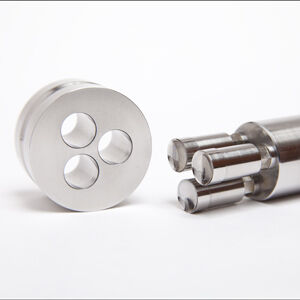
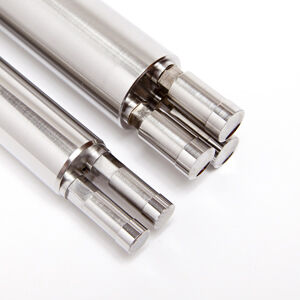
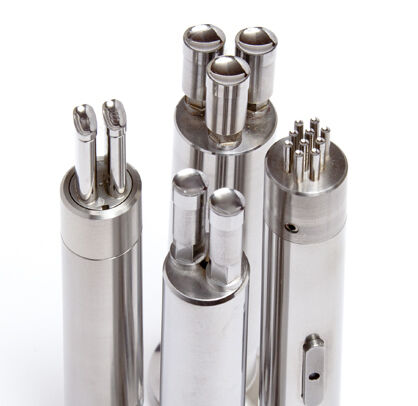
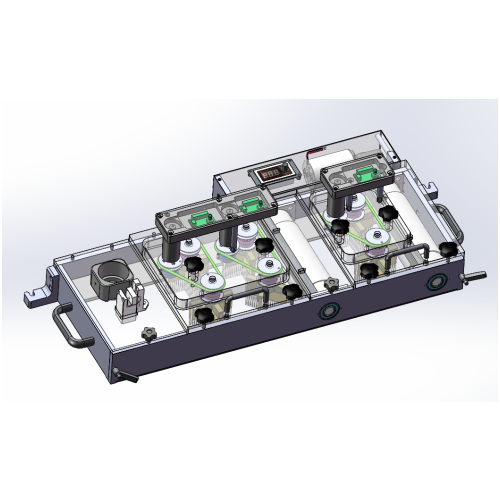
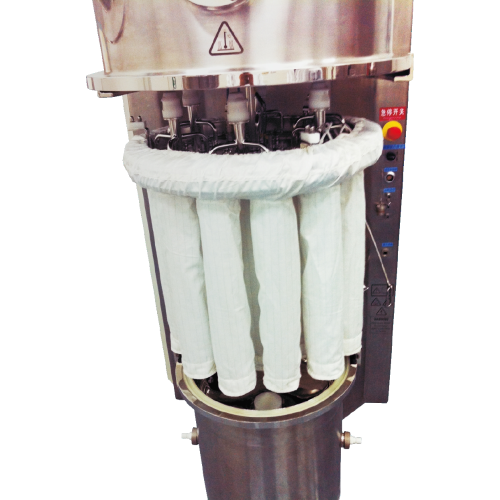
Custom pharmaceutical tooling design represents a specialized engineering solution that creates precise manufacturing components tailored specifically for pharmaceutical production requirements. This sophisticated approach involves developing dies, punches, molds, and other essential equipment that meet the exact specifications of pharmaceutical manufacturers. The custom pharmaceutical tooling design process begins with thorough analysis of production needs, material requirements, and regulatory compliance standards. Engineers work closely with pharmaceutical companies to understand their unique product characteristics, production volumes, and quality expectations. The custom pharmaceutical tooling design methodology incorporates advanced computer-aided design software, precision machining capabilities, and rigorous testing protocols to ensure optimal performance. These custom tools are engineered to produce tablets, capsules, and other pharmaceutical forms with consistent dimensions, weight accuracy, and surface finish quality. The custom pharmaceutical tooling design framework addresses critical factors including material compatibility, wear resistance, cleaning requirements, and maintenance accessibility. Modern custom pharmaceutical tooling design integrates innovative materials such as hardened steel alloys, carbide compositions, and specialized coatings that extend tool life and maintain product integrity. The design process considers operational efficiency, minimizing downtime during tool changes and maximizing production throughput. Custom pharmaceutical tooling design solutions accommodate various pharmaceutical manufacturing processes including compression, coating, encapsulation, and packaging operations. Each custom pharmaceutical tooling design project undergoes comprehensive validation to verify dimensional accuracy, surface quality, and compliance with pharmaceutical manufacturing standards. The application of custom pharmaceutical tooling design extends across multiple pharmaceutical sectors including generic drug manufacturing, specialty medications, nutritional supplements, and veterinary pharmaceuticals. This tailored approach ensures that manufacturing equipment perfectly aligns with specific product formulations, production scales, and quality control requirements that distinguish pharmaceutical operations.


New Product Recommendations

Choosing custom pharmaceutical tooling design delivers substantial practical benefits that directly impact production efficiency and product quality. First, precision customization ensures that every tool matches your exact product specifications, eliminating the compromises inherent in standard off-the-shelf solutions. This precision means your tablets maintain consistent weight, thickness, and appearance across millions of units, reducing waste and ensuring regulatory compliance. When you invest in custom pharmaceutical tooling design, you gain tools engineered specifically for your formulation properties, whether you work with sensitive compounds, abrasive materials, or challenging powder characteristics. The custom pharmaceutical tooling design approach allows you to optimize production speed without sacrificing quality, as tools are configured to handle your specific throughput requirements and machine capabilities. You experience fewer production interruptions because custom pharmaceutical tooling design considers your maintenance schedules, cleaning procedures, and changeover requirements from the outset. The durability advantage proves significant, as engineers select materials and surface treatments based on your actual production conditions rather than generic assumptions. Custom pharmaceutical tooling design reduces your long-term costs by extending tool life, minimizing product defects, and decreasing rejection rates that drain profitability. Your production flexibility improves dramatically because custom pharmaceutical tooling design can accommodate multiple product variations, allowing you to respond quickly to market demands or formulation adjustments. The documentation and validation support that accompanies custom pharmaceutical tooling design simplifies your regulatory submissions and audit preparations, saving valuable time and resources. You benefit from ongoing technical support from designers who understand your specific tools and production challenges, enabling faster problem resolution when issues arise. Custom pharmaceutical tooling design enhances your competitive position by enabling you to manufacture products with distinctive characteristics that differentiate your offerings in crowded markets. The scalability built into custom pharmaceutical tooling design means you can start with prototype volumes and expand to full production without completely replacing your tooling investment. Quality improvements manifest immediately as custom pharmaceutical tooling design eliminates common defects like sticking, capping, lamination, and inconsistent embossing that plague generic tooling users. Your operators appreciate custom pharmaceutical tooling design solutions that incorporate ergonomic considerations and user-friendly features, improving workplace safety and reducing training time for new staff members.

Latest News

What is a mini tablet press machine and how does it work?

25

May

What is a mini tablet press machine and how does it work?

A mini tablet press machine is a compact, precision-driven piece of equipment designed to compress powdered or granulated materials into uniform tablet forms. Whether used in pharmaceutical research, nutraceutical development, or small-scale chemical...
View More
How does a mini tablet press machine improve production?

25

May

How does a mini tablet press machine improve production?

In pharmaceutical manufacturing, nutraceutical production, and even chemical processing, the ability to compress powders into uniform, consistent tablets at scale is a foundational requirement. A mini tablet press machine has emerged as a transformat...
View More
How do packaging machine components work together?

25

May

How do packaging machine components work together?

Understanding how packaging machine components interact is fundamental to running efficient, reliable production lines. Every element within a packaging system—from the feeding mechanism to the sealing unit—is engineered to perform a prec...
View More
What is Blister Packing Tooling and How Does It Work?

25

May

What is Blister Packing Tooling and How Does It Work?

In pharmaceutical and consumer goods manufacturing, precision packaging is not just about aesthetics — it is a fundamental requirement for product safety, shelf life, and regulatory compliance. Blister Packing Tooling sits at the heart of this ...
View More

Get a Free Quote

Our representative will contact you soon.
Email
Name
Company Name
Message
0/1000

custom pharmaceutical tooling design

Precision Engineering for Pharmaceutical Excellence

Precision Engineering for Pharmaceutical Excellence

The precision engineering inherent in custom pharmaceutical tooling design represents the cornerstone of manufacturing excellence in pharmaceutical production environments. This precision begins at the molecular level, where engineers analyze how your specific formulation interacts with tooling surfaces during compression, ejection, and handling stages. Custom pharmaceutical tooling design employs advanced metrology equipment capable of measuring tolerances within micrometers, ensuring that every dimension contributes to optimal product formation. The precision advantage extends to surface finish quality, where custom pharmaceutical tooling design specifies exact roughness parameters that prevent powder adhesion while promoting smooth tablet release. Engineers developing custom pharmaceutical tooling design solutions utilize computational modeling to predict stress distribution, material flow, and compression behavior before manufacturing the first physical prototype. This predictive capability eliminates costly trial-and-error approaches and accelerates your path to validated production. The precision of custom pharmaceutical tooling design manifests in weight consistency, where properly designed punches and dies produce tablets with standard deviations measured in single-digit milligrams even at high production speeds. Your quality control processes become more efficient because custom pharmaceutical tooling design minimizes variation, reducing the sampling frequency required to maintain statistical process control. The geometric precision of custom pharmaceutical tooling design prevents common tablet defects including chipping, cracking, and structural weakness that compromise product integrity and consumer confidence. Custom pharmaceutical tooling design precision extends to embossing features, allowing you to incorporate complex logos, identification codes, and break lines with sharp definition and consistent depth. This capability proves essential for brand protection and patient safety, enabling clear product identification throughout distribution channels. The dimensional accuracy achieved through custom pharmaceutical tooling design ensures compatibility with downstream processes including coating, packaging, and automated inspection systems. When you implement custom pharmaceutical tooling design with precision engineering, you reduce raw material waste because consistent tablet formation eliminates rejects and rework cycles. The precision approach in custom pharmaceutical tooling design also addresses alignment requirements, ensuring that upper and lower punches meet perfectly during compression to prevent tool damage and extend operational life. Temperature management represents another precision aspect of custom pharmaceutical tooling design, where thermal expansion coefficients are calculated to maintain clearances under actual production conditions.
Material Selection and Durability Optimization

Material Selection and Durability Optimization

Material selection forms a critical component of custom pharmaceutical tooling design, directly influencing tool longevity, product quality, and operational costs throughout the production lifecycle. The custom pharmaceutical tooling design process begins with comprehensive analysis of your formulation characteristics, including abrasiveness, moisture content, chemical reactivity, and compression force requirements. Engineers specializing in custom pharmaceutical tooling design maintain extensive material libraries containing performance data for dozens of tool steel grades, carbide compositions, and specialized alloys tested under pharmaceutical production conditions. This knowledge enables selection of materials that resist wear mechanisms specific to your products, whether erosion from abrasive excipients, corrosion from reactive compounds, or fatigue from repetitive compression cycles. Custom pharmaceutical tooling design considers not only bulk material properties but also surface treatment options including chromium plating, nitriding, physical vapor deposition coatings, and electropolishing techniques. These surface modifications enhance custom pharmaceutical tooling design performance by reducing friction, preventing sticking, and creating barrier layers against chemical attack. The durability optimization in custom pharmaceutical tooling design translates to measurable economic benefits, with properly specified tools producing millions of additional tablets before requiring refurbishment or replacement. Your maintenance schedules become more predictable because custom pharmaceutical tooling design incorporates wear monitoring features and replacement indicators that prevent unexpected failures during production runs. The material decisions in custom pharmaceutical tooling design also address cleaning and sterilization requirements, ensuring that selected materials withstand aggressive cleaning agents, high temperatures, and repeated sanitization cycles without degradation. Custom pharmaceutical tooling design for multi-product facilities often specifies materials with superior corrosion resistance to accommodate diverse formulations and cleaning protocols without cross-contamination risks. The hardness gradients achievable through custom pharmaceutical tooling design material selection provide wear resistance at contact surfaces while maintaining toughness in core regions that absorb impact forces. This sophisticated approach prevents catastrophic tool failure that could damage expensive tablet presses and halt production lines. Custom pharmaceutical tooling design material optimization extends to coating selection, where engineers match coating compositions to specific wear patterns observed in your production environment. The investment in proper material selection through custom pharmaceutical tooling design typically returns value within the first production year through reduced replacement frequency and improved product consistency. Environmental considerations also influence material choices in custom pharmaceutical tooling design, with options for recyclable materials and sustainable manufacturing processes that align with corporate responsibility goals.
Regulatory Compliance and Documentation Excellence

Regulatory Compliance and Documentation Excellence

Regulatory compliance represents a fundamental aspect of custom pharmaceutical tooling design, ensuring that manufacturing tools meet stringent pharmaceutical industry standards and facilitate successful regulatory submissions. The custom pharmaceutical tooling design process incorporates Good Manufacturing Practice principles from initial concept through final validation, creating comprehensive documentation trails that satisfy regulatory agency requirements. Engineers developing custom pharmaceutical tooling design solutions understand the critical relationship between tooling specifications and drug product quality attributes, ensuring that tool characteristics support your target product profile and registration commitments. Custom pharmaceutical tooling design documentation packages include detailed engineering drawings with geometric dimensioning and tolerancing, material certificates with full traceability, surface finish measurements, and dimensional inspection reports verified by calibrated equipment. This documentation excellence in custom pharmaceutical tooling design simplifies your validation protocols, providing objective evidence that tools meet predetermined specifications and perform consistently under defined operating conditions. The custom pharmaceutical tooling design approach facilitates change control processes by establishing baseline specifications against which future modifications can be evaluated and documented according to pharmaceutical quality systems. When regulatory inspectors review your manufacturing operations, custom pharmaceutical tooling design documentation demonstrates your commitment to quality and provides transparent evidence of equipment qualification. Custom pharmaceutical tooling design suppliers maintain detailed manufacturing records including heat treatment certificates, machining parameters, and quality control checkpoints that trace each tool's production history. This traceability proves essential when investigating product quality events or responding to regulatory inquiries about manufacturing processes. The validation support inherent in custom pharmaceutical tooling design includes installation qualification protocols, operational qualification testing, and performance qualification data that integrate seamlessly with your overall equipment validation strategy. Custom pharmaceutical tooling design considerations extend to cleaning validation, where tool geometries are optimized to eliminate residue entrapment zones and facilitate complete cleaning verification. The material compatibility documentation in custom pharmaceutical tooling design addresses potential extractables and leachables concerns, providing analytical data that supports product contact safety assessments. Custom pharmaceutical tooling design for international markets incorporates awareness of regional regulatory differences, ensuring tools meet requirements for multiple jurisdictions including FDA, EMA, and other health authorities. The design history file created during custom pharmaceutical tooling design development provides a comprehensive record of design inputs, risk assessments, design reviews, verification activities, and design validation that mirrors drug product development documentation. This parallel structure makes custom pharmaceutical tooling design integration into pharmaceutical quality systems straightforward and audit-ready. Custom pharmaceutical tooling design specifications also address unique identifier requirements, incorporating serialization capabilities or other traceability features that support emerging regulatory mandates for supply chain security.

Get a Free Quote

Our representative will contact you soon.
Email
Name
Company Name
Message
0/1000