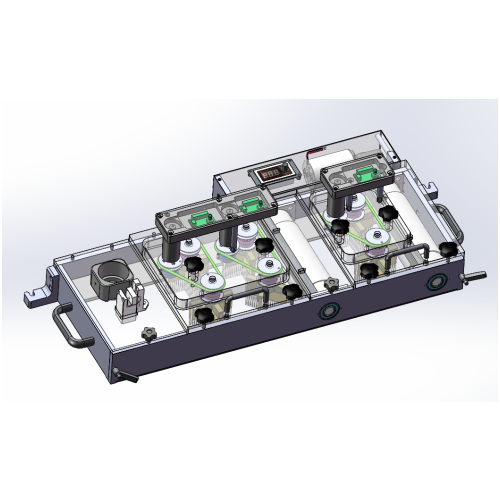
Precision Cutting Solutions: Advanced Technology for Every Material and Application

Get a Free Quote

Our representative will contact you soon.
Email
Name
Company Name
Message
0/1000

cutting

Cutting is a fundamental manufacturing and fabrication process that shapes raw materials into precise, usable components by removing unwanted sections through mechanical, thermal, or chemical means. Whether applied in metalworking, woodworking, textile production, food processing, or advanced industrial manufacturing, cutting serves as the backbone of countless production workflows. At its core, cutting transforms bulk materials into finished or semi-finished parts that meet exact dimensional and geometric specifications, making it indispensable across virtually every industry on the planet. Modern cutting technology has evolved dramatically from simple hand tools to sophisticated computer-controlled systems capable of achieving tolerances measured in micrometers. Today, cutting encompasses a broad spectrum of methods including laser cutting, plasma cutting, waterjet cutting, CNC milling, turning, sawing, shearing, and die cutting, each tailored to specific materials and application requirements. Laser cutting, for instance, uses a focused beam of high-energy light to slice through metals, plastics, and composites with exceptional precision and minimal material waste. Plasma cutting employs ionized gas at extreme temperatures to cut through electrically conductive materials rapidly and efficiently. Waterjet cutting uses a high-pressure stream of water mixed with abrasive particles to cut virtually any material without generating heat, preserving the structural integrity of heat-sensitive components. CNC-based cutting systems integrate digital design files directly with cutting machinery, enabling repeatable, automated production runs with consistent quality across thousands of parts. The applications of cutting span an enormous range of sectors. In aerospace and automotive manufacturing, precision cutting produces engine components, structural frames, and body panels. In construction, cutting shapes steel beams, pipes, and cladding materials. In electronics, fine cutting processes create circuit boards and semiconductor components. In the fashion and textile industry, automated cutting systems produce garment pieces with minimal fabric waste. The food industry relies on cutting for portioning, slicing, and processing raw ingredients at high throughput. As technology continues to advance, cutting processes are becoming faster, more energy-efficient, and more precise, driven by innovations in machine learning, sensor integration, and advanced tooling materials. Understanding the full scope of cutting technology helps businesses select the right method for their specific needs, optimizing both production efficiency and product quality.


Popular Products

Cutting delivers a wide range of practical benefits that directly impact your bottom line, production speed, and product quality. Here is a straightforward look at why investing in the right cutting solution makes a real difference for your operations. First, cutting gives you precise control over dimensions and shapes. When you need parts that fit together perfectly or meet strict specifications, a reliable cutting process eliminates guesswork. You get consistent results every time, which reduces the need for rework, lowers scrap rates, and keeps your production line moving without costly interruptions. Second, cutting saves you time. Modern cutting systems, especially those driven by CNC technology or automated laser and plasma setups, work at speeds that manual methods simply cannot match. You can process large volumes of material in a fraction of the time it would take with traditional approaches. This speed advantage translates directly into faster order fulfillment, shorter lead times, and the ability to take on more work without expanding your workforce. Third, cutting reduces material waste. Advanced cutting methods are designed to maximize the usable area of each sheet, block, or roll of material. Nesting software, for example, arranges cut patterns to minimize offcuts and leftover scraps. Less waste means lower material costs, which adds up to significant savings over time, especially when working with expensive metals, composites, or specialty materials. Fourth, cutting improves worker safety. Automated cutting systems keep operators away from sharp blades, high-temperature plasma arcs, and powerful laser beams. By reducing direct human contact with the cutting process, you lower the risk of workplace injuries, reduce liability, and create a safer environment for your team. Fifth, cutting supports a wider range of materials and thicknesses. Whether you are working with thin aluminum sheets, thick steel plates, soft plastics, rubber, foam, or delicate fabrics, there is a cutting method suited to the job. This versatility means you can handle diverse customer orders without needing to outsource specialized work or invest in multiple separate production lines. Sixth, cutting integrates seamlessly with digital workflows. Modern cutting machines connect directly to CAD and CAM software, allowing you to move from design to finished part quickly and accurately. Design changes can be implemented almost instantly, giving you the flexibility to respond to customer requests or engineering updates without lengthy retooling processes. Seventh, cutting enhances your competitive position. When your cutting process is fast, accurate, and efficient, you can offer customers better pricing, tighter tolerances, and quicker delivery. These advantages help you win more contracts, retain existing clients, and build a reputation for quality and reliability in your market. In summary, the practical benefits of cutting go far beyond simply dividing material into pieces. A well-chosen cutting solution streamlines your entire production process, reduces costs, improves safety, and positions your business for sustainable growth.

Practical Tips

How does a mini tablet press machine improve production?

25

May

How does a mini tablet press machine improve production?

In pharmaceutical manufacturing, nutraceutical production, and even chemical processing, the ability to compress powders into uniform, consistent tablets at scale is a foundational requirement. A mini tablet press machine has emerged as a transformat...
View More
How do packaging machine components work together?

25

May

How do packaging machine components work together?

Understanding how packaging machine components interact is fundamental to running efficient, reliable production lines. Every element within a packaging system—from the feeding mechanism to the sealing unit—is engineered to perform a prec...
View More
How Does Press Tooling Design Impact Production Efficiency?

25

May

How Does Press Tooling Design Impact Production Efficiency?

In high-volume manufacturing environments, the design of Press Tooling is one of the most consequential engineering decisions a production team can make. From cycle time to scrap rate, from die longevity to operator safety, the geometry, material sel...
View More
Which Materials Work Best with Blister Packing Tooling?

25

May

Which Materials Work Best with Blister Packing Tooling?

Selecting the right material for Blister Packing Tooling is one of the most consequential decisions a pharmaceutical or consumer goods manufacturer can make. The material determines not only how well the tooling performs during forming, sealing, and ...
View More

Get a Free Quote

Our representative will contact you soon.
Email
Name
Company Name
Message
0/1000

cutting

Unmatched Precision for Complex Cutting Applications

Unmatched Precision for Complex Cutting Applications

One of the most compelling reasons businesses invest in advanced cutting technology is the extraordinary level of precision it delivers. In industries where even a fraction of a millimeter matters, such as aerospace component manufacturing, medical device production, and high-performance automotive engineering, the accuracy of the cutting process directly determines whether a finished part meets specification or ends up as scrap. Modern cutting systems, particularly those using laser or CNC-guided methods, routinely achieve tolerances of plus or minus 0.1 millimeters or better, ensuring that every part produced matches the original design intent with remarkable fidelity. This precision is not just about hitting a number on a drawing. It has cascading benefits throughout the entire production chain. When individual components are cut to exact dimensions, assembly becomes faster and easier because parts fit together without the need for manual adjustment, filing, or shimming. Quality control inspections pass more quickly because dimensional deviations are minimal. Customer returns and warranty claims drop because products perform as designed from the very first use. The precision of modern cutting also enables manufacturers to work with tighter design margins, which can reduce material usage, lower component weight, and improve overall product performance. In the aerospace sector, for example, lighter and more precisely cut structural components contribute directly to fuel efficiency and payload capacity. In electronics manufacturing, precise cutting of circuit board substrates ensures reliable electrical connections and consistent signal performance across large production batches. Advanced cutting systems achieve this level of precision through a combination of rigid machine construction, high-resolution motion control systems, real-time feedback sensors, and sophisticated software that compensates for thermal expansion, tool wear, and material variation. The result is a cutting process that maintains its accuracy not just for a single part, but consistently across thousands or even millions of production cycles. For businesses that compete on quality, investing in precision cutting capability is not optional. It is the foundation upon which reliable, high-value products are built, and it is what separates market leaders from those who struggle with rework, scrap, and customer dissatisfaction.
Versatile Cutting Solutions Across Diverse Materials and Industries

Versatile Cutting Solutions Across Diverse Materials and Industries

The true power of modern cutting technology lies in its remarkable versatility. Unlike many manufacturing processes that are optimized for a narrow range of materials or applications, cutting methods have been developed and refined to handle an extraordinarily broad spectrum of materials, thicknesses, and geometries. This versatility makes cutting one of the most universally applicable processes in industrial production, capable of serving industries as different as shipbuilding and fashion design, food processing and semiconductor fabrication. Consider the range of materials that cutting processes handle on a daily basis. In metalworking, cutting systems slice through mild steel, stainless steel, aluminum, titanium, copper, and exotic alloys with equal competence, adjusting parameters such as speed, power, and feed rate to suit each material's unique properties. In the plastics industry, cutting tools shape everything from thin polyethylene film to thick acrylic sheets and rigid engineering polymers. In construction and architecture, cutting equipment processes glass, stone, ceramic tile, and composite cladding panels. In the textile and apparel sector, automated cutting systems handle delicate silk, heavy denim, technical performance fabrics, and multilayer composite materials used in protective gear. This material versatility is made possible by the availability of multiple cutting technologies, each with its own strengths. Laser cutting excels with thin to medium thickness metals and non-metals, delivering clean edges and intricate shapes. Waterjet cutting handles thick materials and heat-sensitive substrates without thermal distortion. Plasma cutting offers high-speed processing of conductive metals at greater thicknesses. Mechanical cutting methods such as sawing, shearing, and routing provide cost-effective solutions for high-volume production of standard profiles and shapes. For businesses, this versatility translates into operational flexibility. A single cutting facility equipped with the right combination of technologies can serve multiple customer segments, respond to changing market demands, and take on a wider variety of projects without significant capital reinvestment. It also reduces the need to outsource specialized cutting work, keeping more value in-house and giving businesses greater control over quality, lead times, and costs. The ability to cut diverse materials accurately and efficiently is a strategic asset that supports business growth and resilience.
Cost-Effective Cutting That Maximizes Material Yield and Reduces Waste

Cost-Effective Cutting That Maximizes Material Yield and Reduces Waste

In any manufacturing or fabrication operation, material costs represent one of the largest line items in the production budget. Raw materials such as steel, aluminum, specialty alloys, and engineered composites are expensive, and every piece of scrap or offcut that ends up in the waste bin represents money that cannot be recovered. This is why the material efficiency of the cutting process is not just a technical consideration but a critical financial one. Advanced cutting systems are specifically designed to maximize material yield, ensuring that as much of each sheet, plate, or roll as possible is converted into usable parts rather than waste. Modern cutting software plays a central role in achieving this efficiency. Nesting algorithms analyze the shapes of all the parts that need to be cut from a given sheet of material and arrange them in a configuration that minimizes the gaps between parts and reduces the amount of material left over after cutting. In high-volume production environments, optimized nesting can reduce material waste by twenty to forty percent compared to manual layout methods, a saving that compounds dramatically over thousands of production runs. Beyond nesting, the cutting method itself influences material efficiency. Laser cutting, for example, produces an extremely narrow kerf, the width of material removed by the cutting action, which means more parts can be extracted from a given sheet compared to methods with wider kerfs. Waterjet cutting produces no heat-affected zone, which means parts can be nested more closely together without risk of thermal distortion affecting adjacent components. These technical characteristics translate directly into lower material costs per part, improving the economics of every job. Cost-effective cutting also reduces the environmental footprint of manufacturing operations. Less material waste means fewer raw materials need to be extracted, processed, and transported, lowering the carbon intensity of production. Scrap metal and offcuts that do accumulate can often be recycled, but minimizing their generation in the first place is always the more sustainable and economical approach. For businesses looking to improve margins, reduce costs, and demonstrate environmental responsibility, investing in efficient cutting technology delivers measurable returns across financial, operational, and sustainability dimensions.

Get a Free Quote

Our representative will contact you soon.
Email
Name
Company Name
Message
0/1000