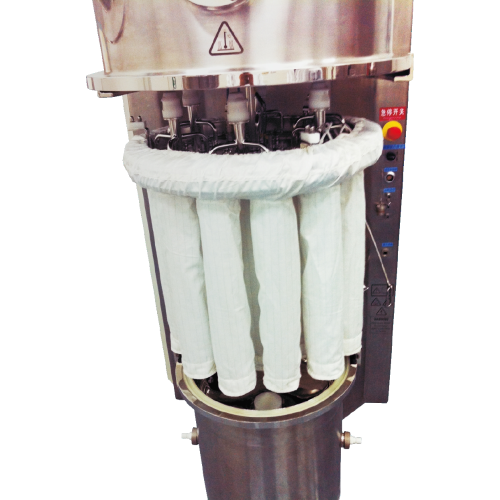
Industrial Press Machines: Precision, Power, and Versatility for Modern Manufacturing

Get a Free Quote

Our representative will contact you soon.
Email
Name
Company Name
Message
0/1000

press

The press is a cornerstone of modern manufacturing, serving as an essential piece of equipment across a wide range of industrial sectors. At its core, a press applies controlled force to a workpiece, enabling processes such as stamping, forming, punching, blanking, drawing, and assembly. Whether operating in automotive production lines, electronics fabrication, aerospace component manufacturing, or metal fabrication shops, the press delivers consistent, repeatable results that manual processes simply cannot match. Modern press technology has evolved dramatically over the past several decades. Today, presses are available in a variety of configurations, including mechanical presses, hydraulic presses, pneumatic presses, and servo-driven presses, each designed to meet specific production demands. Mechanical presses use a flywheel and crankshaft mechanism to deliver rapid, high-energy strokes, making them ideal for high-volume stamping operations. Hydraulic presses rely on fluid power to generate force, offering precise control over speed and pressure throughout the entire stroke, which is particularly valuable for deep drawing and forming complex shapes. Pneumatic presses use compressed air to drive the ram, providing fast cycle times for lighter-duty applications. Servo presses represent the latest advancement in press technology, using servo motors to control ram motion with exceptional precision, programmability, and energy efficiency. Key technological features of the press include advanced control systems, real-time monitoring capabilities, automatic lubrication systems, and safety mechanisms such as light curtains and two-hand controls. These features ensure that the press operates at peak efficiency while protecting operators and maintaining product quality. The press finds application in producing automotive body panels, electronic connectors, kitchen appliances, structural brackets, medical device components, and countless other products. Its ability to process materials ranging from thin aluminum foil to thick structural steel makes the press an indispensable tool in virtually every manufacturing environment. With ongoing advancements in automation and digital integration, the press continues to evolve, offering manufacturers greater productivity, flexibility, and precision than ever before.


New Products

Choosing the right press for your production line is one of the most impactful decisions you can make for your business. A high-quality press delivers a set of practical benefits that directly affect your bottom line, your product quality, and your team's safety every single day. Here is a straightforward look at what a modern press brings to your operation. First, a press dramatically increases your production speed. Unlike manual forming or cutting methods, a press completes each cycle in a fraction of a second to a few seconds, depending on the application. This means you can produce thousands of parts per shift without sacrificing consistency. When your customers need large volumes delivered on time, a fast and reliable press keeps you ahead of schedule. Second, a press gives you outstanding repeatability. Every part that comes off a well-maintained press matches the last one with tight dimensional tolerances. This consistency reduces scrap rates, lowers rework costs, and builds the kind of quality reputation that keeps customers coming back. You spend less time sorting bad parts and more time shipping good ones. Third, a press reduces your labor costs over time. Once you set up a press with the correct tooling and parameters, it runs with minimal operator intervention. One skilled operator can oversee multiple press stations, freeing your workforce to focus on higher-value tasks. The return on investment becomes clear within the first year of operation for most manufacturers. Fourth, a press handles a wide variety of materials and thicknesses. From soft copper and aluminum to high-strength steel and stainless steel, a properly specified press adapts to your material requirements. This versatility means you do not need separate machines for every job, which saves floor space and capital expenditure. Fifth, modern presses are built with operator safety as a top priority. Features like light curtains, safety guards, two-hand control systems, and emergency stop mechanisms protect your team from injury. A safer workplace means fewer lost workdays, lower insurance costs, and a more motivated workforce. Sixth, today's presses integrate seamlessly with automation systems. You can connect a press to robotic part loading and unloading systems, conveyor lines, vision inspection systems, and factory data networks. This integration supports lean manufacturing goals and gives you real-time visibility into production performance. Seventh, energy-efficient press designs, particularly servo presses, consume power only when performing work, cutting your energy bills compared to older flywheel-based systems that run continuously. Lower energy consumption also supports your sustainability commitments, which increasingly matter to customers and regulators alike. In summary, investing in a quality press means faster output, better parts, lower costs, a safer team, and a more flexible operation ready to grow with your business.

Practical Tips

How does a mini tablet press machine improve production?

25

May

How does a mini tablet press machine improve production?

In pharmaceutical manufacturing, nutraceutical production, and even chemical processing, the ability to compress powders into uniform, consistent tablets at scale is a foundational requirement. A mini tablet press machine has emerged as a transformat...
View More
How do packaging machine components work together?

25

May

How do packaging machine components work together?

Understanding how packaging machine components interact is fundamental to running efficient, reliable production lines. Every element within a packaging system—from the feeding mechanism to the sealing unit—is engineered to perform a prec...
View More
What is Press Tooling and How Does It Work in Manufacturing?

25

May

What is Press Tooling and How Does It Work in Manufacturing?

In modern manufacturing, precision, repeatability, and efficiency are not optional — they are the foundation of competitive production. Press Tooling sits at the heart of this foundation, enabling manufacturers across industries to form, cut, s...
View More
How Does Press Tooling Design Impact Production Efficiency?

25

May

How Does Press Tooling Design Impact Production Efficiency?

In high-volume manufacturing environments, the design of Press Tooling is one of the most consequential engineering decisions a production team can make. From cycle time to scrap rate, from die longevity to operator safety, the geometry, material sel...
View More

Get a Free Quote

Our representative will contact you soon.
Email
Name
Company Name
Message
0/1000

press

Precision Control Technology: Delivering Exact Results Every Time

Precision Control Technology: Delivering Exact Results Every Time

One of the most significant advantages that a modern press offers is its ability to deliver precise, controlled force exactly where and when it is needed. This precision control technology is not just a technical specification on a datasheet. It is the foundation of consistent part quality, reduced material waste, and long tool life, all of which translate directly into financial savings and competitive advantage for manufacturers. At the heart of precision control in a contemporary press is the integration of advanced servo motor systems and programmable logic controllers. Unlike older mechanical presses that follow a fixed motion profile determined by the crankshaft geometry, a servo-driven press allows the operator to program the ram speed, position, dwell time, and force profile for each specific job. This means you can slow the ram down at the critical moment of contact with the workpiece to reduce shock loads on the tooling, then accelerate through the return stroke to maintain cycle time. The result is tooling that lasts significantly longer, reducing your tooling replacement costs and unplanned downtime. Precision control also enables the press to handle a broader range of materials and part geometries without requiring a different machine for each application. Thin, delicate materials that would crack or wrinkle under an uncontrolled stroke can be formed successfully when the press applies force at a carefully managed rate. High-strength materials that demand peak force at a specific point in the stroke benefit from the press's ability to deliver exactly that force profile, no more and no less. Real-time monitoring systems built into modern presses continuously measure force, position, and energy consumption during every stroke. If a part is missing, if the material thickness is out of specification, or if the tooling begins to wear, the press detects the anomaly immediately and alerts the operator or stops the cycle automatically. This in-process quality control catches defects at the source rather than downstream in the inspection process, saving both time and material. For manufacturers operating in industries with strict quality standards, such as automotive, aerospace, and medical devices, this level of precision is not optional. It is a requirement. A press equipped with precision control technology gives you the confidence to meet those standards consistently, shift after shift, day after day, without relying on operator skill alone to maintain quality.
Robust Construction and Long Service Life: Built to Perform for Decades

Robust Construction and Long Service Life: Built to Perform for Decades

When you invest in a press, you are making a long-term commitment to your production infrastructure. The durability and structural integrity of the press you choose will determine whether that investment pays off over years and decades or becomes a source of ongoing maintenance headaches and unexpected downtime. The best presses on the market are engineered from the ground up with longevity in mind, using materials, manufacturing processes, and design principles that ensure reliable performance under demanding production conditions. The frame of a high-quality press is typically constructed from heavy-gauge welded steel or high-grade cast iron, both of which provide the rigidity needed to resist deflection under full load. Frame deflection is a critical issue in press design because even small amounts of flexing under load can cause misalignment between the upper and lower tooling, leading to uneven wear, poor part quality, and premature tool failure. A rigid press frame maintains precise alignment throughout the stroke, protecting your tooling investment and ensuring consistent part dimensions. Precision-ground guiding systems keep the ram moving in a perfectly straight path, further protecting tooling and ensuring part quality. These guides are manufactured to tight tolerances and are designed to maintain their accuracy even after millions of press cycles. In many press designs, the guides are adjustable, allowing maintenance technicians to compensate for wear over time and restore the press to like-new accuracy without a full rebuild. Lubrication systems play a vital role in extending the service life of a press. Modern presses incorporate automatic centralized lubrication systems that deliver precisely metered amounts of lubricant to all critical bearing surfaces on a timed schedule. This eliminates the risk of human error in manual lubrication routines and ensures that every component receives the protection it needs, even during high-speed production runs when stopping to lubricate manually is not practical. The drive components of a press, including the crankshaft, connecting rods, bearings, and gears, are manufactured from high-alloy steels and subjected to heat treatment processes that maximize their hardness and fatigue resistance. These components are designed to handle the cyclic loading that is inherent in press operation without developing cracks or excessive wear over time. When you choose a press built to these standards, you are choosing a machine that will serve your production needs reliably for twenty, thirty, or even forty years with proper maintenance, delivering a return on investment that few other capital equipment purchases can match.
Versatile Application Range: One Press, Countless Possibilities

Versatile Application Range: One Press, Countless Possibilities

The true measure of a press's value to a manufacturing operation is not just how well it performs a single task, but how many different tasks it can perform effectively. A versatile press expands your production capabilities, allows you to take on a wider variety of customer orders, and reduces the need to invest in multiple specialized machines for different applications. Modern press technology has reached a level of sophistication where a single well-specified press can handle an impressive range of forming, cutting, and assembly operations across diverse materials and industries. Stamping is one of the most common applications for a press, and it encompasses a broad family of operations including blanking, piercing, bending, embossing, coining, and progressive die stamping. In blanking, the press cuts flat shapes from sheet metal with clean, precise edges. In piercing, the press punches holes of various sizes and shapes through the workpiece. Bending operations use the press to form sheet metal into angles, channels, and complex profiles. Coining uses the press to apply very high pressure to create fine surface detail and tight dimensional tolerances. Progressive die stamping combines multiple operations in a single press stroke using a multi-station die, allowing complex parts to be produced at high speed from a continuous strip of material. Deep drawing is another critical application where the press forms flat sheet metal into cup-shaped or box-shaped parts by drawing the material over a punch and into a die. This process is used to produce items such as beverage cans, automotive fuel tanks, kitchen sinks, and electronic housings. The press must apply force in a carefully controlled manner during deep drawing to prevent the material from tearing or wrinkling, which is why adjustable blank holder force and programmable ram motion are so valuable in this application. Beyond metal forming, a press is also used for assembly operations such as press fitting, riveting, and clinching, where components are joined together by force rather than fasteners or adhesives. In the electronics industry, a press inserts connectors, terminals, and other components into circuit boards and housings with precise force control to avoid damage to delicate parts. In the automotive industry, a press assembles bearings, bushings, and seals into housings and shafts. This remarkable versatility makes the press one of the most valuable and widely used machines in manufacturing, capable of adapting to new products and processes as your business evolves and grows.

Get a Free Quote

Our representative will contact you soon.
Email
Name
Company Name
Message
0/1000