Forming Technology: Advanced Metal Forming Processes for Efficient Manufacturing Solutions

Get a Free Quote

Our representative will contact you soon.
Email
Name
Company Name
Message
0/1000

forming

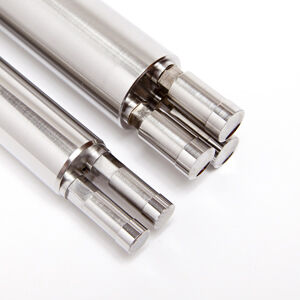
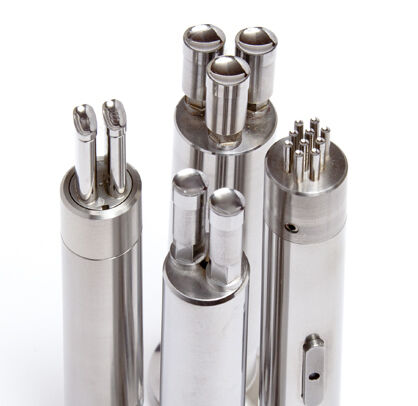
Forming represents a fundamental manufacturing process that transforms raw materials into desired shapes and configurations through mechanical deformation without removing material. This versatile production method encompasses various techniques including stamping, bending, drawing, forging, and roll forming, each tailored to specific material properties and end-product requirements. The forming process operates by applying controlled forces to workpieces, causing plastic deformation that permanently alters their geometry while maintaining material integrity and often enhancing structural characteristics. Modern forming technology integrates precision engineering with advanced automation systems, enabling manufacturers to produce components with exceptional accuracy, repeatability, and surface quality. The process finds extensive application across industries ranging from automotive and aerospace to construction, electronics, and consumer goods manufacturing. Technological features of contemporary forming operations include computer numerical control systems that ensure dimensional precision, hydraulic and servo-electric drive mechanisms that deliver consistent force application, and real-time monitoring systems that track quality parameters throughout production cycles. The versatility of forming allows processors to work with diverse materials including steel, aluminum, copper, titanium, and various alloys, accommodating thicknesses from thin foils to heavy plates. Advanced forming techniques incorporate heating elements for hot forming applications, enabling manipulation of materials that would otherwise prove too rigid for cold working. The process efficiency stems from minimal material waste, high production speeds, and the ability to create complex geometries in single or multiple operations. Environmental considerations favor forming over material-removal processes since it generates fewer byproducts and consumes less energy per component produced. Integration capabilities allow forming equipment to function within automated production lines, seamlessly coordinating with feeding systems, transfer mechanisms, and downstream finishing operations to create comprehensive manufacturing solutions that maximize throughput while maintaining stringent quality standards.


New Product Recommendations

Choosing forming technology for your manufacturing operations delivers substantial practical benefits that directly impact your bottom line and competitive positioning. The process achieves remarkable material efficiency since it reshapes rather than removes material, resulting in minimal scrap generation and lower raw material costs compared to machining alternatives. This conservation translates to significant cost savings, particularly when working with expensive metals or alloys. Production speed represents another compelling advantage, as forming operations typically complete parts in seconds or minutes rather than hours, enabling high-volume output that meets demanding delivery schedules and reduces per-unit manufacturing costs. The mechanical properties of formed components often surpass those of cast or machined alternatives because the deformation process aligns grain structures and work-hardens the material, enhancing strength, fatigue resistance, and durability without additional heat treatment steps. This inherent strengthening effect allows designers to specify thinner materials that still meet performance requirements, reducing component weight and material expenses simultaneously. Consistency and repeatability characterize modern forming operations, with automated systems producing thousands of identical parts that maintain tight tolerances and uniform quality, minimizing rejection rates and eliminating costly rework. The flexibility of forming equipment allows manufacturers to accommodate design changes through relatively simple tooling modifications rather than complete process redesigns, reducing time-to-market for new products and variants. Energy consumption per component typically registers lower than alternative manufacturing methods, contributing to reduced operating costs and supporting corporate sustainability initiatives. Surface finish quality emerges directly from forming operations without requiring extensive secondary finishing processes, streamlining production workflows and reducing handling requirements. The technology scales effectively from prototype quantities through mass production volumes, providing consistent results across order sizes and enabling manufacturers to serve diverse market segments with a single process platform. Tooling longevity in properly maintained forming equipment delivers millions of cycles before replacement becomes necessary, distributing capital investment across extensive production runs and minimizing downtime for tool changes. Integration capabilities allow forming systems to operate within lights-out manufacturing environments, running unattended during off-shifts and maximizing equipment utilization rates. The compact footprint of forming equipment relative to its output capacity optimizes factory floor space utilization, an increasingly valuable consideration as real estate costs rise and manufacturers seek to maximize productivity per square foot of facility space.

Latest News

What is a mini tablet press machine and how does it work?

25

May

What is a mini tablet press machine and how does it work?

A mini tablet press machine is a compact, precision-driven piece of equipment designed to compress powdered or granulated materials into uniform tablet forms. Whether used in pharmaceutical research, nutraceutical development, or small-scale chemical...
View More
How does a mini tablet press machine improve production?

25

May

How does a mini tablet press machine improve production?

In pharmaceutical manufacturing, nutraceutical production, and even chemical processing, the ability to compress powders into uniform, consistent tablets at scale is a foundational requirement. A mini tablet press machine has emerged as a transformat...
View More
How do packaging machine components work together?

25

May

How do packaging machine components work together?

Understanding how packaging machine components interact is fundamental to running efficient, reliable production lines. Every element within a packaging system—from the feeding mechanism to the sealing unit—is engineered to perform a prec...
View More
How Does Press Tooling Design Impact Production Efficiency?

25

May

How Does Press Tooling Design Impact Production Efficiency?

In high-volume manufacturing environments, the design of Press Tooling is one of the most consequential engineering decisions a production team can make. From cycle time to scrap rate, from die longevity to operator safety, the geometry, material sel...
View More

Get a Free Quote

Our representative will contact you soon.
Email
Name
Company Name
Message
0/1000

forming

Superior Material Utilization and Cost Efficiency

Superior Material Utilization and Cost Efficiency

The economic advantages of forming technology stem primarily from its exceptional material utilization characteristics that fundamentally distinguish it from subtractive manufacturing approaches. When manufacturers employ forming processes, they reshape existing material rather than cutting away excess, resulting in scrap rates that typically range between two and eight percent compared to machining operations that may waste thirty to sixty percent of raw material inputs. This dramatic difference in material efficiency creates immediate cost savings that compound across production volumes, particularly significant when processing expensive materials such as titanium alloys, stainless steels, or specialized copper formulations. The financial impact extends beyond simple material conservation, as reduced scrap volumes decrease handling requirements, lower disposal costs, and simplify recycling operations for the minimal waste that forming operations do generate. Manufacturing facilities implementing forming technology also benefit from reduced inventory carrying costs since the process requires less raw material to produce equivalent quantities of finished components. The predictability of material consumption in forming operations enhances production planning accuracy, allowing procurement teams to negotiate favorable supplier agreements based on precise volume forecasts rather than maintaining safety stock buffers to accommodate wasteful processes. Energy economics further favor forming technology, as reshaping material through mechanical deformation typically consumes substantially less energy per component than removing material through cutting, grinding, or other chip-generating methods. This energy advantage becomes particularly pronounced in high-volume production scenarios where even modest per-unit savings multiply into significant operational cost reductions and measurably lower carbon footprints. The combination of material efficiency, energy conservation, and reduced waste handling creates a compelling total cost of ownership proposition that strengthens financial performance while supporting corporate environmental stewardship objectives. Manufacturers transitioning to forming technology frequently report payback periods measured in months rather than years, as savings accumulate rapidly across material procurement, energy consumption, waste management, and labor efficiency dimensions simultaneously.
Enhanced Mechanical Properties Through Controlled Deformation

Enhanced Mechanical Properties Through Controlled Deformation

The forming process delivers unique metallurgical advantages that machining and casting cannot replicate, fundamentally improving component performance characteristics through controlled plastic deformation of material grain structures. When metal undergoes forming operations, the applied forces reorganize crystalline structures at the microscopic level, aligning grain boundaries along stress lines and creating directional strength properties that enhance load-bearing capacity precisely where components experience operational forces. This phenomenon, known as work hardening or strain hardening, increases material yield strength and tensile properties without requiring additional heat treatment cycles, effectively delivering stronger components from the same base material specifications. The mechanical property improvements prove particularly valuable in applications subject to cyclic loading, where fatigue resistance determines service life and component reliability. Formed components demonstrate superior fatigue performance compared to machined alternatives because continuous grain flow through critical stress regions eliminates the weak points that machining operations create by severing grain structures. The absence of material removal also preserves surface integrity, maintaining the protective oxide layers and work-hardened surface zones that contribute to wear resistance and corrosion protection. Engineers designing components for demanding applications increasingly specify forming processes specifically to exploit these metallurgical advantages, allowing them to meet performance requirements with lighter, more economical designs than would be necessary using components produced through alternative manufacturing methods. The predictability of property enhancement through forming enables designers to incorporate these strength improvements directly into structural calculations, optimizing material selection and thickness specifications with confidence that formed components will reliably deliver expected performance characteristics. Quality control procedures for formed components focus primarily on dimensional verification since the forming process inherently delivers consistent mechanical properties across production runs, simplifying inspection protocols and reducing testing requirements compared to processes where property variations demand extensive sampling and verification. The combination of enhanced strength, improved fatigue resistance, and superior surface integrity creates components that perform better and last longer in service, reducing warranty costs, enhancing customer satisfaction, and strengthening brand reputation for manufacturers who leverage forming technology advantages throughout their product portfolios.
Exceptional Production Speed and Scalability

Exceptional Production Speed and Scalability

Manufacturing velocity represents a critical competitive advantage in modern markets where shortened product lifecycles and just-in-time delivery expectations demand responsive, high-capacity production capabilities that forming technology delivers exceptionally well. Contemporary forming systems complete operations in cycle times measured in seconds, producing finished components at rates that frequently exceed hundreds or thousands of parts per hour depending on complexity and size parameters. This remarkable throughput capacity enables manufacturers to fulfill large orders rapidly, respond quickly to demand fluctuations, and maintain lean inventory strategies that minimize working capital requirements while ensuring product availability. The speed advantages of forming extend beyond simple cycle time considerations to encompass setup efficiency, as modern quick-change tooling systems allow operators to transition between different component specifications in minutes rather than hours, dramatically improving overall equipment effectiveness and enabling economical production of smaller batch quantities. Automated feeding systems integrate seamlessly with forming equipment, continuously supplying raw material and removing finished components without operator intervention, sustaining maximum production rates throughout extended shifts and supporting lights-out manufacturing strategies that maximize equipment utilization. The scalability characteristics of forming technology provide manufacturers with exceptional flexibility to match production capacity with market demand across a broad range of volumes. Prototype and low-volume requirements benefit from single-station forming operations that deliver identical process results to high-volume production, allowing design validation and market testing without investing in dedicated high-speed tooling. As demand grows, manufacturers can incrementally add forming stations, implement progressive die strategies that complete multiple operations per press stroke, or transition to transfer systems that automatically move workpieces between sequential forming stages, scaling capacity smoothly without abandoning previous investments or requalifying processes. This scalability extends across component size ranges as well, with forming equipment available in capacities from miniature precision presses handling delicate electronic components to massive forging systems processing structural aerospace elements, all operating on consistent forming principles that allow manufacturers to serve diverse market segments with familiar technology platforms. The combination of rapid cycle times, efficient setup procedures, automation compatibility, and scalable capacity creates a production solution that adapts to evolving business requirements while consistently delivering the speed, quality, and cost-effectiveness that competitive markets demand from manufacturing operations.

Get a Free Quote

Our representative will contact you soon.
Email
Name
Company Name
Message
0/1000