Industrial Hammer Mill: High-Performance Size Reduction Equipment for Efficient Material Processing

Get a Free Quote

Our representative will contact you soon.
Email
Name
Company Name
Message
0/1000

industrial hammer mill

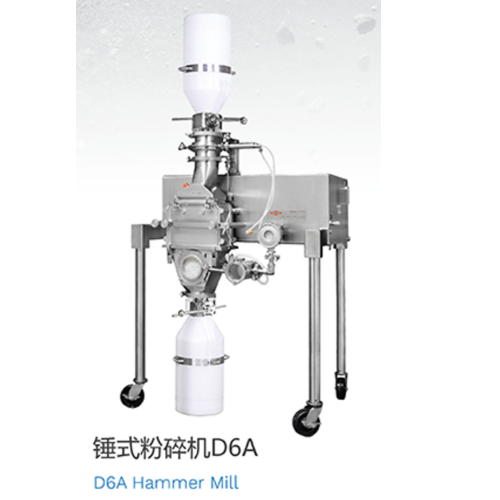
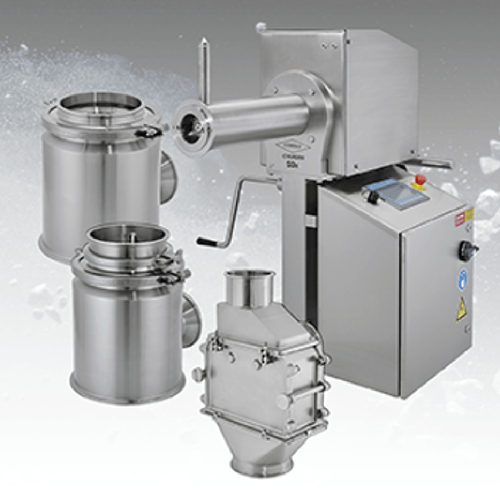
An industrial hammer mill represents a crucial piece of grinding equipment designed to pulverize, shred, and reduce various materials into smaller particles through repeated high-speed impacts. This robust machinery operates on a straightforward yet highly effective principle: rotating hammers strike materials repeatedly until they achieve the desired particle size, passing through screens that control the final output dimensions. Manufacturing facilities across multiple sectors rely on industrial hammer mills to process everything from grains and biomass to minerals and recycled materials. The fundamental construction includes a rotor assembly fitted with multiple hammers, a grinding chamber with replaceable liners, discharge screens with varying perforation sizes, and a powerful motor that drives the entire system. Modern industrial hammer mill designs incorporate advanced engineering principles to maximize throughput while minimizing energy consumption and maintenance requirements. The versatility of these machines allows operators to adjust grinding parameters including rotor speed, hammer configuration, and screen size to accommodate different materials and achieve specific particle size distributions. Industrial hammer mills deliver consistent performance in demanding production environments, processing tons of material daily with minimal downtime. Their compact footprint relative to processing capacity makes them space-efficient solutions for facilities with limited floor space. These machines excel at handling materials with varying moisture contents and physical characteristics, from brittle substances that shatter easily to fibrous materials requiring more aggressive grinding action. Safety features integrated into contemporary industrial hammer mill designs protect operators while facilitating easy access for maintenance and cleaning procedures. The enclosed grinding chamber contains dust and prevents material loss during processing, contributing to cleaner working environments and improved material recovery rates. With proper maintenance and appropriate hammer selection, an industrial hammer mill provides years of reliable service, making it a sound investment for operations requiring consistent particle size reduction capabilities across diverse material types and production volumes.

New Product Releases

Investing in an industrial hammer mill brings numerous practical benefits that directly impact your bottom line and operational efficiency. First and foremost, these machines deliver exceptional versatility, processing a wide range of materials without requiring extensive reconfiguration or specialized attachments. Whether you need to grind agricultural products, reduce wood waste, process minerals, or handle pharmaceutical ingredients, a single industrial hammer mill adapts to your changing production needs. This flexibility eliminates the expense of purchasing multiple specialized machines, reducing capital expenditure and simplifying equipment management. The cost-effectiveness extends beyond initial investment, as industrial hammer mills consume less energy per ton of processed material compared to alternative grinding technologies. Their efficient impact-based grinding mechanism requires less power to achieve equivalent particle size reduction, translating to lower electricity bills and reduced operating costs over the equipment lifespan. Maintenance simplicity represents another significant advantage, with most industrial hammer mills featuring straightforward designs that allow your maintenance team to perform routine servicing without specialized training or expensive tools. Hammer replacement, screen changes, and bearing inspections can be completed quickly during scheduled downtime, minimizing production interruptions. The machines produce consistent particle size distribution, ensuring product quality remains uniform across production runs. This consistency eliminates the quality variations that plague less sophisticated grinding equipment, reducing waste and customer complaints. Space efficiency makes industrial hammer mills ideal for facilities where floor space commands premium value. These compact units process impressive material volumes relative to their physical footprint, allowing you to maximize production capacity without expanding your facility. The enclosed design controls dust generation, creating safer working conditions for your employees while reducing housekeeping requirements and preventing valuable material loss to the atmosphere. Quick changeover capabilities enable you to switch between different materials or particle sizes rapidly, supporting diverse product lines without extended downtime. Modern industrial hammer mills incorporate noise reduction features that lower workplace sound levels, contributing to more comfortable working environments and helping you meet occupational health regulations. The robust construction withstands harsh industrial conditions, delivering reliable performance year after year with minimal degradation. Automated controls available on advanced models reduce operator involvement, freeing your workforce for other value-adding activities while maintaining precise grinding parameters. The immediate return on investment becomes apparent through increased throughput, reduced labor costs, lower energy consumption, and improved product quality that commands better market prices.

Practical Tips

What are cardboard packing boxes and how do they work?

25

May

What are cardboard packing boxes and how do they work?

When businesses and individuals need a reliable, cost-effective, and versatile solution for protecting goods during storage or transit, cardboard packing boxes consistently emerge as the go-to choice. These containers are constructed from layers of p...
View More
How do packaging machine components work together?

25

May

How do packaging machine components work together?

Understanding how packaging machine components interact is fundamental to running efficient, reliable production lines. Every element within a packaging system—from the feeding mechanism to the sealing unit—is engineered to perform a prec...
View More
What is Press Tooling and How Does It Work in Manufacturing?

25

May

What is Press Tooling and How Does It Work in Manufacturing?

In modern manufacturing, precision, repeatability, and efficiency are not optional — they are the foundation of competitive production. Press Tooling sits at the heart of this foundation, enabling manufacturers across industries to form, cut, s...
View More
How Does Press Tooling Quality Affect Final Product Results?

25

May

How Does Press Tooling Quality Affect Final Product Results?

In precision manufacturing, the quality of Press Tooling is one of the most consequential variables in determining whether a final product meets its dimensional, structural, and aesthetic specifications. Every stamped, formed, or punched component th...
View More

Get a Free Quote

Our representative will contact you soon.
Email
Name
Company Name
Message
0/1000

industrial hammer mill

Superior Particle Size Control and Customization Capabilities

Superior Particle Size Control and Customization Capabilities

The industrial hammer mill excels at delivering precise particle size control through multiple adjustable parameters that allow operators to fine-tune output characteristics to exact specifications. Unlike fixed-configuration grinding equipment, this machinery provides extensive customization through interchangeable screens, adjustable rotor speeds, and various hammer configurations that work together to achieve desired particle distributions. Screen selection plays a fundamental role in determining final particle size, with perforation sizes ranging from coarse openings for rapid throughput of larger particles to fine mesh configurations that produce powder-like consistency. Operators can swap screens in minutes, enabling the same industrial hammer mill to produce dramatically different particle sizes for various applications without complex recalibration procedures. Rotor speed adjustment offers another dimension of control, with higher speeds generating more impact energy for harder materials or finer grinding requirements, while reduced speeds suit softer materials or applications where excessive fines would be problematic. The hammer arrangement itself contributes to grinding performance, with options including swing hammers that pivot upon contact, rigid hammers for more aggressive grinding action, and specialized hammer designs optimized for specific material characteristics. This multi-parameter approach to particle size management ensures that your industrial hammer mill produces exactly the particle distribution your process requires, whether you need narrow size ranges for pharmaceutical applications, specific surface areas for chemical reactions, or particular bulk densities for packaging considerations. The ability to reproduce particle size specifications consistently across production runs eliminates the quality variations that compromise product performance and customer satisfaction. Advanced industrial hammer mill installations incorporate automated controls that maintain optimal grinding parameters continuously, compensating for variations in feed material characteristics and maintaining uniform output quality without constant operator intervention. This precision control extends to materials with challenging properties, including fibrous substances that resist conventional grinding, sticky materials that tend to agglomerate, and friable products that shatter into excessive fines under improper grinding conditions. By matching grinding parameters to material properties, an industrial hammer mill maximizes throughput while minimizing energy consumption and unwanted particle size fractions that require reprocessing or disposal.
Exceptional Durability and Minimal Maintenance Requirements

Exceptional Durability and Minimal Maintenance Requirements

The industrial hammer mill stands out for its exceptional durability and remarkably low maintenance demands compared to alternative size reduction technologies, delivering reliable performance that keeps production lines running smoothly with minimal intervention. This reliability stems from robust engineering principles that prioritize simplicity and strength over complexity, resulting in machinery that withstands punishing operating conditions year after year. The rotor assembly, which represents the heart of the industrial hammer mill, utilizes heavy-duty construction with precision-balanced components that resist the tremendous forces generated during high-speed impact grinding. Manufacturers fabricate these rotors from high-strength steel alloys selected specifically for impact resistance and fatigue endurance, ensuring they maintain structural integrity through millions of operating cycles. Hammer elements, which contact materials directly and absorb grinding impacts, feature hardened surfaces or wear-resistant coatings that extend service life considerably beyond unhardened alternatives. When hammers eventually require replacement due to normal wear, the process takes minimal time and requires only standard hand tools, allowing maintenance personnel to complete the task during brief production pauses without specialized skills or equipment. The grinding chamber incorporates replaceable liner plates that protect the main housing from abrasive material contact, serving as sacrificial wear surfaces that preserve the structural integrity of more expensive permanent components. These liners can be fabricated from various materials matched to specific applications, including abrasion-resistant steel for mineral grinding, stainless steel for food and pharmaceutical applications, or specialized alloys for corrosive materials. Bearing assemblies supporting the rotor shaft utilize industrial-grade components rated for continuous heavy-duty service, with proper lubrication systems ensuring adequate protection under demanding operating conditions. Many industrial hammer mill designs position bearings outside the grinding chamber, isolating them from process dust and heat that could accelerate wear, while sealed bearing arrangements prevent contamination from compromising lubrication effectiveness. Maintenance schedules for industrial hammer mills involve straightforward procedures that your existing maintenance team can perform without extensive training, including periodic lubrication checks, visual inspections for wear, and scheduled replacement of consumable components at predictable intervals. This maintenance simplicity reduces both direct servicing costs and indirect expenses associated with production downtime, contributing significantly to lower total cost of ownership compared to more complex grinding technologies that require specialized technicians and expensive replacement parts.
Energy Efficiency and Environmental Sustainability Features

Energy Efficiency and Environmental Sustainability Features

Modern industrial hammer mill designs prioritize energy efficiency and environmental sustainability, delivering substantial operational cost savings while supporting corporate environmental responsibility initiatives and regulatory compliance. The fundamental impact-based grinding mechanism employed by industrial hammer mills inherently requires less energy per ton of processed material compared to alternative size reduction methods such as ball mills or roller mills that rely on compression or attrition. This efficiency advantage stems from the direct energy transfer that occurs when rapidly moving hammers strike material particles, converting motor power into grinding action with minimal energy losses to friction or heat generation. Advanced rotor designs optimize this energy transfer further through aerodynamic profiles that reduce air resistance and careful mass distribution that minimizes rotational power requirements while maintaining adequate impact energy for effective grinding. Variable frequency drives available on contemporary industrial hammer mill installations allow precise motor speed control that matches grinding intensity to material characteristics and desired particle sizes, preventing energy waste from excessive grinding action. These intelligent drive systems can reduce motor speed when processing easily ground materials or when maximum throughput is unnecessary, cutting energy consumption by significant percentages during extended operating periods. The enclosed grinding chamber design contributes to environmental sustainability by containing process dust and preventing particulate emissions that would otherwise escape into the workplace atmosphere and surrounding environment. Integrated dust collection connections on industrial hammer mills facilitate attachment to facility dust control systems, capturing airborne particles for recovery or proper disposal rather than releasing them as air pollution. This containment protects worker health, reduces facility cleaning requirements, and helps operations comply with increasingly stringent air quality regulations. Material recovery rates benefit from the enclosed design as well, as particles that might otherwise be lost as dust remain within the system for collection and sale or further processing. Noise reduction engineering incorporated into modern industrial hammer mills addresses another environmental concern, with sound-dampening enclosures and vibration isolation mounting systems lowering workplace noise levels to protect employee hearing and improve working conditions. Some advanced installations achieve noise reductions of twenty decibels or more compared to older unenclosed designs, making substantial differences in workplace comfort and regulatory compliance. The longevity and durability of industrial hammer mills support sustainability by reducing manufacturing resource consumption and waste generation associated with premature equipment replacement, while their ability to process recycled materials and organic waste streams enables circular economy initiatives across various industries.

Get a Free Quote

Our representative will contact you soon.
Email
Name
Company Name
Message
0/1000