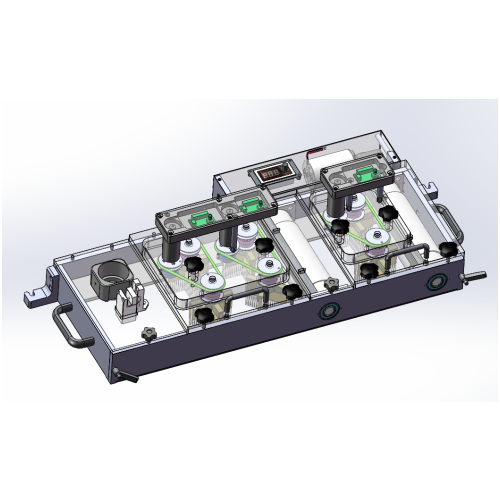
Punch and Die Set - Precision Tooling for Metal Fabrication and Sheet Metal Processing

Get a Free Quote

Our representative will contact you soon.
Email
Name
Company Name
Message
0/1000

punch and die set

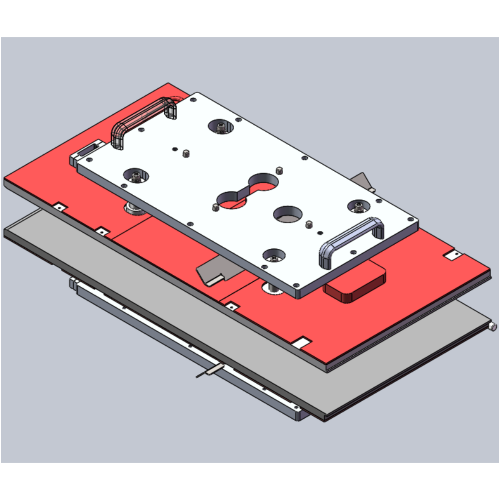
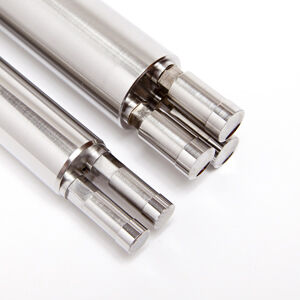
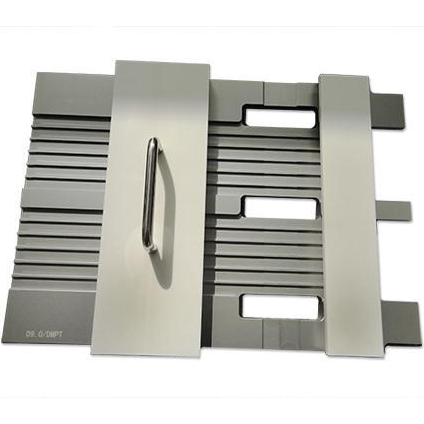
A punch and die set is a fundamental tooling system used in metal fabrication, sheet metal working, and manufacturing operations to cut, shape, or form materials with precision and repeatability. At its core, the punch and die set consists of two primary components: the punch, which is the male component that applies force, and the die, which is the female component that receives the punch and defines the shape of the cut or formed material. Together, these two elements work in tandem to produce clean, accurate results across a wide range of industrial and commercial applications. The punch and die set operates by pressing the punch through or into the workpiece material, which is supported by the die beneath it. This action can produce holes, slots, notches, embossed features, or complex contoured shapes depending on the geometry of the tooling. Modern punch and die sets are engineered from high-grade tool steels, carbide alloys, or powder metallurgy materials, ensuring exceptional hardness, wear resistance, and dimensional stability even under high-cycle production conditions. Technological features of a quality punch and die set include precision-ground surfaces for tight tolerances, heat-treated components for extended service life, and interchangeable designs that allow operators to switch between different shapes and sizes quickly. Many sets also incorporate guided stripper plates, alignment bushings, and spring-loaded mechanisms to improve accuracy and reduce setup time. Advanced coatings such as titanium nitride or chrome plating are often applied to reduce friction and prevent galling during operation. Applications for the punch and die set span numerous industries, including automotive manufacturing, aerospace component production, electronics enclosure fabrication, HVAC ductwork, appliance manufacturing, and general sheet metal shops. Whether used in hydraulic press machines, mechanical punch presses, or CNC turret punch systems, the punch and die set remains an indispensable tool for achieving consistent, high-quality results in material processing operations worldwide.


New Products

When you invest in a quality punch and die set, you gain a tooling solution that delivers real, measurable benefits from the very first use. Here is a straightforward look at what makes this tooling system a smart choice for fabricators, manufacturers, and shop owners who need reliable performance day after day. First, a punch and die set gives you consistent, repeatable results every single time. Once you set up the tooling correctly, every hole, cutout, or formed feature comes out identical to the last. This consistency eliminates the guesswork and rework that often comes with manual cutting methods, saving you time and reducing material waste on every production run. Second, speed is a major advantage. A punch and die set can process sheet metal and other materials far faster than sawing, grinding, or laser cutting in many high-volume scenarios. You load your material, activate the press, and the punch and die set does the work in a fraction of a second. Over the course of a full production shift, this speed advantage adds up to significantly higher output without adding labor costs. Third, the punch and die set is built to last. High-quality sets are manufactured from hardened tool steel or carbide, meaning they can withstand millions of press cycles before requiring replacement or reconditioning. This long service life translates directly into a lower cost per part over time, making the punch and die set one of the most cost-effective tooling investments available to metal fabricators. Fourth, versatility sets this tooling apart from single-purpose cutting tools. A well-stocked punch and die set can handle round holes, square cutouts, oblong slots, D-shaped openings, and custom profiles simply by swapping the punch and die components. This flexibility means one press machine equipped with the right punch and die set can handle a wide variety of jobs without requiring additional capital equipment. Fifth, the punch and die set produces clean, burr-free edges in most applications when the tooling is properly maintained and the clearance between punch and die is correctly set. Clean edges reduce or eliminate secondary finishing operations like deburring, filing, or grinding, which cuts your total production time and labor costs further. Sixth, setup and changeover are straightforward. Modern punch and die sets are designed with quick-change features, standardized holders, and clear size markings that make it easy for operators to swap tooling between jobs. Less downtime between setups means more productive time on the press and better overall equipment utilization. Seventh, a punch and die set supports tight quality control. Because the tooling geometry is fixed and the press stroke is controlled, dimensional variation from part to part is minimal. This makes it easier to meet customer specifications and pass inspection without relying on operator skill alone. In summary, the punch and die set combines speed, durability, versatility, and precision into a single tooling system that pays for itself quickly and continues delivering value throughout its long working life.

Latest News

What are cardboard packing boxes and how do they work?

25

May

What are cardboard packing boxes and how do they work?

When businesses and individuals need a reliable, cost-effective, and versatile solution for protecting goods during storage or transit, cardboard packing boxes consistently emerge as the go-to choice. These containers are constructed from layers of p...
View More
What is a mini tablet press machine and how does it work?

25

May

What is a mini tablet press machine and how does it work?

A mini tablet press machine is a compact, precision-driven piece of equipment designed to compress powdered or granulated materials into uniform tablet forms. Whether used in pharmaceutical research, nutraceutical development, or small-scale chemical...
View More
How do packaging machine components work together?

25

May

How do packaging machine components work together?

Understanding how packaging machine components interact is fundamental to running efficient, reliable production lines. Every element within a packaging system—from the feeding mechanism to the sealing unit—is engineered to perform a prec...
View More
How Does Blister Packing Tooling Improve Production Speed?

25

May

How Does Blister Packing Tooling Improve Production Speed?

In high-volume pharmaceutical and consumer goods manufacturing, every second on the production line carries real cost. When facilities look for ways to accelerate output without compromising quality, the conversation almost always returns to the same...
View More

Get a Free Quote

Our representative will contact you soon.
Email
Name
Company Name
Message
0/1000

punch and die set

Precision Engineering for Consistent, High-Quality Results

Precision Engineering for Consistent, High-Quality Results

One of the most important qualities any fabricator or manufacturer looks for in a tooling system is the ability to produce parts that meet exact specifications every single time. The punch and die set is engineered specifically to deliver this level of precision, and it does so through a combination of tight manufacturing tolerances, high-quality materials, and thoughtful design features that work together to eliminate variation from the production process. Every component in a professional-grade punch and die set is precision-ground to exacting dimensions. The punch diameter or profile is matched to the die opening with a carefully calculated clearance that is typically expressed as a percentage of the material thickness being processed. This clearance is critical because it directly affects the quality of the cut edge, the amount of force required to complete the stroke, and the overall life of the tooling. When the clearance is correct, the punch and die set produces a clean shear with minimal rollover on the entry side and a small, controlled fracture zone on the exit side, resulting in a part edge that often requires no secondary finishing. The materials used in a high-performance punch and die set are selected for their ability to maintain dimensional stability under repeated impact loading. Tool steels such as D2, M2, and H13 are commonly used because they combine high hardness with sufficient toughness to resist chipping and cracking during normal press operations. Carbide grades are chosen for the most demanding high-volume applications where tool life is the primary concern. Heat treatment processes including hardening, tempering, and stress relieving are applied to optimize the mechanical properties of each component, ensuring that the punch and die set performs reliably across millions of press cycles. Guided punch and die sets add another layer of precision by incorporating alignment bushings and guide posts that keep the punch perfectly centered over the die opening throughout the entire stroke. This guidance system prevents lateral deflection of the punch, which can cause uneven wear, off-center holes, and premature tooling failure. For applications requiring extremely tight positional tolerances, a guided punch and die set is the preferred choice because it removes alignment uncertainty from the equation entirely. The practical value of this precision is significant. When your punch and die set produces accurate, consistent parts, you spend less time on inspection, rework, and scrap disposal. Your customers receive parts that fit and function as intended, which builds trust and supports long-term business relationships. Precision tooling also reduces press maintenance requirements because properly aligned, correctly cleared tooling places less stress on the press frame, ram, and drive components. Investing in a precision punch and die set is therefore not just a tooling decision but a quality management decision that benefits every stage of your production operation.
Exceptional Durability That Reduces Your Total Cost of Ownership

Exceptional Durability That Reduces Your Total Cost of Ownership

When evaluating any tooling investment, the purchase price is only one part of the financial picture. The true measure of value is the total cost of ownership, which includes the initial cost, the cost of replacement tooling, the cost of downtime for tooling changes, and the cost of any scrap or rework caused by worn or failed tooling. A well-made punch and die set delivers outstanding value on every one of these dimensions, making it one of the most economical tooling choices available to metal fabricators and manufacturers. The durability of a quality punch and die set begins with material selection. Premium punch and die sets are manufactured from high-alloy tool steels or tungsten carbide, both of which offer exceptional resistance to abrasive wear, adhesive wear, and impact fatigue. These materials are significantly harder and tougher than the workpiece materials they process, which means the tooling retains its sharp cutting edges and accurate dimensions through an enormous number of press cycles. In practical terms, a well-maintained punch and die set used in a typical sheet metal application can produce hundreds of thousands of parts before requiring reconditioning, and many carbide punch and die sets can reach millions of cycles before reaching the end of their useful life. Surface treatments and coatings further extend the working life of the punch and die set. Titanium nitride coatings, applied through physical vapor deposition processes, create an extremely hard surface layer that reduces friction between the punch and the workpiece material. This reduced friction lowers the stripping force required to withdraw the punch after each stroke, which in turn reduces the stress on the punch body and the press stripper mechanism. Chrome plating and other surface treatments serve similar purposes while also providing corrosion resistance that protects the tooling during storage and in humid shop environments. Proper maintenance practices are straightforward with a quality punch and die set. Regular inspection for wear, periodic sharpening of the cutting faces, and correct lubrication of the punch and die surfaces are the primary maintenance tasks required to keep the tooling performing at its best. Most punch and die sets can be resharpened multiple times before the component dimensions fall outside acceptable limits, and each resharpening restores the tooling to near-original performance levels. This resharpenability multiplies the effective service life of the punch and die set and further reduces the cost per part over the life of the tooling. The business impact of durable tooling is clear. Less frequent tooling replacement means lower consumable costs and fewer production interruptions. Predictable tooling life makes it easier to schedule maintenance during planned downtime rather than reacting to unexpected failures. And consistent tooling performance means consistent part quality, which reduces inspection costs and customer complaints. A durable punch and die set is not just a tool but a reliable production asset that supports your bottom line every day it is in service.
Versatile Design That Adapts to a Wide Range of Production Needs

Versatile Design That Adapts to a Wide Range of Production Needs

Manufacturing environments are rarely static. Job requirements change, customer specifications evolve, and production volumes fluctuate. A tooling system that can adapt to these changing demands without requiring major capital investment is enormously valuable, and the punch and die set is designed from the ground up to provide exactly this kind of flexibility. The versatility of the punch and die set starts with the sheer variety of shapes and sizes available. Standard punch and die sets cover round holes from the smallest practical diameter up to large-diameter cutouts, as well as square, rectangular, oblong, hexagonal, D-shaped, and triangular profiles. Custom punch and die sets can be manufactured to virtually any profile required by a specific application, including complex contoured shapes, company logos, ventilation patterns, and proprietary connector openings. This means that a single press machine equipped with the appropriate punch and die set can handle an enormous range of part types without any modification to the machine itself. The interchangeability of punch and die components within standardized tooling systems adds another dimension of versatility. Many punch and die set systems use common holders, retainers, and die shoes that accept a wide range of punch and die inserts. This standardization means that operators can change from one job to the next by swapping only the punch and die inserts rather than the entire tooling assembly, which dramatically reduces changeover time and tooling inventory costs. Quick-change tooling systems take this concept further by allowing punch and die inserts to be swapped in seconds without tools, enabling rapid response to changing production requirements. The punch and die set also adapts to different material types and thicknesses. By selecting the appropriate punch and die clearance, cutting geometry, and material grade, fabricators can process mild steel, stainless steel, aluminum, copper, brass, and various engineered plastics with the same basic tooling system. This material versatility makes the punch and die set a practical choice for job shops and contract manufacturers who work with a diverse customer base and cannot afford to maintain separate tooling inventories for each material type. Integration with modern CNC turret punch press systems represents the highest expression of punch and die set versatility. In a CNC turret system, dozens of different punch and die sets are loaded into a rotating turret and called up automatically by the machine control system as needed to produce complex parts with multiple hole patterns, cutouts, and formed features in a single setup. The combination of the punch and die set with CNC automation eliminates manual repositioning of the workpiece between operations, reduces setup time to near zero for repeat jobs, and enables the production of highly complex parts with consistent accuracy and minimal operator involvement. For any fabricator looking to maximize the productivity and flexibility of their press equipment, investing in a comprehensive punch and die set system is one of the most impactful decisions they can make.

Get a Free Quote

Our representative will contact you soon.
Email
Name
Company Name
Message
0/1000