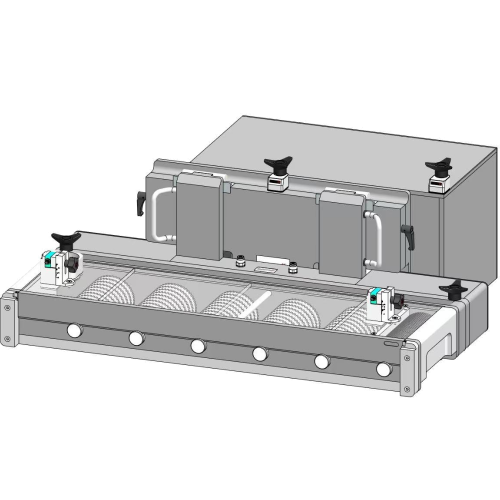
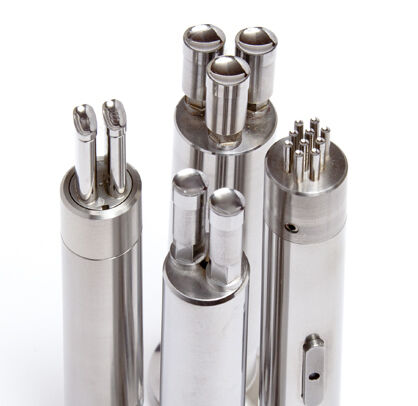
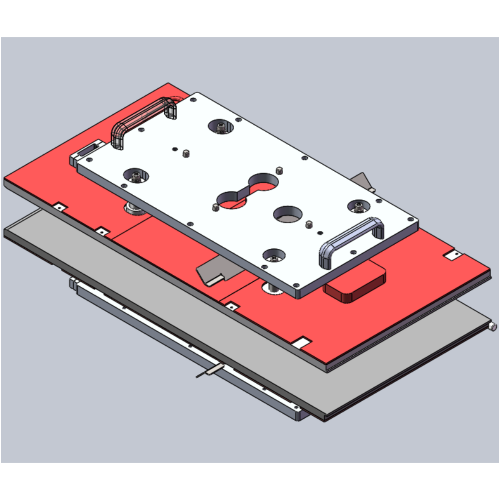
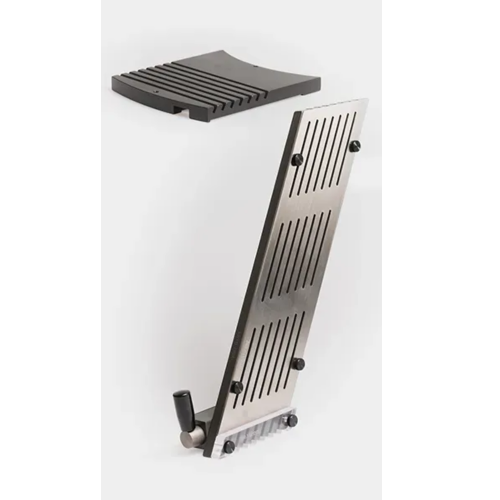
Romaco Pharmaceutical Machinery: Precision Processing and Packaging Solutions

Get a Free Quote

Our representative will contact you soon.
Email
Name
Company Name
Message
0/1000

romaco

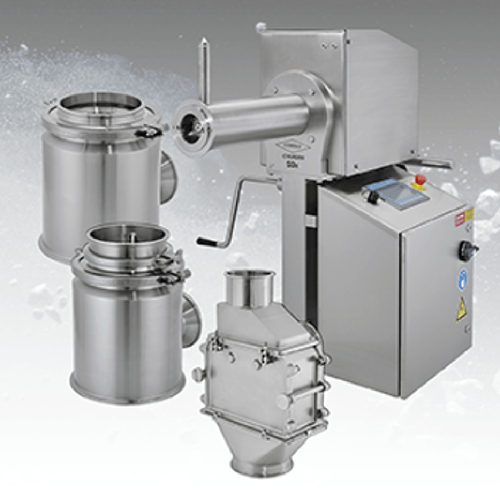
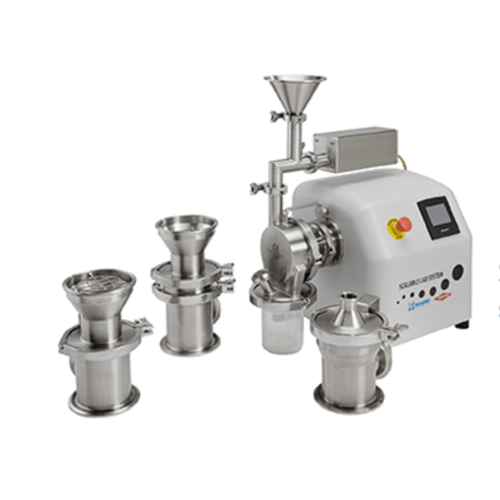
Romaco is a globally recognized manufacturer of pharmaceutical processing and packaging machinery, delivering end-to-end solutions that serve the needs of drug producers, nutraceutical companies, and contract manufacturers worldwide. Founded on decades of engineering expertise, Romaco has built a reputation for combining precision mechanics with intelligent automation, resulting in machines that meet the highest standards of quality, compliance, and output efficiency. The company operates across multiple technology platforms, each designed to address a specific stage of the pharmaceutical production cycle, from granulation and tablet compression to blister packaging, cartoning, and serialization. Romaco's core product lines include the Noack blister packaging systems, the Siebler heat-seal packaging machines, the Promatic cartoning equipment, the Kilian tablet press series, and the Macofar filling and closing systems. Together, these platforms cover a comprehensive range of dosage forms including tablets, capsules, powders, liquids, and semi-solids. Each machine line is engineered to deliver repeatable accuracy, minimal downtime, and straightforward integration into existing production environments. Technologically, Romaco machines are built around modular design principles, allowing manufacturers to configure equipment to their specific production requirements without investing in entirely new systems. Advanced HMI interfaces provide operators with real-time process data, fault diagnostics, and recipe management capabilities, reducing the learning curve and supporting consistent output quality. Many Romaco systems are fully compliant with GMP regulations and support 21 CFR Part 11 data integrity requirements, making them suitable for regulated pharmaceutical markets across North America, Europe, and Asia. Romaco also places strong emphasis on sustainability, engineering machines that consume less energy, generate less waste, and use materials responsibly. The company supports customers through the full equipment lifecycle with installation, validation, training, and after-sales service programs. Whether a manufacturer is scaling up production, entering a new dosage form category, or upgrading legacy equipment, Romaco provides the technical depth and product breadth to support those goals effectively and reliably.


New Product Recommendations

Romaco gives manufacturers a clear operational edge, and the reasons are practical rather than theoretical. Here is what working with Romaco actually means for your production floor and your bottom line. First, Romaco machines are built to run. Downtime is one of the most expensive problems in pharmaceutical manufacturing, and Romaco addresses it directly through robust mechanical construction, high-quality components, and modular architecture that makes maintenance faster and less disruptive. When a part needs replacing or a format change is required, operators can complete the task without specialized tools or lengthy reconfiguration processes. This keeps production moving and reduces the cost of unplanned stops. Second, Romaco equipment scales with your business. Whether you are running a small-batch development line or a high-speed commercial production environment, Romaco offers machines that fit your current output needs while leaving room to grow. The modular design means you can add capabilities over time rather than replacing entire systems, which protects your capital investment and gives you flexibility as market demands shift. Third, compliance is built in, not bolted on. Romaco designs its machines to meet GMP standards and support data integrity requirements from the ground up. This means your validation process is smoother, your audit trail is cleaner, and your risk of regulatory findings is lower. For manufacturers operating in multiple markets, this built-in compliance readiness saves significant time and resources during market entry. Fourth, Romaco reduces material waste. Precise dosing, accurate sealing, and consistent format control mean fewer rejected units and less raw material lost during production runs. Over time, these savings add up to a meaningful reduction in cost of goods, which directly improves your margin on every batch produced. Fifth, operator experience is straightforward. Romaco invests heavily in intuitive HMI design, clear process visualization, and guided fault resolution. New operators get up to speed faster, experienced operators work more efficiently, and the overall skill dependency on your line decreases. This is especially valuable in environments where workforce turnover is a challenge. Sixth, Romaco supports you after the sale. Installation, qualification, operator training, spare parts supply, and remote diagnostics are all part of the service offering. You are not left to figure things out alone after the machine arrives. Romaco's global service network means that wherever your facility is located, support is accessible and responsive. Seventh, Romaco machines integrate cleanly with upstream and downstream equipment, including third-party systems. This interoperability reduces the complexity of building or expanding a production line and gives you more freedom in how you design your manufacturing environment. Taken together, these advantages make Romaco a practical, reliable, and commercially sound choice for pharmaceutical manufacturers who need equipment that performs consistently, complies confidently, and supports long-term growth without unnecessary complexity or cost.

Practical Tips

How does a mini tablet press machine improve production?

25

May

How does a mini tablet press machine improve production?

In pharmaceutical manufacturing, nutraceutical production, and even chemical processing, the ability to compress powders into uniform, consistent tablets at scale is a foundational requirement. A mini tablet press machine has emerged as a transformat...
View More
What is Press Tooling and How Does It Work in Manufacturing?

25

May

What is Press Tooling and How Does It Work in Manufacturing?

In modern manufacturing, precision, repeatability, and efficiency are not optional — they are the foundation of competitive production. Press Tooling sits at the heart of this foundation, enabling manufacturers across industries to form, cut, s...
View More
What is Blister Packing Tooling and How Does It Work?

25

May

What is Blister Packing Tooling and How Does It Work?

In pharmaceutical and consumer goods manufacturing, precision packaging is not just about aesthetics — it is a fundamental requirement for product safety, shelf life, and regulatory compliance. Blister Packing Tooling sits at the heart of this ...
View More
Which Materials Work Best with Blister Packing Tooling?

25

May

Which Materials Work Best with Blister Packing Tooling?

Selecting the right material for Blister Packing Tooling is one of the most consequential decisions a pharmaceutical or consumer goods manufacturer can make. The material determines not only how well the tooling performs during forming, sealing, and ...
View More

Get a Free Quote

Our representative will contact you soon.
Email
Name
Company Name
Message
0/1000

romaco

Modular Architecture That Grows With Your Production Needs

Modular Architecture That Grows With Your Production Needs

One of the most significant practical advantages Romaco brings to pharmaceutical manufacturers is its commitment to modular machine architecture. Unlike traditional equipment designs that lock manufacturers into fixed configurations, Romaco builds its systems so that individual modules can be added, swapped, or upgraded independently. This approach fundamentally changes how manufacturers think about capital investment in production equipment. When you purchase a Romaco machine, you are not buying a static asset with a fixed ceiling on its capabilities. You are investing in a platform that can evolve alongside your production requirements. For a manufacturer starting with a single blister format, the ability to add additional format tooling, integrate a vision inspection module, or connect a downstream cartoning unit without replacing the core machine represents a substantial saving in both capital expenditure and operational disruption. The modular design also simplifies maintenance. Because each functional unit of the machine is designed as a discrete, accessible component, technicians can isolate and address issues without taking the entire line offline. Preventive maintenance schedules become more predictable, spare parts inventories are easier to manage, and the mean time to repair drops significantly compared to monolithic machine designs. From a validation perspective, modularity is equally valuable. When a new module is added to an existing validated system, the scope of revalidation is limited to the new component and its interface with the existing platform, rather than requiring a full system revalidation. This reduces the time and cost associated with bringing new capabilities into a regulated production environment. Romaco applies this modular philosophy consistently across its product lines, from the Noack blister packaging systems to the Kilian tablet press series. The result is a portfolio of equipment that serves manufacturers at every stage of their growth, from early-phase clinical production through to full commercial scale, without forcing unnecessary equipment replacement at each transition point. For any manufacturer planning for long-term production flexibility, Romaco's modular architecture is a foundational advantage that delivers measurable value across the entire equipment lifecycle.
Regulatory Compliance Designed Into Every Machine

Regulatory Compliance Designed Into Every Machine

Pharmaceutical manufacturing operates under some of the most demanding regulatory frameworks in any industry, and the cost of non-compliance, whether measured in failed audits, product recalls, or delayed market approvals, is severe. Romaco addresses this reality not by offering compliance as an optional add-on, but by engineering it into the core design of every machine it produces. Every Romaco system is built to meet current Good Manufacturing Practice requirements as defined by major regulatory authorities including the FDA, EMA, and their international equivalents. This means that the mechanical design, material selection, surface finishes, and cleaning protocols associated with each machine are developed with GMP compliance as a baseline requirement, not an afterthought. For manufacturers operating in regulated markets, this translates directly into a smoother qualification process and a lower risk profile during inspections. Romaco machines also support 21 CFR Part 11 compliance, the FDA regulation governing electronic records and electronic signatures in pharmaceutical manufacturing. The HMI systems on Romaco equipment are designed to maintain complete, accurate, and attributable audit trails for all process-relevant data. Operators cannot alter records without leaving a traceable log entry, batch records are generated automatically, and access controls ensure that only authorized personnel can make critical process changes. This level of data integrity support is increasingly expected by regulators worldwide, and Romaco delivers it as a standard feature rather than a premium upgrade. Beyond data integrity, Romaco machines are designed to support process analytical technology initiatives, providing the sensor integration and data output capabilities that modern quality-by-design manufacturing approaches require. For manufacturers pursuing continuous manufacturing strategies or advanced process control, Romaco equipment provides the technical foundation needed to implement these approaches within a compliant framework. The practical outcome for customers is clear: less time spent on compliance remediation, faster regulatory submissions, and greater confidence during inspections. In a manufacturing environment where regulatory risk is a constant concern, Romaco's built-in compliance architecture is not just a feature, it is a competitive advantage that protects your business and your products.
Precision Engineering That Reduces Waste and Improves Yield

Precision Engineering That Reduces Waste and Improves Yield

In pharmaceutical manufacturing, the cost of raw materials is substantial, and any process that introduces unnecessary waste directly erodes profitability. Romaco machines are engineered with precision as a core design value, and the practical result is measurably better yield performance across every dosage form and packaging format the equipment handles. Starting at the tablet compression stage, Romaco's Kilian press series delivers consistent weight control and hardness uniformity across high-speed production runs. The closed-loop control systems on these machines continuously monitor and adjust compression force in real time, compensating for variations in granule flow and density before they can produce out-of-specification tablets. The result is a rejection rate that stays low even during extended production campaigns, which means more of your active pharmaceutical ingredient ends up in finished product rather than in the waste stream. At the packaging stage, Romaco's Noack blister systems apply the same precision philosophy to sealing and forming operations. Accurate thermoforming control ensures that blister cavities are formed to consistent depth and geometry, reducing the incidence of seal failures and package defects. Vision inspection systems integrated into the line detect and reject defective units automatically, maintaining package quality without slowing throughput. For liquid and powder filling applications, Romaco's Macofar systems use volumetric and gravimetric filling technologies that deliver fill accuracy within tight tolerances, minimizing both overfill waste and the risk of underfill non-conformances. In high-value product categories such as biologics, oncology drugs, and controlled substances, this level of fill accuracy has a direct and significant impact on batch economics. Across all of these applications, the common thread is Romaco's commitment to engineering out variability at every stage of the process. Less variability means fewer rejects, fewer batch failures, less rework, and less raw material consumed per unit of finished product. For manufacturers focused on improving their cost of goods and strengthening their competitive position, the yield improvements delivered by Romaco precision engineering represent a tangible and recurring financial benefit that compounds over the life of the equipment.

Get a Free Quote

Our representative will contact you soon.
Email
Name
Company Name
Message
0/1000