Tablet Friability Tester: Professional Quality Testing Equipment for Pharmaceutical Manufacturing Standards

Get a Free Quote

Our representative will contact you soon.
Email
Name
Company Name
Message
0/1000

tablet friability tester

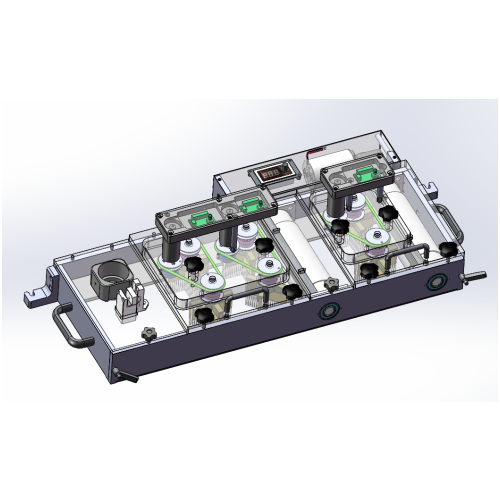
The tablet friability tester stands as an essential pharmaceutical testing instrument designed to evaluate the mechanical strength and durability of tablets during manufacturing, packaging, and transportation processes. This sophisticated equipment measures how well tablets can withstand physical stress, such as chipping, breaking, or abrading when subjected to tumbling and friction. By rotating tablets within a specially designed drum at controlled speeds, the tablet friability tester simulates real-world conditions that tablets encounter throughout their lifecycle. Modern pharmaceutical manufacturers rely on this device to ensure their products meet stringent quality standards and regulatory requirements set by organizations like the FDA and European Pharmacopoeia. The fundamental operation involves weighing a sample of tablets before testing, placing them in the rotating chamber, running the test for a predetermined number of revolutions, and then weighing the tablets again to calculate the percentage of weight loss. This percentage indicates the friability value, which must fall within acceptable limits to pass quality control standards. Contemporary tablet friability tester models incorporate advanced digital controls, automated counting systems, and precise speed regulation mechanisms that enhance accuracy and reproducibility of results. The equipment features transparent acrylic drums that allow operators to observe the testing process, ensuring proper tumbling action and detecting any irregularities during operation. Construction materials typically include stainless steel and high-grade plastics that resist corrosion and maintain cleanliness standards required in pharmaceutical environments. Most tablet friability tester units comply with international pharmacopoeia standards, including USP, BP, and IP specifications, making them suitable for global pharmaceutical operations. The versatility of these instruments extends across various tablet types, including coated, uncoated, and specialty formulations, providing comprehensive quality assessment capabilities for diverse pharmaceutical product lines.

Popular Products

Investing in a reliable tablet friability tester delivers substantial benefits that directly impact product quality, manufacturing efficiency, and overall business success. First and foremost, this testing equipment protects your company's reputation by ensuring every batch of tablets maintains structural integrity before reaching consumers. When tablets break apart or crumble easily, customers lose confidence in your brand, but consistent friability testing prevents such quality issues from occurring. The financial advantages prove equally compelling, as identifying weak formulations early in the development process saves enormous costs associated with product recalls, customer complaints, and wasted materials. Manufacturers can optimize their tablet formulations by understanding exactly how different ingredients and compression forces affect physical durability, leading to better products and reduced material waste. The tablet friability tester provides rapid results, typically completing tests within minutes, which accelerates quality control procedures and keeps production lines moving smoothly without lengthy delays. This speed advantage means your quality assurance team can test more samples throughout the day, providing better oversight of manufacturing consistency and catching potential problems before they affect large production volumes. Regulatory compliance becomes straightforward when using a properly calibrated tablet friability tester, as the equipment generates documented evidence that your products meet required standards, simplifying audits and inspections. The user-friendly design of modern units means training new operators takes minimal time, reducing the specialized knowledge barrier and allowing multiple team members to perform testing confidently. Maintenance requirements remain minimal due to robust construction and simple mechanical systems, resulting in lower long-term ownership costs and less downtime for repairs. The precision offered by digital controls eliminates human error in timing and speed control, ensuring every test follows identical parameters for truly comparable results across different batches and testing sessions. Data recording capabilities found in advanced models create automatic documentation of test parameters and results, reducing paperwork burden and ensuring complete traceability for compliance purposes. The compact footprint of most tablet friability tester units means they fit comfortably in existing laboratory spaces without requiring facility modifications or dedicated rooms. Versatility across different tablet sizes, shapes, and formulations means one instrument serves multiple product lines, maximizing your equipment investment. The clear visibility provided by transparent drums lets operators identify unusual behavior immediately, such as tablets sticking together or breaking in unexpected patterns, enabling quick investigation of root causes. Overall, the tablet friability tester represents a smart investment that pays dividends through improved product quality, reduced waste, faster development cycles, and enhanced regulatory confidence.

Tips And Tricks

What is a mini tablet press machine and how does it work?

25

May

What is a mini tablet press machine and how does it work?

A mini tablet press machine is a compact, precision-driven piece of equipment designed to compress powdered or granulated materials into uniform tablet forms. Whether used in pharmaceutical research, nutraceutical development, or small-scale chemical...
View More
How does a mini tablet press machine improve production?

25

May

How does a mini tablet press machine improve production?

In pharmaceutical manufacturing, nutraceutical production, and even chemical processing, the ability to compress powders into uniform, consistent tablets at scale is a foundational requirement. A mini tablet press machine has emerged as a transformat...
View More
How Does Press Tooling Quality Affect Final Product Results?

25

May

How Does Press Tooling Quality Affect Final Product Results?

In precision manufacturing, the quality of Press Tooling is one of the most consequential variables in determining whether a final product meets its dimensional, structural, and aesthetic specifications. Every stamped, formed, or punched component th...
View More
Which Materials Work Best with Blister Packing Tooling?

25

May

Which Materials Work Best with Blister Packing Tooling?

Selecting the right material for Blister Packing Tooling is one of the most consequential decisions a pharmaceutical or consumer goods manufacturer can make. The material determines not only how well the tooling performs during forming, sealing, and ...
View More

Get a Free Quote

Our representative will contact you soon.
Email
Name
Company Name
Message
0/1000

tablet friability tester

Advanced Digital Control Systems for Unmatched Precision

Advanced Digital Control Systems for Unmatched Precision

The integration of advanced digital control systems in modern tablet friability tester equipment represents a significant technological leap that delivers unprecedented precision and reliability in pharmaceutical quality testing. Unlike older mechanical timer-based systems that required constant monitoring and manual intervention, contemporary digital controls provide exact speed regulation, automatic revolution counting, and programmable test parameters that ensure absolute consistency across every testing session. This technological sophistication means operators simply input the desired test specifications, and the tablet friability tester executes the procedure flawlessly without variation, eliminating the human factors that previously introduced inconsistencies into test results. The microprocessor-based control panels feature intuitive touchscreen interfaces that display real-time information about test progress, remaining time, current rotation speed, and accumulated revolutions, giving operators complete visibility into the testing process at all times. Programmable memory functions allow laboratories to store multiple test protocols for different tablet types or regulatory standards, enabling quick setup when switching between product lines without consulting reference materials or risking parameter entry errors. The precision motor control maintains exact rotation speeds throughout the entire test duration, compensating automatically for any mechanical resistance changes that might occur as tablets tumble and shift within the drum, ensuring that the tumbling action remains consistent from the first revolution to the last. Automatic stopping mechanisms engage precisely when the programmed revolution count completes, eliminating the timing errors that occurred when operators manually stopped older equipment, thereby improving the reproducibility of results across different testing sessions and different operators. Built-in diagnostic systems continuously monitor equipment performance, alerting users to potential calibration drift, mechanical issues, or operational anomalies before they compromise test accuracy, supporting proactive maintenance strategies that minimize unexpected downtime. The digital systems also facilitate compliance documentation by automatically recording test parameters, timestamps, and operator identifications, creating an electronic audit trail that satisfies regulatory requirements without additional paperwork burden. This automation reduces the possibility of transcription errors that occur when manually recording test conditions in logbooks, enhancing data integrity and simplifying regulatory inspections. The user-friendly interface reduces training time significantly, as new operators quickly learn the straightforward menu navigation and clear display information, allowing pharmaceutical companies to cross-train personnel and maintain testing flexibility across shifts and departments.
Robust Construction Meeting International Quality Standards

Robust Construction Meeting International Quality Standards

The structural design and material selection in professional-grade tablet friability tester equipment reflect a commitment to durability, hygiene, and compliance with international pharmaceutical manufacturing standards that ensures long-term reliability and regulatory acceptance. Manufacturers construct these instruments using pharmaceutical-grade stainless steel for all product-contact surfaces, eliminating corrosion concerns and facilitating the thorough cleaning protocols required in controlled manufacturing environments. The stainless steel construction resists chemical damage from cleaning agents and disinfectants used in pharmaceutical facilities, maintaining surface integrity and preventing contamination risks that could compromise test validity or product safety. The rotating drum assemblies feature precision-engineered acrylic or polycarbonate materials that provide crystal-clear visibility while withstanding repeated impact from tumbling tablets without cracking, clouding, or degrading over years of continuous use. This transparency serves a critical quality control function, allowing operators to observe tablet behavior during testing and identify unusual patterns such as excessive clumping, abnormal breakage modes, or coating defects that might indicate formulation problems requiring investigation. The mechanical drive systems incorporate high-quality bearings, gears, and motor assemblies designed for extended operational life with minimal maintenance requirements, reducing total cost of ownership and ensuring consistent performance across thousands of testing cycles. Vibration-dampening mounting systems isolate the rotating mechanism from the equipment frame, preventing the transmission of mechanical vibrations that could affect test results or create noise disturbances in laboratory environments. The tablet friability tester construction adheres to specifications outlined in major pharmacopoeias including United States Pharmacopeia, British Pharmacopoeia, European Pharmacopoeia, and Indian Pharmacopoeia, ensuring that test results generated on this equipment will be accepted by regulatory authorities worldwide. This international standards compliance proves particularly valuable for pharmaceutical companies operating in multiple markets or seeking to expand their geographic reach, as a single validated testing instrument can support quality control for global distribution. The equipment dimensions and drum specifications precisely match pharmacopoeia requirements, eliminating any questions about method equivalence and ensuring that friability values measured on this equipment directly compare to reference standards and competitor products. Safety features integrated into the design include automatic drum locking mechanisms that prevent accidental opening during operation, emergency stop controls that halt testing immediately if problems arise, and interlocked covers that stop rotation when accessed, protecting operators from moving parts and preventing test contamination from environmental exposure.
Versatile Testing Capabilities for Comprehensive Quality Assurance

Versatile Testing Capabilities for Comprehensive Quality Assurance

The exceptional versatility built into modern tablet friability tester equipment enables pharmaceutical manufacturers to conduct comprehensive quality evaluations across their entire product portfolio using a single, reliable instrument, maximizing equipment utilization and return on investment. This adaptability extends to tablets of varying sizes, from small pediatric formulations measuring just a few millimeters in diameter to large specialty tablets exceeding standard dimensions, as the spacious drum capacity accommodates diverse sample sizes without requiring equipment modifications or accessory purchases. The testing protocols can be customized to evaluate different tablet types including immediate-release formulations, extended-release products, enteric-coated tablets, film-coated varieties, and specialty formulations such as chewable tablets or orally disintegrating tablets, each of which may have unique friability specifications reflecting their intended use and manufacturing processes. Adjustable testing parameters allow quality control laboratories to implement various pharmacopoeia methods or develop custom protocols tailored to specific product characteristics or internal quality standards that exceed regulatory minimums, providing flexibility to optimize testing approaches as formulations evolve or new products enter development. The tablet friability tester proves equally valuable during multiple stages of pharmaceutical development and production, from early formulation screening where researchers evaluate numerous prototype compositions to routine production monitoring where consistent quality verification ensures every manufactured batch meets established specifications. Research and development teams utilize the equipment to understand how different excipients, binders, compression forces, and coating processes affect mechanical strength, generating data that guides formulation optimization and scale-up decisions that ultimately determine commercial product performance. Production quality control departments rely on the same equipment for release testing, conducting friability evaluations on representative samples from each manufacturing lot to verify that production processes maintained proper control and that finished tablets possess adequate durability for packaging, distribution, and patient handling. The instrument supports comparative testing between different manufacturing sites, contract manufacturers, or equipment configurations, helping companies maintain consistent product quality regardless of where or how tablets are produced, which proves essential for companies operating multiple facilities or utilizing contract manufacturing organizations. Stability testing programs incorporate tablet friability tester evaluations at various time points throughout shelf-life studies, monitoring whether tablet mechanical strength changes during storage under different environmental conditions, providing critical data for establishing expiration dating and storage recommendations. The ability to generate reproducible, quantitative data rather than subjective assessments transforms tablet durability evaluation from an art into a science, enabling statistical analysis of manufacturing trends, capability studies that validate process control, and objective comparisons between different formulation approaches that support evidence-based development decisions.


Get a Free Quote

Our representative will contact you soon.
Email
Name
Company Name
Message
0/1000