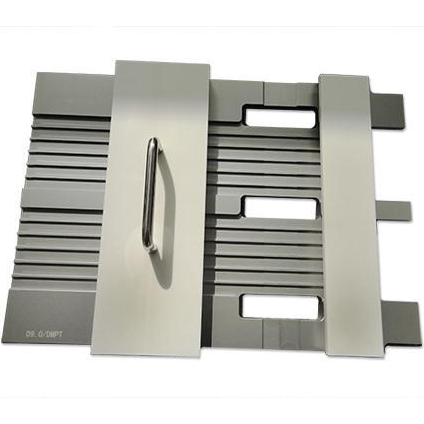
Debossing Services: Premium Tactile Finishing for Packaging and Branding

Get a Free Quote

Our representative will contact you soon.
Email
Name
Company Name
Message
0/1000

debossing

Debossing is a specialized surface finishing technique that creates recessed impressions in materials by pressing a custom die or stamp into the surface under controlled heat and pressure. Unlike embossing, which raises the design above the surface, debossing pushes the pattern downward, creating an elegant sunken effect that adds depth, texture, and a premium tactile quality to a wide range of products. This process has been refined over centuries and today stands as one of the most sought-after finishing methods in packaging, branding, and product design. The core function of debossing is to permanently imprint logos, text, patterns, or decorative motifs onto materials such as leather, paper, cardboard, fabric, and certain plastics. The result is a clean, precise impression that communicates craftsmanship and attention to detail. Brands across industries rely on debossing to elevate the perceived value of their products and packaging, making it a powerful tool in both marketing and product differentiation. From a technological standpoint, debossing uses custom-machined metal dies, typically made from brass or magnesium, that are engineered to exact specifications. The die is mounted onto a press, and the material is positioned beneath it. Heat and pressure are applied simultaneously, causing the fibers or surface of the material to compress and conform to the shape of the die. The depth, clarity, and consistency of the impression depend on factors such as die quality, material thickness, temperature settings, and dwell time. Modern debossing equipment allows for precise control over all these variables, ensuring repeatable, high-quality results across large production runs. Debossing finds applications in luxury packaging, book covers, business cards, leather goods, promotional merchandise, stationery, wine labels, cosmetic packaging, and corporate gifts. It is frequently combined with foil stamping, spot UV coating, or blind embossing to create multi-dimensional finishes that captivate consumers and reinforce brand identity. Whether used as a standalone technique or as part of a layered finishing strategy, debossing delivers a level of sophistication that digital printing alone cannot replicate.


New Products

Debossing gives your products and packaging a quality that people can see and feel the moment they pick them up. That immediate sensory impact is one of the most powerful advantages this technique offers, and it works across a huge range of industries and materials. Here is a straightforward look at why debossing is worth considering for your next project. First, debossing makes your brand look more premium without requiring a complete redesign of your product. Simply pressing your logo or a key design element into the surface of a box, a notebook cover, or a leather item instantly elevates how customers perceive it. People associate that sunken, tactile impression with quality and care, which means your brand benefits from a stronger first impression every single time someone handles your product. Second, debossing is incredibly durable. Because the impression is physically pressed into the material rather than printed on top of it, it does not fade, peel, or wear away over time. A debossed logo on a leather wallet or a hardcover book will still look sharp years after it was made. This longevity means you get lasting brand visibility without ongoing maintenance or reprinting costs. Third, debossing works beautifully on its own, but it also pairs well with other finishing techniques. You can combine it with foil stamping to add a metallic sheen to the recessed area, or use it alongside spot UV coating to create contrast between matte and glossy surfaces. This flexibility lets you build layered, eye-catching designs that stand out on retail shelves and in unboxing experiences. Fourth, debossing is a cost-effective way to add perceived value. Compared to other premium finishing options, debossing delivers a high-end look at a relatively accessible price point, especially when you factor in the long production life of the metal dies used in the process. Once a die is made, it can be used for thousands of impressions, which brings the per-unit cost down significantly over time. Fifth, debossing is environmentally friendlier than many alternative decoration methods. It does not require inks, chemicals, or coatings to achieve its effect, which means fewer consumables and less waste in the production process. For brands that are working toward more sustainable packaging and product solutions, debossing is a smart choice that aligns with those goals without sacrificing visual impact. Sixth, debossing creates a consistent result across every single piece in a production run. Because the process is controlled by precise mechanical settings, every impression comes out with the same depth, clarity, and definition. This consistency is critical for brands that need to maintain a uniform appearance across thousands of units. Finally, debossing communicates craftsmanship in a way that resonates with today's consumers, who increasingly value authenticity and quality over mass-produced aesthetics. When customers see and feel a debossed detail, they understand that thought and effort went into the product. That perception drives purchase decisions, builds brand loyalty, and encourages word-of-mouth recommendations. Debossing is not just a finishing technique. It is a strategic investment in how your brand is experienced.

Latest News

How does a mini tablet press machine improve production?

25

May

How does a mini tablet press machine improve production?

In pharmaceutical manufacturing, nutraceutical production, and even chemical processing, the ability to compress powders into uniform, consistent tablets at scale is a foundational requirement. A mini tablet press machine has emerged as a transformat...
View More
What is Press Tooling and How Does It Work in Manufacturing?

25

May

What is Press Tooling and How Does It Work in Manufacturing?

In modern manufacturing, precision, repeatability, and efficiency are not optional — they are the foundation of competitive production. Press Tooling sits at the heart of this foundation, enabling manufacturers across industries to form, cut, s...
View More
How Does Press Tooling Quality Affect Final Product Results?

25

May

How Does Press Tooling Quality Affect Final Product Results?

In precision manufacturing, the quality of Press Tooling is one of the most consequential variables in determining whether a final product meets its dimensional, structural, and aesthetic specifications. Every stamped, formed, or punched component th...
View More
What is Blister Packing Tooling and How Does It Work?

25

May

What is Blister Packing Tooling and How Does It Work?

In pharmaceutical and consumer goods manufacturing, precision packaging is not just about aesthetics — it is a fundamental requirement for product safety, shelf life, and regulatory compliance. Blister Packing Tooling sits at the heart of this ...
View More

Get a Free Quote

Our representative will contact you soon.
Email
Name
Company Name
Message
0/1000

debossing

Tactile Elegance That Elevates Brand Perception

Tactile Elegance That Elevates Brand Perception

One of the most compelling reasons brands choose debossing is the immediate, tangible impression it creates. In a marketplace saturated with digitally printed packaging and mass-produced goods, the physical sensation of a debossed surface communicates something that no flat print can replicate: intentionality. When a customer picks up a product and runs their fingers across a debossed logo or pattern, they experience the brand in a direct, personal way. That moment of tactile engagement creates a memory, and memories drive loyalty. Debossing achieves this effect by pressing a precision-engineered die into the surface of the material, creating a recessed impression that has both visual depth and physical texture. The result is a design element that catches light differently depending on the viewing angle, adding a dynamic quality that changes as the product is handled. This interplay of shadow and surface gives debossed designs a three-dimensional presence that printed graphics simply cannot match. For luxury brands, this is particularly valuable. Consumers who purchase premium products expect every detail to reflect the quality they are paying for, and debossing delivers on that expectation consistently. A debossed monogram on a leather journal, a sunken logo on a rigid gift box, or an intricate pattern pressed into the cover of a hardcover book all signal that the brand takes its presentation seriously. This attention to detail builds trust and reinforces the brand's positioning in the minds of consumers. Beyond luxury, debossing is equally effective for mid-market brands looking to differentiate themselves. In a retail environment where products compete for attention on crowded shelves, a debossed detail can be the deciding factor that draws a customer in and encourages them to pick up the product. Once they do, the tactile quality of the debossing does the rest of the work, communicating value and quality before a single word is read. The versatility of debossing means it can be applied to a wide range of materials and product categories, from cosmetic packaging and wine labels to corporate stationery and promotional merchandise. Regardless of the application, the outcome is the same: a product that feels as good as it looks, and a brand that leaves a lasting impression.
Unmatched Durability for Long-Lasting Brand Visibility

Unmatched Durability for Long-Lasting Brand Visibility

When you invest in branding and packaging, you want that investment to last. Debossing offers a level of durability that most other surface decoration techniques simply cannot match, making it one of the smartest long-term choices for brands that want consistent, lasting visibility. The reason debossing is so durable comes down to the nature of the process itself. Rather than applying ink, foil, or coating on top of a surface, debossing physically alters the structure of the material by compressing it under heat and pressure. The impression is not sitting on the surface waiting to be scratched off or worn away. It is part of the material itself. This means that a debossed design will retain its clarity and definition through years of handling, storage, and use. Consider a debossed leather cover on a notebook or portfolio. Even after hundreds of uses, the debossed logo or pattern remains crisp and visible, while a printed or foil-stamped equivalent might show signs of wear. The same principle applies to debossed packaging. A rigid gift box with a debossed brand mark will still look polished and professional long after it has been opened and repurposed for storage, extending the brand's visibility well beyond the initial purchase moment. This durability also has practical implications for production efficiency. The metal dies used in debossing, typically machined from brass or magnesium, are built to withstand tens of thousands of impressions without degrading. Once a die is created, it can be used across multiple production runs, maintaining the same level of precision and consistency throughout its lifespan. This makes debossing not only a durable choice for the finished product but also a reliable and cost-efficient choice for the production process. For brands that produce seasonal or limited-edition packaging, the longevity of debossing dies means that designs can be revisited and reused without the need for new tooling, reducing costs and turnaround times. For brands with evergreen packaging needs, the consistency of debossing across large volumes ensures that every unit meets the same high standard, protecting brand integrity at scale. Durability in branding is not just about physical longevity. It is about the lasting impression a product makes on the people who interact with it. Debossing delivers both, making it a foundational technique for brands that are serious about quality and consistency.
Versatile Applications Across Industries and Materials

Versatile Applications Across Industries and Materials

One of the greatest strengths of debossing as a finishing technique is its remarkable versatility. It is not limited to a single material, product type, or industry. Instead, debossing adapts to a wide range of surfaces and applications, making it a go-to solution for designers, brand managers, and manufacturers across virtually every sector. In the packaging industry, debossing is used extensively on rigid boxes, folding cartons, paper bags, and labels. Luxury brands in fashion, cosmetics, spirits, and jewelry rely on debossing to give their packaging a premium feel that aligns with their brand positioning. A debossed logo on a matte black box, for example, creates a subtle yet sophisticated visual effect that communicates exclusivity without the need for additional color or embellishment. In the publishing and stationery world, debossing is a classic technique for book covers, journals, notebooks, and greeting cards. The pressed impression adds a handcrafted quality that resonates with consumers who value artisanal aesthetics. Publishers use debossing to create collector editions and special releases that stand apart from standard print runs, driving both perceived value and sales. The leather goods industry has long embraced debossing as a primary method for personalizing and branding products. Wallets, belts, bags, shoes, and accessories all benefit from the clean, precise impressions that debossing produces on leather surfaces. The technique is also widely used for personalization services, allowing customers to have their initials or custom designs pressed into leather items for a bespoke finish. Corporate and promotional merchandise represents another major application area for debossing. Business card holders, padfolios, USB drives, and branded gifts all gain a professional, high-quality appearance when finished with debossing. For companies looking to make a strong impression with their corporate gifts and branded materials, debossing offers a level of refinement that sets their items apart from generic alternatives. The adaptability of debossing to different materials, including paper, board, leather, fabric, and select plastics, combined with its compatibility with other finishing techniques such as foil stamping and spot UV, means that designers have enormous creative freedom when incorporating debossing into their projects. This versatility ensures that debossing remains relevant and in demand across a constantly evolving landscape of design trends and consumer preferences.

Get a Free Quote

Our representative will contact you soon.
Email
Name
Company Name
Message
0/1000