Taper Tools and Components: Precision Fit, Lasting Performance

Get a Free Quote

Our representative will contact you soon.
Email
Name
Company Name
Message
0/1000

taper

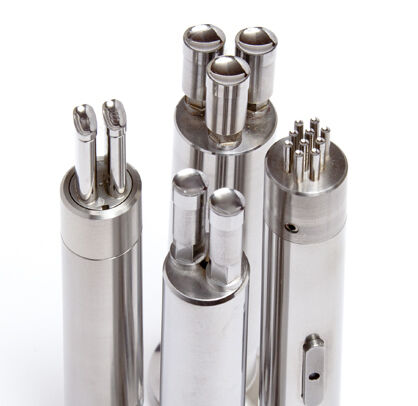
A taper is a precision tool or component designed to create a gradual, uniform reduction in diameter or thickness along its length. Whether used as a cutting tool, a mechanical fitting, or a shaping instrument, the taper plays a fundamental role across a wide range of industries, from metalworking and woodworking to medical device manufacturing and aerospace engineering. Its defining characteristic is the consistent angular transition from a wider base to a narrower tip, which allows for controlled engagement, secure fitting, and repeatable performance in demanding applications. The primary function of a taper is to enable precise mating between two components. When a tapered shaft is inserted into a tapered bore, the geometry creates a self-centering and self-locking connection that distributes load evenly and resists loosening under vibration or stress. This makes the taper an essential element in machine tool spindles, drill chucks, lathe centers, and arbors. In cutting applications, tapered tools such as tapered reamers, tapered end mills, and tapered drill bits allow machinists to produce holes and bores with exact angular profiles, meeting tight dimensional tolerances required in precision manufacturing. Technologically, modern tapers are engineered to conform to internationally recognized standards such as Morse Taper, Jacobs Taper, Brown and Sharpe Taper, and ISO taper specifications. These standards ensure interchangeability and compatibility across different machines and tooling systems worldwide. Advanced manufacturing techniques, including CNC grinding and precision lapping, are used to produce tapers with surface finishes and dimensional accuracies measured in microns. In terms of applications, the taper is found in automotive drivetrains, surgical instruments, optical fiber connectors, woodworking joints, and high-speed machining centers. Its versatility, reliability, and mechanical efficiency make it one of the most enduring and widely used geometric forms in engineering and manufacturing history.


New Products

The taper offers a set of practical benefits that make it a preferred choice for engineers, machinists, and manufacturers who need reliable, repeatable, and efficient connections or cutting performance. Understanding these advantages helps you see why the taper continues to be a go-to solution across so many industries and applications. First, the taper creates a self-centering fit. When you insert a tapered component into a matching socket or bore, the geometry automatically aligns the two parts along a common axis. You do not need additional alignment fixtures or complex setup procedures. This saves time on the shop floor and reduces the chance of assembly errors that can lead to costly rework or scrapped parts. Second, the taper provides a secure, vibration-resistant connection. The wedging action that occurs as a tapered shaft seats into a tapered bore generates significant holding force without the need for threads, keys, or adhesives. This means the connection stays tight even under heavy loads, high-speed rotation, or continuous vibration. In machine tools, this translates directly to better surface finishes, longer tool life, and more consistent part dimensions. Third, the taper makes tool changes fast and straightforward. Because the fit relies on geometry rather than threaded fasteners, you can remove and reinstall tapered tooling quickly. A simple drawbar or drift pin is all you need to release the connection. This reduces machine downtime and keeps production moving efficiently. Fourth, the taper distributes stress evenly across the contact surface. Unlike a sharp shoulder or a flat-bottomed hole, the gradual angle of a taper spreads the load over a larger area. This reduces peak stress concentrations, which extends the service life of both the tool and the machine spindle. Fifth, the taper is highly versatile. The same fundamental geometry works in cutting tools, drive shafts, medical instruments, woodworking joints, and optical connectors. You get a single, well-understood design principle that solves connection and alignment challenges across completely different industries. Sixth, tapers conform to global standards, which means you can source compatible tooling and components from multiple suppliers without worrying about fit or performance. This gives you supply chain flexibility and reduces the risk of being locked into a single vendor. Seventh, the taper is easy to inspect and verify. Standard taper gauges and ring gauges allow you to quickly confirm that a taper meets its dimensional specification. This simplifies quality control and keeps your production process on track. Taken together, these advantages explain why the taper remains one of the most trusted and widely used mechanical forms in precision engineering and manufacturing today.

Latest News

How does a mini tablet press machine improve production?

25

May

How does a mini tablet press machine improve production?

In pharmaceutical manufacturing, nutraceutical production, and even chemical processing, the ability to compress powders into uniform, consistent tablets at scale is a foundational requirement. A mini tablet press machine has emerged as a transformat...
View More
How Does Press Tooling Design Impact Production Efficiency?

25

May

How Does Press Tooling Design Impact Production Efficiency?

In high-volume manufacturing environments, the design of Press Tooling is one of the most consequential engineering decisions a production team can make. From cycle time to scrap rate, from die longevity to operator safety, the geometry, material sel...
View More
What is Blister Packing Tooling and How Does It Work?

25

May

What is Blister Packing Tooling and How Does It Work?

In pharmaceutical and consumer goods manufacturing, precision packaging is not just about aesthetics — it is a fundamental requirement for product safety, shelf life, and regulatory compliance. Blister Packing Tooling sits at the heart of this ...
View More
How Does Blister Packing Tooling Improve Production Speed?

25

May

How Does Blister Packing Tooling Improve Production Speed?

In high-volume pharmaceutical and consumer goods manufacturing, every second on the production line carries real cost. When facilities look for ways to accelerate output without compromising quality, the conversation almost always returns to the same...
View More

Get a Free Quote

Our representative will contact you soon.
Email
Name
Company Name
Message
0/1000

taper

Self-Locking Precision Fit That Eliminates Alignment Guesswork

Self-Locking Precision Fit That Eliminates Alignment Guesswork

One of the most valuable features of the taper is its ability to create a self-locking, self-centering fit between mating components. This is not a minor convenience. It is a fundamental mechanical advantage that directly affects the quality, consistency, and efficiency of any operation that relies on the taper connection. When a tapered shaft or tool shank is inserted into a matching tapered socket, the two surfaces make contact along the full length of the taper angle. As the components are drawn together, the wedging action increases the contact pressure uniformly around the entire mating surface. This creates a connection that is both precisely centered and highly resistant to axial and radial displacement. In practical terms, this means that every time you install a tapered tool or component, it seats in exactly the same position. There is no need to use dial indicators to check runout after every tool change, and there is no need to spend time adjusting the position of the tool relative to the spindle axis. The taper does this work for you automatically, every single time. This repeatability is critical in precision machining environments where part tolerances are measured in thousandths of an inch or fractions of a millimeter. A tool that seats consistently in the same position produces parts that meet their dimensional specifications consistently, which reduces scrap rates and inspection time. The self-locking nature of the taper also means that the connection holds securely during cutting operations without requiring additional clamping force from drawbars or retention knobs in many standard applications. The friction generated by the wedging contact is sufficient to transmit torque and resist axial pull-out under normal cutting loads. This simplifies the tooling system and reduces the number of components that can wear out or fail. For manufacturers who run high-volume production, the combination of fast, repeatable seating and secure holding force translates directly into higher throughput, lower tooling costs, and more predictable process performance. The taper is not just a geometric feature. It is a precision engineering solution that makes your entire machining or assembly process more reliable and more efficient from the first part to the last.
Broad Compatibility Across Industry Standards and Tooling Systems

Broad Compatibility Across Industry Standards and Tooling Systems

The taper has been standardized across multiple internationally recognized systems, and this standardization is one of its greatest practical strengths. Whether you work with Morse Taper, Jacobs Taper, Brown and Sharpe Taper, National Machine Tool Builders Association taper, or ISO taper specifications, you are working within a framework that has been tested, refined, and adopted by manufacturers and machine builders around the world over many decades. This broad compatibility means that when you invest in tapered tooling or tapered machine components, you are not buying into a proprietary system that limits your sourcing options. You can purchase compatible tooling from dozens of qualified suppliers, compare prices, evaluate quality, and switch vendors without redesigning your process or replacing your equipment. This supply chain flexibility is a significant operational advantage, particularly in environments where lead times and component availability can affect production schedules. Standardized tapers also simplify maintenance and repair. When a tapered spindle or socket shows wear, you can replace it with a standard component that meets the published specification. You do not need to send parts back to the original equipment manufacturer or wait for custom replacements. Standard taper gauges are widely available and easy to use, so your quality team can verify conformance quickly and confidently. Beyond the supply chain benefits, standardization means that the engineering data for each taper type is well documented and widely understood. Machinists, engineers, and quality inspectors who are familiar with Morse Taper or ISO taper specifications can work with your tooling and equipment without extensive retraining. This reduces onboarding time and makes it easier to bring in contract machinists or temporary staff during peak production periods. The taper also bridges different industries. The same Morse Taper that holds a drill bit in a metalworking lathe is used in woodworking machinery, medical drilling equipment, and laboratory instruments. This cross-industry adoption reflects the universal reliability of the tapered connection and gives you confidence that the design principle you are relying on has been validated in the most demanding real-world environments imaginable.
Extended Tool and Component Life Through Optimized Load Distribution

Extended Tool and Component Life Through Optimized Load Distribution

The geometry of the taper does more than create a secure fit. It actively protects the tools and machine components involved in the connection by distributing mechanical loads across a broad contact area rather than concentrating them at a single point or edge. This load distribution characteristic is one of the key reasons why tapered connections consistently outlast alternative connection methods in high-demand applications. When a cutting force, torque, or axial load is applied to a tapered connection, the stress is spread along the entire length of the mating taper surfaces. This means that no single point on the tool shank or the machine spindle bears a disproportionate share of the load. Peak stress concentrations, which are the primary cause of fatigue cracking and premature wear in mechanical connections, are significantly reduced. The result is a connection that maintains its dimensional integrity and holding performance over a much longer service life than a flat-bottomed or threaded connection of comparable size. In high-speed machining applications, where cutting forces change rapidly and vibration is a constant factor, this stress distribution advantage becomes even more important. A taper that distributes load evenly dampens vibration more effectively than a connection with localized contact points. Better vibration damping means smoother cutting action, which produces better surface finishes on machined parts and reduces the wear rate on cutting edges. You get more parts per tool, which lowers your cost per part and reduces the frequency of tool changes. The extended service life of tapered components also reduces the total cost of ownership of your machining or assembly equipment. Spindles, arbors, and tool holders that are protected by the load-distributing geometry of the taper require less frequent replacement, which reduces both direct material costs and the indirect costs associated with machine downtime during maintenance. For any operation where tool life, surface quality, and equipment reliability are priorities, the taper delivers measurable, lasting value that justifies its place as the connection standard of choice in precision manufacturing environments worldwide.

Get a Free Quote

Our representative will contact you soon.
Email
Name
Company Name
Message
0/1000