Portable Hammer Mill: Mobile Grinding Solutions for Agriculture, Biomass, and Recycling

Get a Free Quote

Our representative will contact you soon.
Email
Name
Company Name
Message
0/1000

portable hammer mill

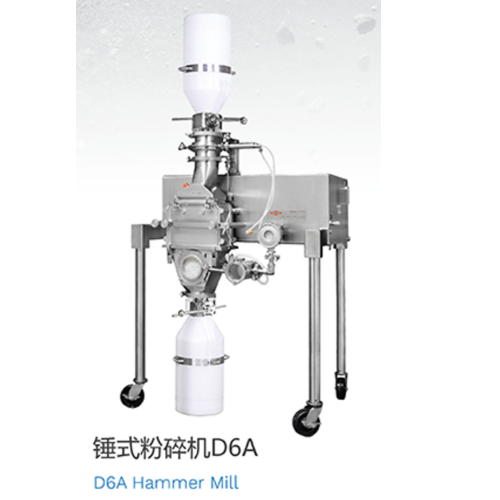
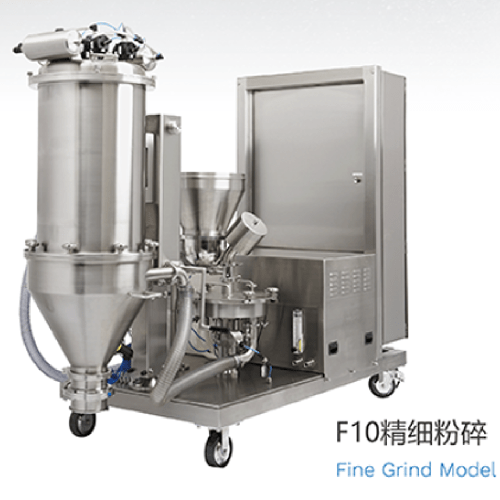
The portable hammer mill is a compact, high-performance grinding machine designed to process a wide range of materials directly at the source. Unlike stationary grinding equipment, this machine is built for mobility, allowing operators to move it between job sites, farms, or processing facilities with minimal effort. Its core function is to reduce the size of raw materials by using rapidly rotating hammers that strike, shatter, and pulverize feed stocks into fine, uniform particles. This mechanism makes it an essential tool across agriculture, biomass processing, recycling, and small-scale industrial operations. At the heart of the portable hammer mill is a robust rotor assembly fitted with hardened steel hammers. As the rotor spins at high speed, the hammers deliver repeated impact forces to incoming material, breaking it down until the particles are small enough to pass through a replaceable screen. The screen size determines the final particle diameter, giving operators precise control over output granularity. Most models are powered by either electric motors or diesel engines, making them adaptable to locations with or without grid electricity. Technologically, modern portable hammer mills incorporate features such as variable-speed drives, quick-change screen systems, and dust containment enclosures. These advancements reduce downtime, improve safety, and allow rapid switching between different processing tasks. Some units also integrate magnetic separators to remove metal contaminants before they reach the grinding chamber, protecting internal components and extending service life. The applications of the portable hammer mill span a broad spectrum. In agriculture, it grinds corn, wheat, soybeans, and other grains into animal feed. In biomass energy production, it shreds wood chips, straw, and agricultural residues into uniform feedstock for pellet mills or boilers. Recycling operations use it to break down cardboard, plastics, and organic waste. Small mining and construction sites rely on it for preliminary size reduction of soft minerals and aggregates. This versatility, combined with its mobility and ease of setup, makes the portable hammer mill a practical investment for businesses that need reliable, on-demand grinding capability without the cost and complexity of permanent installations.


New Product Recommendations

The portable hammer mill delivers real, measurable benefits that directly improve how you work and how much you spend. Here is a straightforward look at what makes this machine a smart choice for farmers, processors, recyclers, and small business owners. First, you save money on transportation and logistics. When your grinding equipment travels with you, you eliminate the cost of hauling raw materials to a fixed processing plant. You process grain, biomass, or waste right where it is collected, cutting fuel costs and reducing the time your team spends on the road. Over a single season, those savings add up to a significant reduction in operating expenses. Second, you gain flexibility that stationary machines simply cannot offer. A portable hammer mill lets you serve multiple locations with one piece of equipment. A farmer can grind feed at the main barn in the morning and move the unit to a remote pasture facility in the afternoon. A contractor can take the machine to a demolition site, process wood waste on the spot, and move on to the next job without leaving material behind. This kind of operational agility gives small operations the ability to compete with larger, better-resourced businesses. Third, setup is fast and straightforward. Most portable hammer mill models are designed so that one or two people can have the machine running within minutes of arrival. There are no complex foundations to pour, no permanent electrical connections to wire, and no lengthy commissioning procedures. You unload, connect your power source, load material, and start grinding. That simplicity translates directly into productive hours rather than wasted setup time. Fourth, maintenance is accessible and affordable. The hammers, screens, and bearings on a portable hammer mill are standard components that are easy to inspect, replace, and source. Because the machine is compact, every serviceable part is within reach without specialized lifting equipment. Operators can swap a worn screen in the field in under fifteen minutes, keeping downtime to an absolute minimum. Fifth, the portable hammer mill handles a wide variety of materials without requiring a different machine for each task. Grain, straw, wood chips, cardboard, soft minerals, and organic waste all respond well to hammer mill processing. By adjusting the screen size and rotor speed, you tune the output to match your exact requirements. That adaptability means one investment covers multiple revenue streams or production needs. Sixth, energy efficiency has improved dramatically in recent portable hammer mill designs. Variable-frequency drives match motor output to actual load conditions, so you are not burning full power when processing lighter materials. Diesel-powered models use fuel-efficient engines that meet current emissions standards, reducing both operating costs and environmental impact. Seventh, the compact footprint of a portable hammer mill means it fits into spaces where larger equipment cannot go. Tight barn aisles, small processing sheds, and crowded job sites are all workable environments. You do not need to redesign your facility around the machine. The machine adapts to your space. Taken together, these advantages make the portable hammer mill one of the most cost-effective and operationally flexible grinding solutions available today. Whether you are scaling up a small farm operation, launching a biomass processing business, or adding grinding capacity to an existing recycling workflow, this machine delivers dependable performance without locking you into a fixed location or a heavy capital commitment.

Latest News

What are cardboard packing boxes and how do they work?

25

May

What are cardboard packing boxes and how do they work?

When businesses and individuals need a reliable, cost-effective, and versatile solution for protecting goods during storage or transit, cardboard packing boxes consistently emerge as the go-to choice. These containers are constructed from layers of p...
View More
What is a mini tablet press machine and how does it work?

25

May

What is a mini tablet press machine and how does it work?

A mini tablet press machine is a compact, precision-driven piece of equipment designed to compress powdered or granulated materials into uniform tablet forms. Whether used in pharmaceutical research, nutraceutical development, or small-scale chemical...
View More
How does a mini tablet press machine improve production?

25

May

How does a mini tablet press machine improve production?

In pharmaceutical manufacturing, nutraceutical production, and even chemical processing, the ability to compress powders into uniform, consistent tablets at scale is a foundational requirement. A mini tablet press machine has emerged as a transformat...
View More
How Does Blister Packing Tooling Improve Production Speed?

25

May

How Does Blister Packing Tooling Improve Production Speed?

In high-volume pharmaceutical and consumer goods manufacturing, every second on the production line carries real cost. When facilities look for ways to accelerate output without compromising quality, the conversation almost always returns to the same...
View More

Get a Free Quote

Our representative will contact you soon.
Email
Name
Company Name
Message
0/1000

portable hammer mill

Unmatched Mobility for On-Site Processing

Unmatched Mobility for On-Site Processing

The defining characteristic of the portable hammer mill is its ability to go where the work is, and that single quality reshapes the economics of material processing in ways that are difficult to overstate. Traditional grinding operations require raw materials to be collected, loaded, transported to a central facility, processed, and then redistributed. Each of those steps costs time, fuel, and labor. The portable hammer mill collapses that chain by bringing the processing capability directly to the material source, whether that is a grain field, a logging site, a construction yard, or a waste collection point. The mobility of the portable hammer mill is engineered into every aspect of its design. The frame is typically mounted on a heavy-duty trailer or skid with forklift pockets, allowing it to be towed by a standard farm tractor or pickup truck and repositioned by a forklift or telehandler. Folding feed hoppers and retractable discharge chutes reduce the overall transport dimensions so the unit fits within standard road width limits without requiring special permits. Locking mechanisms secure all moving parts during transit, preventing damage and ensuring the machine arrives at the next site in full working condition. For agricultural operations, this mobility means a single portable hammer mill can service an entire network of feeding stations across a large property or across multiple farms under a cooperative arrangement. Instead of investing in a fixed grinder at each location, operators share one high-quality machine and schedule its use efficiently. For biomass contractors, the ability to process wood waste, crop residues, and organic material at the harvest or collection point eliminates the cost of transporting bulky, low-density raw material over long distances. The processed output is denser, more uniform, and far cheaper to move. For recycling businesses, on-site size reduction means collection vehicles carry more processed material per trip, improving route efficiency and reducing the number of runs needed to clear a site. The practical value of this mobility extends beyond cost savings. It also reduces the environmental footprint of the entire processing operation. Fewer truck movements mean lower fuel consumption and reduced road wear. Processing at the source minimizes the dust, noise, and traffic associated with centralized grinding facilities, making it easier to operate in or near residential and agricultural communities. The portable hammer mill does not just move the machine. It moves the entire value of centralized processing out into the field, putting control and efficiency directly in the hands of the operator.
Precision Output Control Through Interchangeable Screen Technology

Precision Output Control Through Interchangeable Screen Technology

One of the most valuable technical features of the portable hammer mill is its interchangeable screen system, which gives operators direct, hands-on control over the particle size of the finished product. This capability transforms a single machine into a multi-purpose processing tool that can meet the specifications of completely different end uses without any major mechanical changes. The screen is a perforated metal plate that surrounds the lower portion of the grinding chamber. As the rotating hammers break down incoming material, particles are continuously thrown against the screen. Only particles small enough to pass through the perforations exit the grinding chamber. Larger particles remain inside and continue to receive hammer impacts until they reach the required size. By selecting a screen with smaller or larger perforations, the operator directly sets the maximum particle diameter of the output. In practice, this means a portable hammer mill processing grain for poultry feed can use a fine screen to produce a floury texture that maximizes digestibility. The same machine, fitted with a coarser screen, can process the same grain into a cracked texture preferred for cattle or hog rations. Switch to a large-aperture screen and the machine shifts to coarse chopping of straw or hay for bedding or roughage supplementation. Move to a biomass application and a medium screen produces wood chip particles sized correctly for pellet mill infeed. The interchangeable screen system on a modern portable hammer mill is designed for rapid field changes. Quick-release clamps or swing-bolt closures allow a single operator to open the grinding chamber access door, slide out the used screen, insert the replacement, and close the chamber in under fifteen minutes without tools beyond a standard wrench. Some designs use a hinged screen cradle that swings out of the machine entirely, making the swap even faster and reducing the risk of injury from handling sharp-edged perforated metal in a confined space. Screen durability is also a key engineering consideration. Screens are manufactured from hardened steel alloys that resist abrasion from high-velocity particle impacts. Wear-resistant coatings and heat treatment processes extend service life significantly compared to earlier generations of equipment. When screens do wear out, they are standard replacement components available from the manufacturer or through agricultural and industrial supply networks, keeping maintenance costs predictable and downtime short. The ability to control output particle size with precision is not just a convenience. It is a direct driver of product quality and customer satisfaction in every market the portable hammer mill serves.
Durable Construction Built for Demanding Field Conditions

Durable Construction Built for Demanding Field Conditions

A portable hammer mill operates in some of the harshest environments that industrial equipment encounters. Dusty grain handling facilities, muddy farm yards, wet logging sites, and gritty recycling operations all place extreme demands on mechanical components. The durability built into a well-engineered portable hammer mill is therefore not a luxury feature. It is the foundation of reliable performance and a low total cost of ownership over the machine's working life. The grinding chamber of a portable hammer mill is the component under the greatest stress. It is constructed from thick-gauge steel plate, often reinforced with wear-resistant liner panels that absorb the abrasive impact of high-velocity particles before they reach the structural walls. These liners are replaceable, so when they wear down after extended use, the operator installs new panels rather than replacing the entire chamber housing. This design philosophy extends the service life of the main structure to many years while keeping maintenance costs focused on affordable consumable parts. The hammers themselves are the primary wear components in any portable hammer mill. They are forged or cast from high-chromium steel or manganese steel alloys that combine hardness with enough toughness to resist fracture under repeated impact loading. Most hammer designs are reversible, meaning the operator can flip each hammer to present a fresh striking edge when one side wears down, effectively doubling the service life of each hammer before replacement is needed. The rotor shaft and bearing assemblies are engineered to handle the continuous vibration and radial loads generated by high-speed hammer rotation. Sealed, heavy-duty roller bearings with extended lubrication intervals are standard on quality portable hammer mill models, reducing the frequency of maintenance interventions and the risk of bearing failure in remote locations where replacement parts may not be immediately available. The external frame and trailer structure of a portable hammer mill are built to withstand the stresses of repeated towing over rough terrain. Reinforced hitch connections, heavy-duty suspension components, and corrosion-resistant coatings protect the structural integrity of the unit through years of field deployment. Electrical and control components are housed in sealed enclosures rated for dusty and wet environments, preventing contamination-related failures that could sideline the machine at a critical moment. This commitment to durable construction means that a portable hammer mill purchased today will still be delivering productive performance years from now, making it a capital investment that pays back its cost many times over across its operational lifespan.

Get a Free Quote

Our representative will contact you soon.
Email
Name
Company Name
Message
0/1000