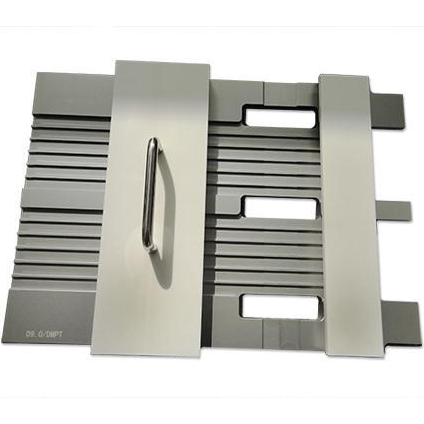
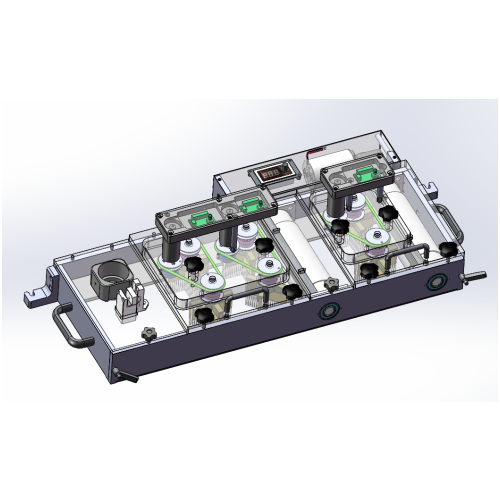
Industrial Punch Tools: Precision, Durability, and Versatile Hole-Making Solutions

Get a Free Quote

Our representative will contact you soon.
Email
Name
Company Name
Message
0/1000

punch

The punch is a versatile and essential tool used across a wide range of industries, from manufacturing and metalworking to leathercraft, paper processing, and construction. At its core, a punch is designed to create clean, precise holes or indentations in various materials by applying focused force through a hardened tip or die. Whether operated manually or powered by hydraulic, pneumatic, or electric mechanisms, the punch delivers consistent results that meet the demands of both professional workshops and large-scale industrial environments. Modern punch technology has evolved significantly, incorporating high-strength steel alloys, precision-ground cutting edges, and advanced guide systems that ensure accuracy with every strike. The tool is available in a broad spectrum of configurations, including hollow punches, solid punches, center punches, and combination punch-and-die sets, each engineered for specific tasks and material types. Technologically, today's punch units often feature adjustable depth stops, quick-change tooling systems, and ergonomic handles or frames that reduce operator fatigue during extended use. CNC-integrated punch presses take automation a step further, allowing manufacturers to program complex hole patterns and shapes with minimal human intervention, dramatically increasing throughput and reducing material waste. The applications of the punch span virtually every sector. In sheet metal fabrication, punches create mounting holes, ventilation slots, and decorative cutouts with razor-sharp edges. In the garment and leather industries, punches produce uniform eyelet holes for belts, shoes, and bags. In office and print environments, paper punches deliver neat binding holes in seconds. Construction crews rely on heavy-duty punches to perforate steel beams and structural plates without the heat distortion caused by drilling or cutting torches. The punch stands out as a tool that combines mechanical simplicity with engineering precision, making it indispensable for anyone who needs reliable, repeatable hole-making capability across diverse materials and production scales.


New Products

Choosing the right punch for your work can make a significant difference in how efficiently and accurately you get the job done. Here is a straightforward look at why the punch outperforms many alternative hole-making methods and why it continues to be the go-to choice for professionals and hobbyists alike. First, the punch delivers speed that other tools simply cannot match. When you need to create dozens or even hundreds of holes in a short period, a punch completes each cycle in a fraction of a second. There is no waiting for a drill bit to spin up, no repositioning a cutting torch, and no cooling time required between operations. This speed translates directly into higher productivity and lower labor costs, which matters whether you run a small craft studio or a high-volume production line. Second, the punch produces cleaner results. A well-maintained punch cuts through material in a single, controlled stroke, leaving a smooth, burr-free edge that often requires no secondary finishing. Drilling, by contrast, frequently leaves rough edges that need deburring, adding time and cost to the process. For industries where surface quality affects the final product, such as electronics enclosures or decorative metalwork, this clean-cut advantage is a genuine game changer. Third, the punch is remarkably consistent. Once you set up the tooling and position your material, every hole comes out identical in size, shape, and location. This repeatability is critical in assembly-line environments where parts must fit together precisely. Human error is minimized, reject rates drop, and quality control becomes far easier to manage. Fourth, the punch is cost-effective over the long term. Punch tooling is durable and, with proper maintenance, can last through tens of thousands of cycles before needing replacement. Compared to consumable cutting discs or drill bits that wear out quickly, punch tooling offers a much lower cost per hole. Fifth, the punch is adaptable. By simply swapping out the die and punch tip, you can change hole sizes, shapes, and configurations in minutes. This flexibility means one machine can handle a wide variety of jobs without requiring a separate tool for each task. Sixth, the punch is safer to operate than many cutting alternatives. There are no sparks, no heat, and no rotating blades to manage. Operators face a lower risk of burns, fire hazards, or contact injuries when using a properly guarded punch press compared to angle grinders or plasma cutters. Finally, the punch supports sustainability goals. Because it removes material cleanly and generates minimal scrap, it contributes to leaner, more efficient production processes. Less waste means lower material costs and a smaller environmental footprint, both of which are increasingly important to businesses and their customers.

Tips And Tricks

How do packaging machine components work together?

25

May

How do packaging machine components work together?

Understanding how packaging machine components interact is fundamental to running efficient, reliable production lines. Every element within a packaging system—from the feeding mechanism to the sealing unit—is engineered to perform a prec...
View More
What is Press Tooling and How Does It Work in Manufacturing?

25

May

What is Press Tooling and How Does It Work in Manufacturing?

In modern manufacturing, precision, repeatability, and efficiency are not optional — they are the foundation of competitive production. Press Tooling sits at the heart of this foundation, enabling manufacturers across industries to form, cut, s...
View More
How Does Blister Packing Tooling Improve Production Speed?

25

May

How Does Blister Packing Tooling Improve Production Speed?

In high-volume pharmaceutical and consumer goods manufacturing, every second on the production line carries real cost. When facilities look for ways to accelerate output without compromising quality, the conversation almost always returns to the same...
View More
Which Materials Work Best with Blister Packing Tooling?

25

May

Which Materials Work Best with Blister Packing Tooling?

Selecting the right material for Blister Packing Tooling is one of the most consequential decisions a pharmaceutical or consumer goods manufacturer can make. The material determines not only how well the tooling performs during forming, sealing, and ...
View More

Get a Free Quote

Our representative will contact you soon.
Email
Name
Company Name
Message
0/1000

punch

Unmatched Precision Engineering for Flawless Results Every Time

Unmatched Precision Engineering for Flawless Results Every Time

One of the most compelling reasons professionals across industries choose the punch over competing tools is its ability to deliver pinpoint accuracy on every single operation. Precision is not just a feature of the punch, it is the foundation upon which the entire tool is built. From the ground-up design of the cutting tip to the alignment of the guide bushings and the rigidity of the frame, every component works together to ensure that each hole lands exactly where it should, with the exact dimensions specified, and with edges clean enough to meet the tightest tolerances in modern manufacturing. The secret behind this precision lies in the quality of the tooling materials and the engineering of the punch-and-die clearance. High-grade tool steel, often treated with surface hardening processes such as nitriding or titanium nitride coating, gives the punch tip the hardness needed to cut through tough materials without deforming. The die opening is machined to match the punch diameter with a clearance calculated specifically for the target material thickness and type, ensuring a shear cut rather than a tear. This controlled shearing action is what produces the smooth, consistent hole edge that sets the punch apart from drilling or sawing methods. For manufacturers running automated punch presses, precision is further enhanced by servo-driven positioning systems and real-time feedback controls that compensate for material variation and tool wear. CNC punch systems can hold positional tolerances within fractions of a millimeter across an entire sheet, making them ideal for producing complex panel layouts, circuit board mounting patterns, or architectural facade elements where visual alignment is as important as functional fit. Even in manual punch applications, the use of locating pins, adjustable fences, and depth stops gives operators the ability to reproduce hole positions accurately across large production runs without relying on hand measurement each time. This built-in repeatability reduces setup time, lowers the rate of defective parts, and gives quality control teams confidence that every piece leaving the line meets specification. For customers, this level of precision means fewer assembly problems, less rework, and a finished product that reflects the quality their own customers expect.
Exceptional Durability That Keeps Your Operation Running Without Interruption

Exceptional Durability That Keeps Your Operation Running Without Interruption

Downtime is one of the most expensive problems any production operation can face, and the punch is engineered specifically to minimize it. The durability of a well-built punch is one of its most practical and financially significant advantages, and it is a quality that becomes apparent the moment you compare the lifespan of punch tooling against the consumables used in alternative cutting methods. A quality punch tip and matching die, made from premium tool steel and properly maintained, can complete hundreds of thousands of cycles before showing meaningful wear. This extraordinary service life is the result of careful material selection, precision manufacturing, and the fundamental mechanics of how the punch works. Because the punch shears material rather than grinding or abrading it, the cutting edges experience far less thermal and mechanical stress per cycle than a drill bit or cutting disc would under comparable conditions. The punch tip contacts the workpiece for only a brief moment during each stroke, and the load is distributed evenly across the cutting edge, preventing the localized stress concentrations that cause premature tool failure. Maintenance requirements for the punch are straightforward and manageable. Regular lubrication of the punch tip and die, periodic inspection of the cutting edges for chipping or rounding, and timely sharpening or replacement of worn tooling are the primary tasks needed to keep a punch operating at peak performance. Many modern punch systems include tool condition monitoring features that alert operators when tooling is approaching the end of its service life, allowing for planned replacement during scheduled maintenance windows rather than emergency stops during production. The economic impact of this durability is substantial. When you calculate the cost per hole over the full lifespan of a punch tool set, the figure is consistently lower than the equivalent cost using drill bits, cutting wheels, or laser consumables. For high-volume operations, this difference adds up to significant savings over the course of a year. Beyond the direct cost savings, the reliability of the punch reduces the stress and disruption of unexpected breakdowns, allowing production managers to plan schedules with confidence and meet delivery commitments consistently.
Versatile Application Range That Adapts to Every Material and Industry Need

Versatile Application Range That Adapts to Every Material and Industry Need

The punch earns its place as a cornerstone tool in workshops and factories around the world not just because of its precision or durability, but because of the remarkable range of materials and applications it can handle. Few tools offer the same breadth of capability, and this versatility is a key reason why investing in a quality punch system pays dividends across multiple departments, product lines, and industries. In metalworking, the punch handles everything from thin aluminum sheet to thick structural steel plate, producing holes, slots, notches, and shaped cutouts with equal ease. By selecting the appropriate punch tip geometry and die configuration, operators can work with stainless steel, copper, brass, and specialty alloys without switching to a different machine. The same punch press that creates ventilation holes in an electrical enclosure in the morning can be retooled in minutes to punch mounting slots in a steel bracket in the afternoon. In the leather and textile industries, the punch is the tool of choice for creating clean, round holes in belts, straps, shoe uppers, and garment components. The punch produces edges that resist tearing and fraying, which is essential for products that will experience repeated stress at the hole location. Craft workers and small-batch producers rely on hand-operated punch sets for this work, while larger manufacturers use automated punch presses to maintain consistent quality across high-volume runs. Paper and cardboard processing is another domain where the punch excels. Binding punches, corner punches, and shaped punches are used in print finishing, packaging production, and stationery manufacturing to add functional and decorative features to paper products. The punch creates these features cleanly and quickly, without the tearing or compression that scissors or knives can cause. Plastic sheet fabrication, rubber gasket production, foam padding manufacturing, and even food processing applications all benefit from the punch's ability to cut precise shapes cleanly and repeatedly. This cross-industry applicability means that a business investing in punch technology is not locked into a single use case. As product lines evolve and new materials enter the workflow, the punch adapts through tooling changes rather than requiring capital investment in entirely new equipment.

Get a Free Quote

Our representative will contact you soon.
Email
Name
Company Name
Message
0/1000