High Precision Tooling Parts | Tight Tolerances, Durable Performance, Industry-Wide Applications

Get a Free Quote

Our representative will contact you soon.
Email
Name
Company Name
Message
0/1000

high precision tooling parts

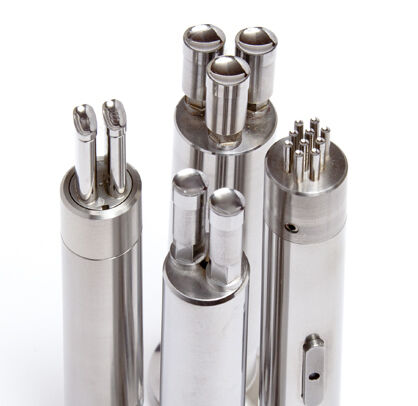
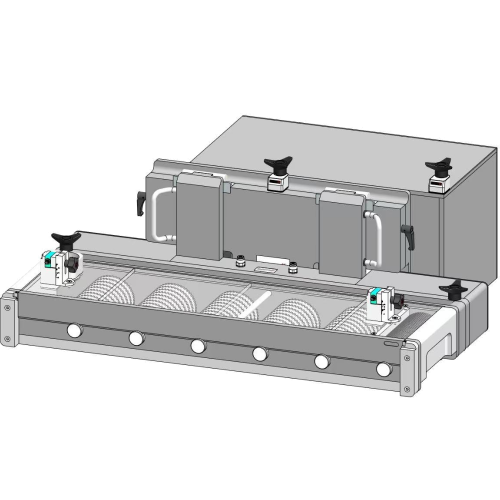
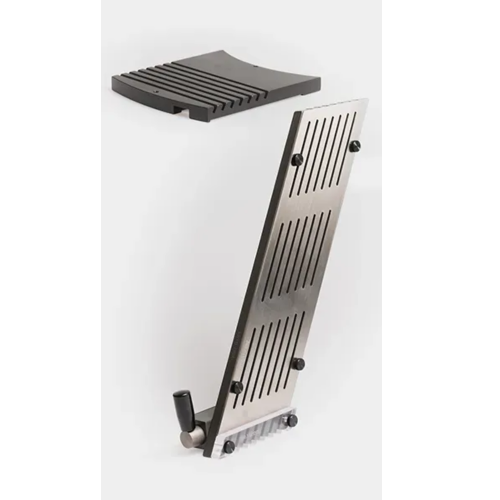
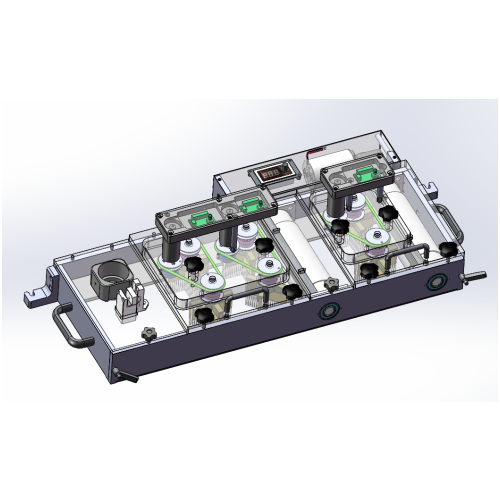
High precision tooling parts are the backbone of modern manufacturing, engineered to deliver exact dimensions, consistent performance, and long-term reliability across a wide range of industrial applications. These components are produced using advanced machining technologies such as CNC milling, grinding, electrical discharge machining (EDM), and wire cutting, all of which allow manufacturers to achieve tolerances as tight as a few microns. The result is a set of parts that fit together seamlessly, function predictably, and hold up under demanding operating conditions. At their core, high precision tooling parts serve several critical functions. They guide, support, and position workpieces during manufacturing processes, ensuring that every finished product meets strict dimensional and geometric specifications. They also form the structural foundation of molds, dies, jigs, and fixtures, which are the essential tools used to shape, cut, and assemble components in industries ranging from automotive to aerospace. Without reliable tooling parts, even the most sophisticated production lines would struggle to maintain quality and throughput. From a technological standpoint, high precision tooling parts are manufactured from carefully selected materials including hardened tool steel, carbide, stainless steel, and specialty alloys. These materials are chosen for their hardness, wear resistance, thermal stability, and machinability. Surface treatments such as nitriding, PVD coating, and hard chrome plating are often applied to extend service life and reduce friction. Metrology plays a central role in the production process, with coordinate measuring machines (CMMs) and optical comparators used to verify that every part meets its design intent before it leaves the factory. The applications of high precision tooling parts span virtually every sector of modern industry. In the automotive field, they are used in engine component molds, transmission housings, and body panel dies. In electronics manufacturing, they enable the production of micro-scale connectors, semiconductor packages, and circuit board assemblies. Medical device manufacturers rely on them to produce implants, surgical instruments, and diagnostic equipment with the accuracy that patient safety demands. Aerospace engineers use them to fabricate turbine blades, structural brackets, and avionics housings where weight, strength, and dimensional accuracy are all non-negotiable. High precision tooling parts are not simply manufactured components. They are engineered solutions that make precision manufacturing possible at scale.

New Products

When you invest in high precision tooling parts, you are making a decision that pays off across every stage of your production process. The benefits are concrete, measurable, and directly tied to the outcomes that matter most to your business: lower costs, higher quality, faster output, and greater confidence in your supply chain. Here is a straightforward look at what these parts actually do for you. First, they cut down on scrap and rework. When tooling parts hold tight tolerances consistently, the components they help produce come out right the first time. You spend less time sorting defective parts, less material goes to waste, and your team focuses on productive work instead of fixing mistakes. Over a production run of thousands or millions of parts, that reduction in scrap translates directly into significant cost savings. Second, high precision tooling parts extend the life of your production equipment. Poorly made tooling wears unevenly, creates vibration, and puts stress on the machines around it. Precision-made parts fit correctly, distribute load evenly, and reduce unnecessary wear on spindles, guides, and drive systems. Your machines last longer, your maintenance intervals stretch out, and your capital equipment delivers a better return on investment. Third, they speed up your production cycles. When every component in a tool or fixture fits together accurately, setup times drop. Operators spend less time adjusting, shimming, and compensating for dimensional variation. The line runs faster, changeovers happen more smoothly, and you get more usable output from every shift. Fourth, precision tooling parts give you consistency across large production volumes. Whether you are running the first part of the day or the ten-thousandth, the tooling performs the same way. That consistency is what allows you to make reliable delivery commitments to your customers and maintain the quality certifications that open doors to demanding markets. Fifth, they reduce your total cost of ownership. A cheaper tooling part that wears out quickly, causes downtime, or produces variable results ends up costing far more than a precision-engineered component that performs reliably for years. When you factor in downtime costs, replacement frequency, scrap rates, and labor, high precision tooling parts almost always deliver a lower total cost over their service life. Sixth, they support your quality management system. Auditors, customers, and certification bodies want to see that your process is in control. Precision tooling is a foundational element of process control. It gives you the documented, repeatable performance data you need to satisfy ISO, IATF, and other quality standards. Seventh, they give your engineering team more freedom to innovate. When you know your tooling will hold the tolerances your designs require, you can push the boundaries of what your products can do. Tighter fits, thinner walls, more complex geometries, and finer surface finishes all become achievable when your tooling is up to the task. In short, high precision tooling parts are not a premium you pay for perfection. They are a practical investment that makes your entire operation run better, cost less, and deliver more value to the customers who depend on you.

Latest News

How does a mini tablet press machine improve production?

25

May

How does a mini tablet press machine improve production?

In pharmaceutical manufacturing, nutraceutical production, and even chemical processing, the ability to compress powders into uniform, consistent tablets at scale is a foundational requirement. A mini tablet press machine has emerged as a transformat...
View More
How do packaging machine components work together?

25

May

How do packaging machine components work together?

Understanding how packaging machine components interact is fundamental to running efficient, reliable production lines. Every element within a packaging system—from the feeding mechanism to the sealing unit—is engineered to perform a prec...
View More
What is Press Tooling and How Does It Work in Manufacturing?

25

May

What is Press Tooling and How Does It Work in Manufacturing?

In modern manufacturing, precision, repeatability, and efficiency are not optional — they are the foundation of competitive production. Press Tooling sits at the heart of this foundation, enabling manufacturers across industries to form, cut, s...
View More
Which Materials Work Best with Blister Packing Tooling?

25

May

Which Materials Work Best with Blister Packing Tooling?

Selecting the right material for Blister Packing Tooling is one of the most consequential decisions a pharmaceutical or consumer goods manufacturer can make. The material determines not only how well the tooling performs during forming, sealing, and ...
View More

Get a Free Quote

Our representative will contact you soon.
Email
Name
Company Name
Message
0/1000

high precision tooling parts

Micron-Level Accuracy That Protects Your Product Quality

Micron-Level Accuracy That Protects Your Product Quality

One of the most important things high precision tooling parts bring to your manufacturing operation is the ability to hold dimensional tolerances at the micron level, consistently, across every part and every production run. This level of accuracy is not just a technical specification on a drawing. It is the foundation on which your entire quality system stands. When tooling parts are manufactured to micron-level tolerances, the components they help produce inherit that precision. Mold cavities fill evenly, cutting tools engage workpieces at exactly the right depth and angle, and fixture locators position blanks with zero ambiguity. The result is a finished product that meets its design intent every single time, without the variation that leads to customer complaints, warranty claims, or costly recalls. Achieving this level of accuracy requires more than good intentions. It demands a combination of advanced machining equipment, skilled operators, rigorous process control, and comprehensive inspection. CNC grinding machines with sub-micron positioning resolution shape the critical surfaces of tooling components. Wire EDM systems cut complex profiles with edge accuracy that conventional milling cannot match. After machining, coordinate measuring machines scan every critical dimension and compare the results against the original CAD model, flagging any deviation before the part moves to the next stage. The materials used in high precision tooling parts also contribute directly to dimensional stability. Hardened tool steels and carbide grades are selected not only for their hardness and wear resistance but also for their low thermal expansion coefficients. This means that as your production environment heats up during a long shift, the tooling maintains its geometry rather than drifting out of tolerance. For manufacturers working in industries where a deviation of even a few microns can mean the difference between a functional product and a rejected one, this thermal stability is not a luxury. It is a requirement. Customers in the medical device, aerospace, and semiconductor sectors understand this well. They specify high precision tooling parts because they cannot afford the consequences of dimensional drift. But the same logic applies to any manufacturer who wants to compete on quality, reduce inspection overhead, and build a reputation for delivering parts that are right the first time, every time. Investing in micron-level accuracy at the tooling stage is the most cost-effective way to protect quality throughout your entire production process.
Durable Construction That Minimizes Downtime and Replacement Costs

Durable Construction That Minimizes Downtime and Replacement Costs

Durability is one of the defining characteristics of high precision tooling parts, and it is a characteristic that has a direct and measurable impact on your bottom line. Every hour your production line sits idle because a tooling component has worn out, cracked, or lost its dimensional integrity is an hour of lost revenue, missed deliveries, and frustrated customers. Precision-engineered tooling parts are built to resist exactly these failure modes, giving you the uptime and reliability your operation depends on. The durability of high precision tooling parts starts with material selection. Tool steels such as D2, H13, and M2 are chosen for their exceptional hardness, toughness, and resistance to abrasive wear. Carbide grades offer even greater hardness for applications where cutting edges or wear surfaces face extreme contact stress. Stainless steel and specialty alloys are selected where corrosion resistance is a priority alongside mechanical performance. Each material is matched to the specific demands of its application, ensuring that the part performs at its best under the exact conditions it will face in service. Surface treatment technology adds another layer of protection. Physical vapor deposition (PVD) coatings apply ultra-hard layers of titanium nitride, titanium aluminum nitride, or diamond-like carbon to critical surfaces, dramatically reducing friction and wear. Nitriding diffuses nitrogen into the surface layer of steel components, creating a hard case that resists galling and fatigue. Hard chrome plating provides a dense, smooth surface that stands up to sliding contact and corrosive environments. These treatments do not just extend the life of individual parts. They reduce the frequency of tool changes, lower your consumption of replacement components, and keep your production schedule on track. Precision manufacturing also contributes to durability in a less obvious but equally important way. When mating surfaces fit together accurately, contact stress is distributed evenly across the full bearing area rather than concentrated at high spots caused by poor fit. Even load distribution reduces peak stress, slows wear, and prevents the micro-cracking that leads to premature fatigue failure. In practical terms, this means that a precision-made tooling assembly lasts significantly longer than one assembled from components with loose tolerances, even if both are made from the same material. For production managers and procurement teams, the durability of high precision tooling parts translates into a lower total cost of ownership, more predictable maintenance schedules, and the confidence to commit to delivery timelines without worrying about unexpected tooling failures disrupting your plans.
Versatile Application Across Industries and Manufacturing Processes

Versatile Application Across Industries and Manufacturing Processes

High precision tooling parts are not designed for a single industry or a single type of manufacturing process. Their versatility is one of their greatest strengths, and it reflects the universal need for accuracy, reliability, and consistency in modern production environments. From the largest automotive stamping plant to the smallest medical device workshop, precision tooling parts play a central role in making quality manufacturing possible. In the automotive industry, high precision tooling parts are found throughout the production process. They form the cavities of injection molds used to produce interior trim components, lighting housings, and fluid system parts. They make up the cutting edges and guide elements of progressive dies that stamp body panels and structural brackets from sheet metal. They are built into the fixtures that hold engine blocks, cylinder heads, and transmission cases during precision machining operations. The dimensional accuracy of these tooling parts directly determines the fit, finish, and function of the vehicles that roll off the assembly line. In electronics manufacturing, the scale of precision required is even more demanding. High precision tooling parts enable the production of connectors with pin pitches measured in fractions of a millimeter, semiconductor packages with bond pad geometries visible only under magnification, and printed circuit board assemblies where component placement tolerances are tighter than the width of a human hair. The miniaturization trend in consumer electronics, wearables, and IoT devices continues to push these tolerances tighter with every product generation, and precision tooling parts are what make that miniaturization achievable in a production environment. The medical device sector places perhaps the highest demands on tooling precision of any industry. Implants must fit the human body with anatomical accuracy. Surgical instruments must operate with the tactile sensitivity that surgeons rely on. Diagnostic equipment must deliver measurements that clinicians trust with patient lives. High precision tooling parts make it possible to manufacture these products at scale without sacrificing the accuracy that safety requires. Aerospace, defense, energy, and industrial automation round out the picture, each bringing its own set of demanding requirements that high precision tooling parts are uniquely equipped to meet. The common thread across all these applications is the need for tooling that performs reliably, holds its dimensions under load and temperature, and supports the quality systems that regulated industries demand. High precision tooling parts deliver on all of these requirements, making them an indispensable resource for manufacturers who compete on quality and precision.

Get a Free Quote

Our representative will contact you soon.
Email
Name
Company Name
Message
0/1000