Premium Pharmaceutical Tooling Supplier - Precision Tools & Expert Support for Drug Manufacturing

Get a Free Quote

Our representative will contact you soon.
Email
Name
Company Name
Message
0/1000

pharmaceutical tooling supplier

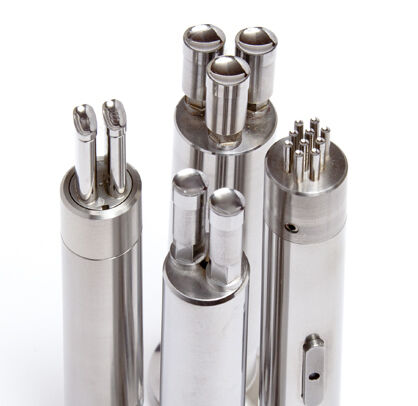
A pharmaceutical tooling supplier serves as a critical partner for drug manufacturers worldwide, providing specialized equipment and precision instruments essential for producing high-quality medications. These suppliers focus on delivering tablet compression tooling, capsule filling equipment components, and various dies and punches that form the backbone of pharmaceutical production lines. The main function centers on manufacturing custom-designed tooling that meets stringent regulatory standards while ensuring consistent tablet weight, hardness, and dimensional accuracy. A pharmaceutical tooling supplier works closely with production teams to understand specific formulation requirements and tablet designs, then engineers solutions that optimize manufacturing efficiency. Technological features include advanced materials like hardened steel alloys and tungsten carbide that resist wear during high-volume production runs. Modern suppliers utilize computer numerical control machining, precision grinding, and laser marking technologies to achieve microscopic tolerances required for pharmaceutical applications. Quality control systems incorporate dimensional inspection, surface finish analysis, and material certification to guarantee every tool meets pharmacopeial standards. Applications span across various dosage forms including immediate-release tablets, sustained-release formulations, effervescent tablets, and specialty shapes for branding purposes. The pharmaceutical tooling supplier also provides technical support for troubleshooting production issues such as capping, lamination, or picking problems that can halt manufacturing operations. Documentation services include material certificates, dimensional reports, and validation support packages that assist pharmaceutical companies during regulatory inspections. Maintenance programs offered by suppliers help extend tool life through professional refurbishment, coating restoration, and precision reworking services. The relationship between pharmaceutical manufacturers and their tooling supplier often develops into long-term partnerships built on reliability, technical expertise, and responsive customer service that directly impacts production uptime and product quality outcomes.

New Product Recommendations

Choosing the right pharmaceutical tooling supplier delivers tangible benefits that directly impact your bottom line and operational efficiency. First, you gain access to specialized expertise that translates complex formulation challenges into practical tooling solutions, reducing trial-and-error costs during product development phases. A reputable supplier brings decades of accumulated knowledge about how different pharmaceutical ingredients behave during compression, allowing them to recommend optimal tool geometries and surface treatments before you commit to full production. This proactive approach saves valuable time and prevents costly production delays. Second, quality consistency becomes significantly more achievable when working with an established pharmaceutical tooling supplier who maintains rigorous manufacturing standards. Every punch and die set undergoes multiple inspection stages, ensuring dimensional accuracy within microns and surface finishes that prevent powder adhesion. This precision translates to uniform tablet weights, consistent dissolution profiles, and reduced rejection rates on your production floor. Third, you benefit from faster turnaround times when ordering replacement tools or developing new products. Experienced suppliers maintain strategic inventory of common configurations and raw materials, enabling rapid response to urgent requests that keep your production lines running without extended downtime. Fourth, comprehensive technical support helps your team resolve production problems quickly. Whether dealing with tablet defects, excessive wear patterns, or changeover complications, knowledgeable application engineers provide troubleshooting guidance based on extensive field experience. Fifth, cost efficiency improves through extended tool life when suppliers use premium materials and advanced coating technologies. Tools that resist abrasive ingredients and corrosive excipients maintain critical dimensions longer, reducing replacement frequency and lowering your per-tablet tooling cost. Sixth, regulatory compliance becomes less burdensome when your pharmaceutical tooling supplier provides complete documentation packages including material traceability, dimensional certifications, and change control records. These documents streamline validation activities and support successful regulatory inspections. Seventh, innovation access allows you to implement latest technological advances without internal research investment. Leading suppliers continuously develop improved materials, coatings, and designs that enhance tablet quality and production efficiency, making these innovations available to customers. Finally, consolidating your tooling needs with a single trusted supplier simplifies procurement, standardizes quality expectations, and often unlocks volume pricing advantages that improve your competitive position in the pharmaceutical marketplace.

Tips And Tricks

What are cardboard packing boxes and how do they work?

25

May

What are cardboard packing boxes and how do they work?

When businesses and individuals need a reliable, cost-effective, and versatile solution for protecting goods during storage or transit, cardboard packing boxes consistently emerge as the go-to choice. These containers are constructed from layers of p...
View More
How Does Press Tooling Design Impact Production Efficiency?

25

May

How Does Press Tooling Design Impact Production Efficiency?

In high-volume manufacturing environments, the design of Press Tooling is one of the most consequential engineering decisions a production team can make. From cycle time to scrap rate, from die longevity to operator safety, the geometry, material sel...
View More
How Does Press Tooling Quality Affect Final Product Results?

25

May

How Does Press Tooling Quality Affect Final Product Results?

In precision manufacturing, the quality of Press Tooling is one of the most consequential variables in determining whether a final product meets its dimensional, structural, and aesthetic specifications. Every stamped, formed, or punched component th...
View More
How Does Blister Packing Tooling Improve Production Speed?

25

May

How Does Blister Packing Tooling Improve Production Speed?

In high-volume pharmaceutical and consumer goods manufacturing, every second on the production line carries real cost. When facilities look for ways to accelerate output without compromising quality, the conversation almost always returns to the same...
View More

Get a Free Quote

Our representative will contact you soon.
Email
Name
Company Name
Message
0/1000

pharmaceutical tooling supplier

Precision Engineering for Pharmaceutical Excellence

Precision Engineering for Pharmaceutical Excellence

The foundation of any successful pharmaceutical manufacturing operation rests upon the precision engineering capabilities of a pharmaceutical tooling supplier. This critical aspect encompasses far more than simply fabricating metal components; it represents a sophisticated integration of materials science, advanced manufacturing technologies, and deep understanding of pharmaceutical physics. When tablets fail to meet specifications, production stops, and revenue disappears, making precision absolutely essential. A pharmaceutical tooling supplier employs state-of-the-art computer numerical control equipment capable of achieving tolerances measured in micrometers, ensuring every punch tip, every die bore, and every embossing detail meets exacting specifications. This level of precision directly determines tablet weight uniformity, which regulatory agencies scrutinize closely during inspections and which patients depend upon for consistent dosing. Beyond dimensional accuracy, surface finish quality demands equal attention because microscopic imperfections can cause powder adhesion, leading to picking and sticking problems that compromise tablet appearance and potentially affect drug release characteristics. Experienced suppliers understand that different pharmaceutical formulations require different surface treatments, recommending specialized coatings like chromium nitride or titanium nitride when working with abrasive or sticky ingredients. The engineering process begins with thorough consultation where the pharmaceutical tooling supplier reviews formulation characteristics, desired tablet appearance, production volume requirements, and existing equipment specifications. This collaborative approach identifies potential challenges before manufacturing begins, avoiding expensive redesigns and production delays. Advanced suppliers utilize three-dimensional modeling software to visualize tablet designs and simulate compression forces, predicting potential weak points or areas prone to excessive wear. Material selection represents another crucial engineering decision where expertise proves invaluable. Different steel grades, carbide compositions, and surface treatments each offer distinct advantages depending on formulation abrasiveness, production volumes, and cleaning protocols. A knowledgeable pharmaceutical tooling supplier guides customers toward optimal material choices that balance initial investment against long-term durability and maintenance requirements. Quality verification employs sophisticated metrology equipment including coordinate measuring machines, optical comparators, and surface roughness testers that document every critical dimension. These detailed inspection reports provide the documentary evidence required for pharmaceutical validation activities and regulatory submissions, demonstrating that tooling meets predetermined specifications and remains traceable to certified raw materials.
Comprehensive Support Throughout Product Lifecycle

Comprehensive Support Throughout Product Lifecycle

The relationship with a pharmaceutical tooling supplier extends far beyond the initial purchase transaction, evolving into an ongoing partnership that supports every phase of your product lifecycle from development through commercial production and eventually product discontinuation. This comprehensive support model delivers substantial value that affects both immediate operational efficiency and long-term strategic success. During product development stages, experienced suppliers function as collaborative partners who contribute formulation insights based on extensive experience with similar compounds and tablet designs. They recommend starting configurations that increase the probability of first-time success, potentially saving months of development time and substantial material costs. When prototype tooling undergoes initial testing, technical representatives analyze resulting tablets to identify optimization opportunities, suggesting geometry modifications or surface treatment adjustments that resolve compression problems before they escalate into major obstacles. As products transition into validation phases, the pharmaceutical tooling supplier provides essential documentation including material certificates, dimensional reports, manufacturing procedures, and change control protocols that validation teams incorporate into master batch records and validation protocols. This documentation support streamlines regulatory submissions and inspection preparations, reducing compliance burden on internal quality teams. Throughout commercial production, responsive technical support becomes invaluable when unexpected issues arise. Whether facing sudden increases in tablet friability, unexplained weight variation, or accelerated tool wear, having direct access to knowledgeable application engineers who understand both your specific tooling and general pharmaceutical manufacturing principles enables rapid problem resolution. Many pharmaceutical tooling suppliers offer on-site troubleshooting visits where specialists observe actual production conditions, examine worn tools under magnification, and recommend corrective actions based on visual evidence rather than distant speculation. Preventive maintenance programs represent another support dimension that extends tool life and maintains consistent product quality. Professional refurbishment services restore worn punches and dies to original specifications through precision grinding, polishing, and recoating procedures that cost significantly less than complete replacement while delivering comparable performance. Strategic suppliers maintain detailed tool history records tracking manufacturing dates, refurbishment cycles, and performance issues that inform future replacement decisions and continuous improvement initiatives. When products eventually reach end-of-life, responsible suppliers assist with tool disposition, maintaining archived samples and documentation that support any future regulatory inquiries while properly recycling valuable materials. This cradle-to-grave support model distinguishes truly professional pharmaceutical tooling suppliers from transactional vendors.
Regulatory Compliance and Quality Assurance Excellence

Regulatory Compliance and Quality Assurance Excellence

Navigating the complex regulatory landscape governing pharmaceutical manufacturing demands partners who demonstrate unwavering commitment to quality assurance and compliance documentation. A pharmaceutical tooling supplier operating at the highest professional standards maintains quality management systems that mirror the expectations placed upon drug manufacturers themselves, creating seamless integration between supplier capabilities and customer requirements. These quality systems begin with raw material control, where incoming steel, carbide, and coating materials undergo rigorous verification against purchase specifications and industry standards. Material certificates trace each batch to original mill certifications, establishing complete supply chain transparency that regulatory inspectors increasingly demand during facility audits. Manufacturing process controls implement multiple in-process inspection points where trained quality technicians verify critical dimensions before subsequent operations proceed, preventing non-conforming material from advancing through production stages where detection becomes more difficult and correction more expensive. Final inspection protocols employ calibrated precision measuring equipment operated by certified inspectors who document every critical dimension against approved engineering drawings. These inspection reports become permanent quality records that accompany each tool shipment, providing objective evidence of conformance that validation teams incorporate into equipment qualification protocols. When dimensional variations occur outside acceptable tolerances, formal deviation procedures investigate root causes and implement corrective actions that prevent recurrence, demonstrating the continuous improvement culture essential for sustained regulatory compliance. A professional pharmaceutical tooling supplier maintains cleanroom or controlled environment manufacturing areas for final assembly and packaging operations, minimizing particulate contamination risks that could compromise pharmaceutical production environments. Environmental monitoring programs document temperature, humidity, and particle counts, ensuring consistent manufacturing conditions that support reproducible results. Change control procedures govern any modifications to materials, processes, or designs, requiring formal risk assessment and customer notification before implementation. This disciplined approach prevents unexpected performance variations that could disrupt validated pharmaceutical processes. Audit readiness represents another hallmark of quality-focused suppliers who welcome customer inspections and regulatory agency visits as opportunities to demonstrate capability rather than threats to be feared. Organized documentation systems provide rapid retrieval of historical records, training certifications, equipment calibration reports, and supplier qualification documents that auditors routinely request. Participation in industry associations and adherence to consensus standards like ISO 9001 quality management and ISO 13485 medical device quality standards signals commitment to internationally recognized best practices. The pharmaceutical tooling supplier who invests in these comprehensive quality systems delivers not just physical products but peace of mind, knowing that every tool arrives backed by verifiable evidence of quality and regulatory compliance.

Get a Free Quote

Our representative will contact you soon.
Email
Name
Company Name
Message
0/1000