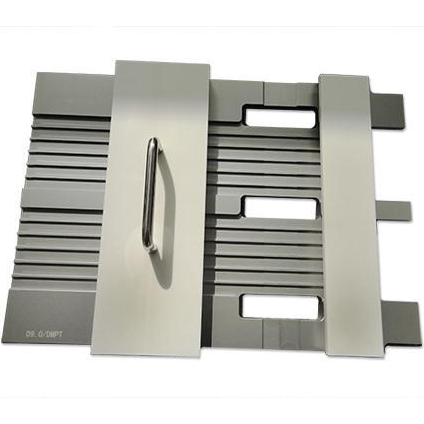
Professional Polishing Services and Solutions for Superior Surface Finishing

Get a Free Quote

Our representative will contact you soon.
Email
Name
Company Name
Message
0/1000

polishing

Polishing is a surface finishing process that transforms rough, dull, or uneven surfaces into smooth, refined, and visually appealing finishes. Whether applied to metals, wood, stone, plastics, or composites, polishing plays a critical role in both functional performance and aesthetic quality. At its core, polishing involves the use of abrasive materials, compounds, or mechanical tools to progressively remove surface imperfections, scratches, oxidation, and contaminants, resulting in a surface that meets precise standards of smoothness and reflectivity. The process can range from manual hand polishing to fully automated machine polishing, depending on the scale of production and the level of precision required. In industrial manufacturing, polishing is an essential step in the production of automotive parts, aerospace components, medical devices, electronic housings, and decorative hardware. The technology behind modern polishing has advanced significantly, incorporating computer-controlled polishing machines, robotic polishing arms, and ultrasonic polishing systems that deliver consistent, repeatable results at high speed. Chemical polishing and electropolishing techniques have also expanded the capabilities of the process, allowing manufacturers to achieve mirror-like finishes on complex geometries and hard-to-reach surfaces. Polishing compounds, abrasive belts, buffing wheels, and polishing pads are among the key consumables used in the process, each selected based on the material type and desired finish grade. Beyond aesthetics, polishing serves important functional purposes. A well-polished surface reduces friction, resists corrosion, prevents bacterial adhesion, and improves the fatigue strength of metal components. In the medical and food processing industries, polishing is a regulatory requirement, ensuring that surfaces meet hygiene and safety standards. In optics and semiconductor manufacturing, polishing achieves nanometer-level surface accuracy critical to product performance. The versatility, precision, and broad applicability of polishing make it one of the most indispensable processes in modern manufacturing and surface treatment technology.


New Products

Polishing delivers a wide range of practical benefits that directly impact product quality, longevity, and customer satisfaction. Understanding these advantages helps businesses and individuals make informed decisions about incorporating polishing into their production or maintenance workflows. First, polishing dramatically improves the visual appearance of any surface. A polished surface reflects light evenly, creating a clean, professional look that signals quality and attention to detail. For consumer products, automotive finishes, and architectural elements, this visual appeal directly influences purchasing decisions and brand perception. Customers consistently associate polished surfaces with premium quality, and that perception translates into real commercial value. Second, polishing extends the service life of components and products. By removing surface defects such as micro-cracks, scratches, and pits, polishing eliminates the starting points for corrosion and fatigue failure. Metal parts that undergo polishing resist rust and oxidation far more effectively than unpolished counterparts, reducing maintenance costs and replacement frequency over time. This is especially valuable in harsh environments such as marine, chemical processing, and outdoor applications where surface degradation happens quickly. Third, polishing improves functional performance. Smooth polished surfaces reduce friction between moving parts, which lowers energy consumption, reduces wear, and extends the operational life of machinery. In fluid handling systems, polished interior surfaces minimize turbulence and pressure loss, improving flow efficiency. In electrical contacts and connectors, polishing ensures reliable conductivity by eliminating surface resistance caused by oxidation and roughness. Fourth, polishing supports compliance with industry standards and regulations. In the food processing, pharmaceutical, and medical device industries, polished surfaces are required to meet strict hygiene standards. Smooth, non-porous polished surfaces prevent bacterial growth and are easier to clean and sterilize, protecting end users and ensuring regulatory approval. Fifth, polishing adds measurable economic value. Products with high-quality polished finishes command higher market prices and attract more discerning customers. For manufacturers, investing in polishing reduces downstream costs associated with warranty claims, product returns, and customer complaints. The return on investment from polishing is tangible and consistent across industries. Sixth, polishing is highly adaptable. Modern polishing techniques work across a vast range of materials including stainless steel, aluminum, titanium, copper, glass, ceramics, and engineered plastics. Whether the goal is a mirror finish, a satin finish, or a specific surface roughness value, polishing can be precisely controlled to achieve the target outcome. This flexibility makes polishing a universal solution for surface finishing challenges across virtually every industry.

Practical Tips

How do packaging machine components work together?

25

May

How do packaging machine components work together?

Understanding how packaging machine components interact is fundamental to running efficient, reliable production lines. Every element within a packaging system—from the feeding mechanism to the sealing unit—is engineered to perform a prec...
View More
What is Press Tooling and How Does It Work in Manufacturing?

25

May

What is Press Tooling and How Does It Work in Manufacturing?

In modern manufacturing, precision, repeatability, and efficiency are not optional — they are the foundation of competitive production. Press Tooling sits at the heart of this foundation, enabling manufacturers across industries to form, cut, s...
View More
What is Blister Packing Tooling and How Does It Work?

25

May

What is Blister Packing Tooling and How Does It Work?

In pharmaceutical and consumer goods manufacturing, precision packaging is not just about aesthetics — it is a fundamental requirement for product safety, shelf life, and regulatory compliance. Blister Packing Tooling sits at the heart of this ...
View More
Which Materials Work Best with Blister Packing Tooling?

25

May

Which Materials Work Best with Blister Packing Tooling?

Selecting the right material for Blister Packing Tooling is one of the most consequential decisions a pharmaceutical or consumer goods manufacturer can make. The material determines not only how well the tooling performs during forming, sealing, and ...
View More

Get a Free Quote

Our representative will contact you soon.
Email
Name
Company Name
Message
0/1000

polishing

Superior Surface Quality That Elevates Product Value

Superior Surface Quality That Elevates Product Value

One of the most compelling reasons to invest in professional polishing is the transformative impact it has on surface quality. Polishing does not simply make a surface look better. It fundamentally changes the physical characteristics of the surface at a microscopic level, removing irregularities that compromise both appearance and performance. When a surface undergoes polishing, abrasive action progressively eliminates peaks and valleys in the surface profile, reducing the Ra roughness value to levels that are often imperceptible to the naked eye but critically important to product function. For manufacturers producing precision components, this level of surface refinement is not optional. It is a core requirement that determines whether a part meets specification or fails inspection. The visual outcome of polishing is equally significant. A properly polished surface achieves a uniform reflectivity that communicates craftsmanship and quality to anyone who sees or touches the product. In consumer goods, jewelry, automotive trim, and architectural metalwork, the polished finish is often the primary factor that justifies a premium price point. Customers recognize and respond to the quality signal that a polished surface provides, and this recognition drives purchasing behavior in competitive markets. Beyond the immediate visual impact, superior surface quality achieved through polishing provides long-term protection against environmental degradation. Polished surfaces are inherently more resistant to corrosion because the smooth, dense surface layer presents fewer entry points for moisture, oxygen, and corrosive agents. This protective effect is especially pronounced in stainless steel polishing, where the process enhances the passive oxide layer that gives the material its corrosion resistance. For industries such as marine engineering, chemical processing, and outdoor construction, this corrosion resistance translates directly into reduced maintenance costs and longer asset life. The precision achievable through modern polishing technology also enables manufacturers to meet increasingly tight tolerances demanded by advanced applications in aerospace, medical devices, and semiconductor manufacturing. In these fields, polishing is not a cosmetic step but a functional necessity that determines whether a component performs as designed. Investing in high-quality polishing is therefore an investment in product reliability, customer trust, and long-term competitive advantage.
Versatile Polishing Solutions Across Materials and Industries

Versatile Polishing Solutions Across Materials and Industries

The true strength of polishing as a surface finishing process lies in its remarkable versatility. Unlike many specialized manufacturing processes that are limited to specific materials or geometries, polishing can be applied effectively across an extraordinarily wide range of substrates, shapes, and surface conditions. This versatility makes polishing an indispensable capability for manufacturers and service providers who work with diverse product lines and customer requirements. In metalworking, polishing is routinely applied to ferrous and non-ferrous metals including carbon steel, stainless steel, aluminum, copper, brass, titanium, and nickel alloys. Each material responds differently to polishing, requiring specific abrasive grades, polishing compounds, and process parameters to achieve the desired finish. Experienced polishing professionals understand these material-specific requirements and apply the right combination of techniques to deliver consistent, high-quality results regardless of the substrate. Beyond metals, polishing is equally effective on non-metallic materials. Stone polishing transforms raw marble, granite, and quartz into the gleaming surfaces seen in luxury interiors and architectural installations. Glass polishing removes scratches, chips, and surface haze, restoring optical clarity to lenses, windows, and display panels. Plastic polishing eliminates mold marks, surface stress, and cloudiness from injection-molded and machined plastic components, improving both appearance and optical properties. The range of polishing techniques available further extends this versatility. Mechanical polishing using abrasive belts, wheels, and pads handles large flat surfaces and simple geometries efficiently. Vibratory and barrel polishing processes handle high volumes of small parts simultaneously, delivering consistent finishes at low cost per piece. Electropolishing uses electrochemical action to smooth and brighten metal surfaces, reaching into recesses and complex geometries that mechanical polishing cannot access. Laser polishing and ultrasonic polishing represent the cutting edge of the technology, enabling precision surface refinement on delicate components and exotic materials. This breadth of available polishing methods means that virtually any surface finishing challenge can be addressed with the right polishing approach. For customers, this versatility translates into a single trusted partner capable of handling all their surface finishing needs, simplifying supply chains and ensuring consistent quality standards across product families.
Polishing Technology That Drives Efficiency and Consistency

Polishing Technology That Drives Efficiency and Consistency

Modern polishing technology has evolved far beyond manual buffing and hand finishing. Today, advanced polishing systems combine precision engineering, intelligent process control, and high-performance consumables to deliver levels of efficiency and consistency that were simply not achievable with traditional methods. For manufacturers operating at scale, this technological advancement is a game-changer that directly impacts production throughput, quality control, and operating costs. Automated polishing machines equipped with CNC controls and robotic arms can execute complex polishing programs with micron-level precision, reproducing the same surface finish on every part, every cycle, without the variability inherent in manual polishing. This consistency is critical for industries where surface finish is a controlled parameter, such as aerospace, medical device manufacturing, and precision optics. When every polished component must meet the same specification, automated polishing technology provides the reliability that manual processes cannot guarantee. The efficiency gains from modern polishing technology are equally significant. High-speed polishing machines process parts in a fraction of the time required by manual methods, dramatically increasing production capacity without proportional increases in labor cost. Automated loading and unloading systems further reduce cycle times and free skilled workers for higher-value tasks. For high-volume production environments, these efficiency improvements translate directly into lower cost per part and faster delivery times, strengthening competitive position in price-sensitive markets. Process monitoring and data logging capabilities built into advanced polishing systems provide manufacturers with real-time visibility into process parameters such as pressure, speed, temperature, and abrasive wear. This data enables proactive process optimization, early detection of quality deviations, and continuous improvement over time. The result is a polishing process that gets better with use, delivering progressively higher quality and lower defect rates as process knowledge accumulates. The development of advanced polishing compounds and abrasive materials has also contributed significantly to process performance. Modern polishing compounds are engineered to deliver maximum cutting efficiency at minimum heat generation, protecting sensitive workpieces while achieving target surface finishes faster than older formulations. Diamond abrasives, ceramic abrasives, and nano-particle polishing compounds extend the boundaries of what polishing can achieve, enabling surface finishes that meet the most demanding specifications in advanced manufacturing. For customers, investing in modern polishing technology means gaining a competitive edge through superior product quality, faster turnaround, and lower total cost of ownership.

Get a Free Quote

Our representative will contact you soon.
Email
Name
Company Name
Message
0/1000