Trusted Hammer Mill Manufacturer - Industrial Grinding Solutions for Every Application

Get a Free Quote

Our representative will contact you soon.
Email
Name
Company Name
Message
0/1000

hammer mill manufacturer

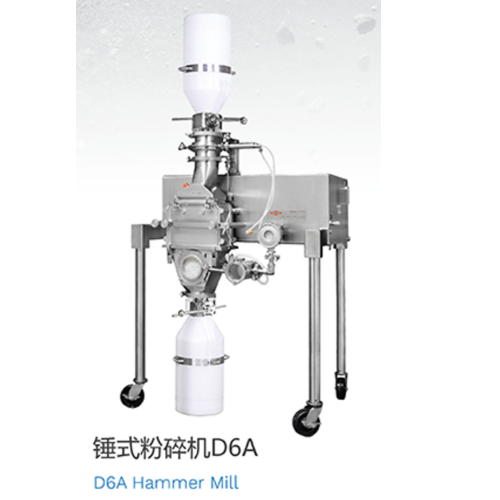
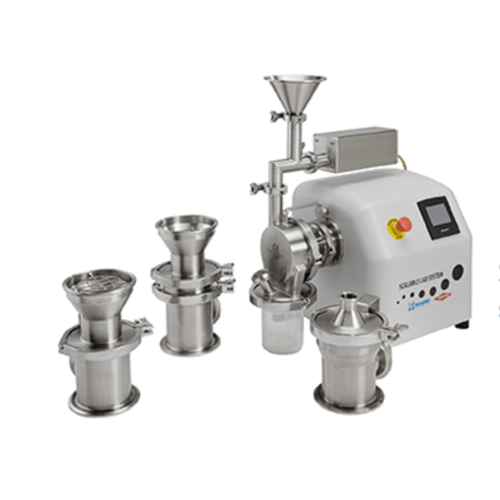
A hammer mill manufacturer designs and produces industrial grinding machines that reduce large materials into smaller, more manageable particles through the repeated impact of rotating hammers. These machines sit at the core of many production lines across agriculture, food processing, biomass energy, mining, and chemical industries. The primary function of a hammer mill is to crush, shred, or pulverize raw materials by exposing them to a series of high-speed hammer blows inside a hardened steel chamber. The resulting particles exit through a screen that controls the final output size, giving operators precise control over the granularity of the finished product. A reputable hammer mill manufacturer invests heavily in engineering precision, material science, and mechanical design to ensure that every unit delivers consistent performance under demanding operating conditions. Modern hammer mills incorporate advanced rotor balancing technology, which minimizes vibration and extends the service life of bearings and structural components. Variable-speed drives allow operators to adjust rotor speed based on the hardness and moisture content of the input material, maximizing throughput while reducing energy consumption. Wear-resistant alloy hammers and replaceable screen panels lower long-term maintenance costs and reduce unplanned downtime. The feeding system, whether gravity-fed or force-fed, is engineered to match the capacity requirements of each specific application. Dust containment systems and noise-reduction enclosures are increasingly standard features, reflecting the commitment of a leading hammer mill manufacturer to workplace safety and environmental compliance. Applications span a wide range, including grain and feed milling, wood chip and biomass pellet production, limestone and mineral grinding, plastic recycling, and pharmaceutical powder preparation. Each application demands a tailored configuration, and experienced manufacturers offer custom engineering services to match machine specifications to process requirements. From small-scale farm operations to large industrial plants, the right hammer mill manufacturer provides scalable solutions that grow with the customer's production needs.

New Product Recommendations

Choosing the right hammer mill manufacturer gives your operation a measurable edge from day one. Here is a straightforward look at the practical benefits you gain when you partner with a manufacturer that prioritizes quality, engineering, and customer support. First, you get consistent particle size control. A well-built hammer mill delivers uniform output every time, which matters enormously in feed milling, food processing, and pharmaceutical production. Inconsistent particle size leads to product rejection, wasted raw material, and costly rework. A reliable hammer mill manufacturer designs screens and rotor configurations that hold tight tolerances across long production runs, so your output meets specification without constant manual adjustment. Second, you reduce your energy bill. Energy is one of the largest operating costs in any grinding or milling operation. A quality hammer mill manufacturer engineers rotors, hammers, and airflow systems to extract maximum grinding efficiency from every kilowatt consumed. Variable-frequency drives let you match motor speed to the actual load, cutting power draw during lighter processing cycles. Over a full production year, these savings add up to a significant reduction in operating costs. Third, you lower your maintenance burden. Downtime costs money. A hammer mill manufacturer that uses hardened alloy hammers, precision-balanced rotors, and tool-free screen change systems gives your maintenance team the ability to service the machine quickly and get back to production. Replacement parts that are standardized and readily available mean you never wait weeks for a critical component. Fourth, you protect your workforce. A responsible hammer mill manufacturer builds dust containment, acoustic enclosures, and safety interlocks directly into the machine design. These features reduce airborne particulate exposure, lower noise levels on the production floor, and prevent accidental contact with moving parts. Compliance with occupational health and safety standards becomes easier when the equipment is engineered with worker protection in mind. Fifth, you gain application flexibility. A single hammer mill platform from a capable manufacturer can handle grain, biomass, minerals, and recycled materials with screen and hammer changes. This versatility means you can adapt your production line to new materials or new markets without purchasing entirely new equipment. Sixth, you benefit from expert technical support. A dedicated hammer mill manufacturer does not just ship a machine and disappear. They provide installation guidance, operator training, process optimization advice, and responsive after-sales service. When a production issue arises, you have access to engineers who understand the machine at a fundamental level and can diagnose problems quickly. Seventh, you secure long-term value. A hammer mill built to industrial standards holds its performance over years of continuous operation. The initial investment in a quality machine from a trusted hammer mill manufacturer pays back through lower repair costs, higher uptime, and consistent product quality that protects your reputation with customers.

Practical Tips

What is a mini tablet press machine and how does it work?

25

May

What is a mini tablet press machine and how does it work?

A mini tablet press machine is a compact, precision-driven piece of equipment designed to compress powdered or granulated materials into uniform tablet forms. Whether used in pharmaceutical research, nutraceutical development, or small-scale chemical...
View More
How do packaging machine components work together?

25

May

How do packaging machine components work together?

Understanding how packaging machine components interact is fundamental to running efficient, reliable production lines. Every element within a packaging system—from the feeding mechanism to the sealing unit—is engineered to perform a prec...
View More
What is Press Tooling and How Does It Work in Manufacturing?

25

May

What is Press Tooling and How Does It Work in Manufacturing?

In modern manufacturing, precision, repeatability, and efficiency are not optional — they are the foundation of competitive production. Press Tooling sits at the heart of this foundation, enabling manufacturers across industries to form, cut, s...
View More
What is Blister Packing Tooling and How Does It Work?

25

May

What is Blister Packing Tooling and How Does It Work?

In pharmaceutical and consumer goods manufacturing, precision packaging is not just about aesthetics — it is a fundamental requirement for product safety, shelf life, and regulatory compliance. Blister Packing Tooling sits at the heart of this ...
View More

Get a Free Quote

Our representative will contact you soon.
Email
Name
Company Name
Message
0/1000

hammer mill manufacturer

Precision Engineering for Consistent Output Quality

Precision Engineering for Consistent Output Quality

One of the most important things any buyer should evaluate when selecting a hammer mill manufacturer is the precision of the machine's internal engineering. Output quality in grinding and milling operations is not accidental. It is the direct result of deliberate design choices made at every stage of the manufacturing process, from rotor geometry to screen perforation tolerances to hammer metallurgy. A hammer mill manufacturer that invests in precision engineering gives customers a machine that delivers repeatable, uniform particle size across every production run, regardless of variations in raw material moisture or bulk density. The rotor assembly is the heart of the hammer mill. A precisely balanced rotor reduces vibration, which in turn protects bearings, extends shaft life, and prevents structural fatigue in the mill housing. Manufacturers that use dynamic balancing equipment during assembly produce rotors that run smoothly at high speeds, translating directly into lower noise levels and longer intervals between bearing replacements. The hammers themselves are manufactured from high-chromium or manganese alloy steel, materials selected for their ability to resist abrasive wear while maintaining impact toughness. Hammers that wear evenly and predictably allow operators to plan maintenance intervals rather than react to sudden failures. Screen panels are another area where precision matters. The perforation pattern, hole diameter, and sheet thickness all influence the final particle size distribution. A quality hammer mill manufacturer machines screens to tight dimensional tolerances and offers a wide range of perforation options so customers can dial in the exact output specification their process requires. Quick-release screen frames reduce changeover time when switching between products or particle size targets. Beyond individual components, the overall chamber geometry plays a critical role in grinding efficiency. The clearance between hammer tips and the screen surface, the angle of the feed inlet, and the design of the discharge plenum all affect how material flows through the machine and how efficiently energy transfers from the hammers to the feed material. Manufacturers that model and test these parameters produce mills that achieve higher throughput at lower specific energy consumption, a combination that directly improves the economics of the customer's operation. In summary, precision engineering is not a marketing claim. It is a measurable attribute that shows up in particle size consistency, machine longevity, energy efficiency, and maintenance costs. Customers who prioritize this criterion when evaluating a hammer mill manufacturer consistently report better production outcomes and lower total cost of ownership over the life of the equipment.
Versatile Application Capability Across Multiple Industries

Versatile Application Capability Across Multiple Industries

A defining characteristic of a leading hammer mill manufacturer is the ability to engineer machines that perform reliably across a broad spectrum of industries and materials. Unlike single-purpose grinding equipment, a well-designed hammer mill platform can be configured to process grain and animal feed, wood chips and agricultural residues, limestone and soft minerals, dried herbs and spices, plastic regrind, and a range of other materials simply by changing the hammer type, screen size, and rotor speed. This versatility delivers enormous practical value to customers who operate in dynamic markets or who process multiple product lines within a single facility. In the agricultural and animal feed sector, hammer mills reduce whole grains, corn, sorghum, and oilseed meals to the particle sizes required for pelleting or direct feeding. The ability to adjust screen perforation size allows nutritionists and feed mill operators to optimize digestibility for different animal species without investing in separate grinding equipment for each formulation. In the biomass and renewable energy sector, hammer mills process wood chips, straw, corn stover, and other lignocellulosic materials into the fine particles needed for pellet pressing or direct combustion. A hammer mill manufacturer that understands biomass processing designs machines with wider feed inlets, higher-capacity rotors, and robust dust management systems to handle the high throughput and fibrous nature of these materials. In the mining and minerals sector, hammer mills crush soft to medium-hard rocks, limestone, gypsum, and coal to the particle sizes required for downstream processing or direct sale. Wear protection becomes especially important in these applications, and a knowledgeable hammer mill manufacturer specifies appropriate hammer alloys and liner materials to extend service intervals in abrasive environments. In the food and pharmaceutical sectors, hygiene and contamination control take priority. Stainless steel construction, smooth internal surfaces, and tool-free disassembly for cleaning are features that a responsible hammer mill manufacturer incorporates into machines destined for these regulated industries. The ability to serve all of these industries from a common engineering platform reflects the depth of design expertise and manufacturing capability that separates a true industrial hammer mill manufacturer from a commodity equipment supplier. Customers benefit from this versatility through reduced capital expenditure, simplified spare parts inventory, and the confidence that their equipment supplier understands the specific demands of their industry.
Robust After-Sales Support and Long-Term Partnership

Robust After-Sales Support and Long-Term Partnership

Purchasing a hammer mill is not a one-time transaction. It is the beginning of a long-term operational relationship, and the quality of after-sales support provided by a hammer mill manufacturer has a direct impact on the total value the customer receives over the life of the equipment. The best manufacturers understand this and build their service infrastructure with the same rigor they apply to machine design. From the moment a new hammer mill arrives at a customer's facility, the manufacturer's support team should be actively involved. Professional installation supervision ensures the machine is mounted correctly, aligned properly, and connected to utilities in a way that protects both the equipment and the surrounding infrastructure. Commissioning support confirms that the mill reaches its rated performance targets before the manufacturer's team leaves the site. Operator training is equally important. A hammer mill is a powerful machine with multiple adjustable parameters, and operators who understand how to set rotor speed, select the correct screen, manage feed rate, and recognize early signs of wear will consistently achieve better results than those who operate the machine by guesswork. A committed hammer mill manufacturer provides structured training programs, clear operating manuals, and access to technical specialists who can answer questions as they arise in real production conditions. Spare parts availability is a practical measure of a manufacturer's commitment to its customers. A hammer mill manufacturer that stocks critical wear parts, including hammers, screens, bearings, and seals, and can ship them quickly minimizes the production impact of routine maintenance and unexpected component failures. Standardized part numbers and cross-reference documentation make it easy for maintenance teams to order the right components without ambiguity. Remote diagnostics and digital monitoring tools are increasingly offered by forward-thinking manufacturers. Vibration sensors, temperature monitors, and power consumption tracking allow operators and manufacturer service teams to identify developing problems before they cause unplanned downtime. Predictive maintenance programs built around this data reduce the total cost of ownership and extend the productive life of the equipment. Ultimately, a hammer mill manufacturer that stands behind its products with responsive, knowledgeable, and well-resourced after-sales support gives customers the confidence to invest in higher-capacity equipment, expand their production lines, and build their business around reliable grinding performance. This partnership approach is what distinguishes the best manufacturers in the industry and why it should be a primary criterion in any purchasing decision.

Get a Free Quote

Our representative will contact you soon.
Email
Name
Company Name
Message
0/1000