High-Efficiency Milling Equipment: Precision, Power, and Performance for Modern Industry

Get a Free Quote

Our representative will contact you soon.
Email
Name
Company Name
Message
0/1000

highefficiency milling equipment

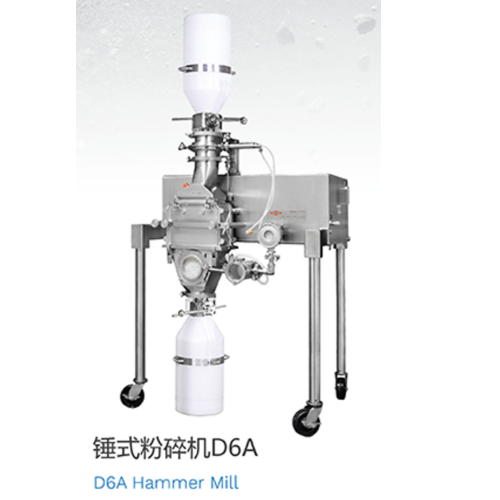
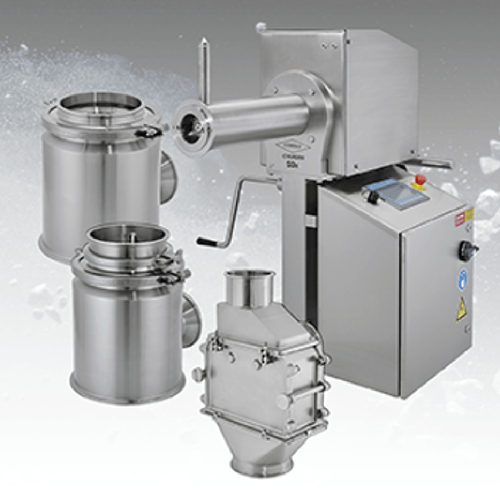
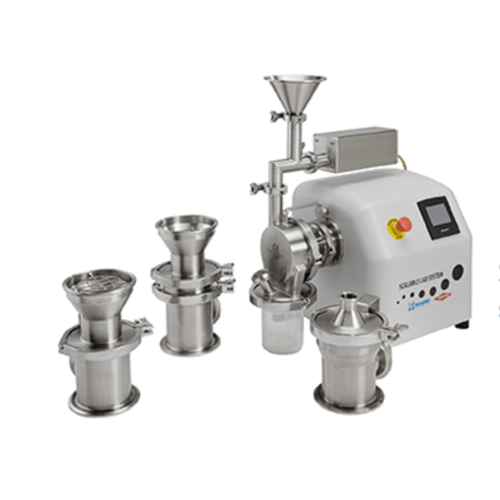
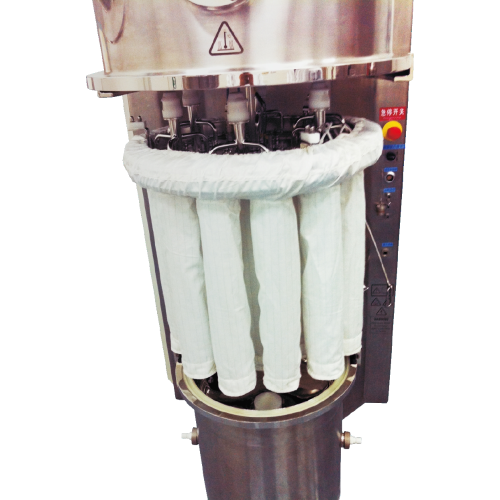
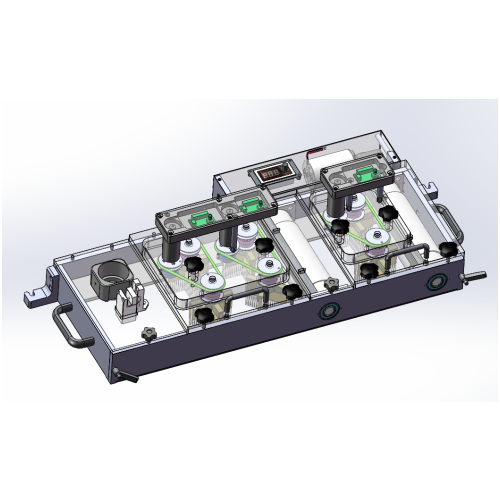
High-efficiency milling equipment represents a significant leap forward in modern manufacturing and material processing. Designed to handle a wide range of materials including metals, alloys, composites, ceramics, and various industrial minerals, this category of machinery delivers consistent, precise, and rapid material reduction with minimal energy waste. At its core, high-efficiency milling equipment combines advanced mechanical engineering with intelligent control systems to produce finer particle sizes, tighter tolerances, and higher throughput than conventional milling solutions. The main functions of high-efficiency milling equipment include size reduction, particle classification, surface modification, and continuous material feeding. These functions work in concert to ensure that raw materials are transformed into finished or semi-finished products that meet exact specifications. Whether the goal is to produce ultra-fine powders for pharmaceutical applications, precisely graded aggregates for construction, or uniformly milled grains for food processing, high-efficiency milling equipment delivers results that traditional machinery simply cannot match. From a technological standpoint, high-efficiency milling equipment incorporates several cutting-edge features. Variable-frequency drive systems allow operators to fine-tune rotational speeds and energy consumption in real time, reducing waste and extending component lifespan. Advanced wear-resistant materials, such as tungsten carbide and high-chromium alloys, are used in grinding chambers and classifier wheels to dramatically extend service intervals. Integrated dust collection and air classification systems ensure that the milling process remains clean, safe, and environmentally compliant. Smart monitoring interfaces provide live data on temperature, vibration, throughput, and particle size distribution, enabling predictive maintenance and process optimization. Applications for high-efficiency milling equipment span numerous industries. In mining and minerals processing, it is used to liberate valuable ores and prepare concentrates. In the chemical industry, it enables the production of reactive fine powders. In food and agriculture, it processes grains, spices, and feed materials to precise specifications. In advanced manufacturing, it supports the production of battery materials, coatings, and specialty chemicals. This versatility makes high-efficiency milling equipment an indispensable asset across the global industrial landscape.


New Product Releases

When you invest in high-efficiency milling equipment, you are making a decision that pays off across every dimension of your operation. Here is a straightforward look at the practical benefits that matter most to businesses like yours. First, you get more output from the same input. High-efficiency milling equipment processes materials faster and more thoroughly than older machines. That means your production line moves quicker, your order fulfillment improves, and your customers receive their products on time. You are not waiting around for slow cycles or dealing with bottlenecks caused by underperforming machinery. Second, you save on energy costs. One of the most immediate financial benefits of high-efficiency milling equipment is its optimized power consumption. These machines are engineered to deliver maximum grinding force with minimum electrical draw. Over the course of a year, the savings on your energy bill can be substantial, often offsetting a significant portion of the initial equipment investment. Third, your maintenance costs go down. High-efficiency milling equipment is built with durability in mind. The use of premium wear-resistant components means that grinding surfaces, liners, and classifier parts last far longer than those found in standard equipment. Fewer breakdowns mean less unplanned downtime, lower repair bills, and a more predictable production schedule. Fourth, you achieve better product quality. Consistency is everything in manufacturing. High-efficiency milling equipment produces uniform particle sizes and smooth surface finishes batch after batch. This consistency reduces waste from off-spec material, lowers rejection rates, and strengthens your reputation with customers who depend on reliable product quality. Fifth, you gain operational flexibility. Modern high-efficiency milling equipment is designed to handle a broad spectrum of materials and product specifications. With adjustable speed controls, interchangeable grinding media, and configurable classifier settings, you can switch between product grades or material types without lengthy changeover procedures. This flexibility lets you respond quickly to changing customer demands and market conditions. Sixth, you protect your workforce and your environment. High-efficiency milling equipment integrates sealed processing chambers, advanced dust suppression systems, and low-noise operation to create a safer, cleaner working environment. Regulatory compliance becomes easier, and your team works in conditions that support long-term health and productivity. Seventh, you future-proof your operation. As industries evolve and material specifications become more demanding, high-efficiency milling equipment gives you the technical capability to meet those challenges head-on. Smart control interfaces, remote monitoring options, and modular upgrade paths mean your equipment grows with your business rather than becoming obsolete. In summary, high-efficiency milling equipment is not just a machine. It is a strategic investment that improves your throughput, reduces your costs, raises your product quality, and positions your business for sustained growth in a competitive market.

Latest News

What is a mini tablet press machine and how does it work?

25

May

What is a mini tablet press machine and how does it work?

A mini tablet press machine is a compact, precision-driven piece of equipment designed to compress powdered or granulated materials into uniform tablet forms. Whether used in pharmaceutical research, nutraceutical development, or small-scale chemical...
View More
How do packaging machine components work together?

25

May

How do packaging machine components work together?

Understanding how packaging machine components interact is fundamental to running efficient, reliable production lines. Every element within a packaging system—from the feeding mechanism to the sealing unit—is engineered to perform a prec...
View More
How Does Blister Packing Tooling Improve Production Speed?

25

May

How Does Blister Packing Tooling Improve Production Speed?

In high-volume pharmaceutical and consumer goods manufacturing, every second on the production line carries real cost. When facilities look for ways to accelerate output without compromising quality, the conversation almost always returns to the same...
View More
Which Materials Work Best with Blister Packing Tooling?

25

May

Which Materials Work Best with Blister Packing Tooling?

Selecting the right material for Blister Packing Tooling is one of the most consequential decisions a pharmaceutical or consumer goods manufacturer can make. The material determines not only how well the tooling performs during forming, sealing, and ...
View More

Get a Free Quote

Our representative will contact you soon.
Email
Name
Company Name
Message
0/1000

highefficiency milling equipment

Precision Particle Control: Delivering the Exact Specifications Your Process Demands

Precision Particle Control: Delivering the Exact Specifications Your Process Demands

One of the most compelling reasons manufacturers and processors choose high-efficiency milling equipment is its ability to deliver precise, repeatable particle size distributions. In industries where product quality is directly tied to particle characteristics, such as pharmaceuticals, battery materials, specialty chemicals, and advanced ceramics, the ability to hit a specific particle size target consistently is not a luxury. It is a fundamental requirement. High-efficiency milling equipment achieves this level of precision through a combination of dynamic air classification technology, variable-speed drive systems, and real-time particle monitoring. The air classifier integrated into the milling circuit acts as a continuous quality gate, allowing only particles that meet the target size specification to exit the system while returning oversized material for further grinding. This closed-loop approach eliminates the variability that plagues open-circuit milling systems and ensures that every batch leaving the machine meets the same tight specification. The variable-speed drive system adds another layer of control. By adjusting the rotational speed of the grinding rotor and the classifier wheel independently, operators can dial in the exact cut point required for a given product without stopping the machine or making physical adjustments. This capability dramatically reduces changeover time when switching between product grades, which is a direct operational cost saving. Real-time monitoring systems provide continuous feedback on particle size distribution, allowing operators to make micro-adjustments on the fly and catch deviations before they result in off-spec product. This proactive approach to quality control reduces waste, lowers raw material consumption, and protects your downstream processes from the disruption caused by inconsistent feed material. For customers who supply materials to industries with strict regulatory or technical standards, the precision particle control offered by high-efficiency milling equipment is a competitive differentiator. It means fewer customer complaints, fewer product returns, and a stronger reputation for reliability. When your clients know they can count on you to deliver material that meets spec every time, that trust translates directly into long-term business relationships and repeat orders. Investing in high-efficiency milling equipment with advanced particle control capability is, in essence, investing in the quality and consistency of your brand.
Energy-Optimized Performance: Cutting Operating Costs Without Cutting Corners

Energy-Optimized Performance: Cutting Operating Costs Without Cutting Corners

Energy consumption is one of the largest ongoing costs in any milling operation, and it is an area where the difference between conventional equipment and high-efficiency milling equipment becomes strikingly clear. Traditional milling machines were designed in an era when energy costs were low and efficiency was a secondary concern. Today, with electricity prices rising and sustainability targets becoming a business imperative, the energy performance of your milling equipment has a direct impact on your bottom line and your environmental footprint. High-efficiency milling equipment addresses this challenge through a multi-layered approach to energy optimization. At the mechanical level, the grinding geometry is engineered to maximize the transfer of kinetic energy from the grinding media or rotor to the target material. This means more of the energy you put into the machine actually goes toward breaking down material, rather than being lost as heat, vibration, or noise. The result is a significantly lower specific energy consumption, measured in kilowatt-hours per ton of product, compared to conventional mills operating at equivalent throughput. At the systems level, variable-frequency drives allow the motor to operate at the optimal speed for each specific material and product specification, rather than running at full power regardless of the actual load. This intelligent power management reduces peak demand charges, extends motor and drive component life, and gives operators the ability to balance throughput against energy cost in real time. Thermal management systems prevent heat buildup in the grinding chamber, which not only protects temperature-sensitive materials from degradation but also reduces the cooling energy required to maintain safe operating conditions. For operations running multiple shifts or continuous production schedules, these energy savings compound quickly. A reduction of even ten to fifteen percent in specific energy consumption can translate into tens of thousands of dollars in annual savings for a mid-sized operation. When you factor in the reduced carbon emissions associated with lower energy use, high-efficiency milling equipment also supports your corporate sustainability goals and helps you meet increasingly stringent environmental reporting requirements. Choosing high-efficiency milling equipment is a decision that delivers measurable financial returns from day one of operation.
Robust Durability and Low Maintenance: Keeping Your Production Line Running Longer

Robust Durability and Low Maintenance: Keeping Your Production Line Running Longer

Downtime is the enemy of profitability in any manufacturing or processing environment. Every hour your milling equipment sits idle waiting for repairs or replacement parts is an hour of lost production, missed deadlines, and frustrated customers. This is why the durability and maintainability of high-efficiency milling equipment is not just a technical specification. It is a core business value proposition. High-efficiency milling equipment is engineered from the ground up with longevity in mind. The grinding chambers, rotor assemblies, and classifier components that experience the highest levels of wear are manufactured from advanced materials including tungsten carbide, high-chromium white iron, and ceramic-reinforced composites. These materials offer wear resistance that is several times greater than the mild steel or standard cast iron used in conventional milling equipment, translating directly into longer intervals between component replacements and lower lifetime maintenance costs. The mechanical design of high-efficiency milling equipment also contributes to its durability. Precision-balanced rotating assemblies reduce vibration, which is one of the primary causes of premature bearing failure and structural fatigue in milling machinery. Sealed bearing housings with automatic lubrication systems ensure that critical components receive consistent lubrication without relying on manual intervention, reducing the risk of lubrication-related failures. Modular component design is another key feature that sets high-efficiency milling equipment apart from conventional alternatives. Wear parts are designed to be replaced quickly and easily, often without the need for specialized tools or extended disassembly procedures. This means that when maintenance is required, it can be completed in a fraction of the time needed for older equipment designs, minimizing the impact on your production schedule. Integrated condition monitoring systems provide continuous data on vibration levels, bearing temperatures, motor current draw, and other key indicators of equipment health. By tracking these parameters over time, maintenance teams can identify developing issues before they become failures, scheduling repairs during planned downtime windows rather than responding to unexpected breakdowns. For businesses that operate in demanding environments or run continuous production schedules, the durability and low-maintenance design of high-efficiency milling equipment provides a level of operational reliability that directly supports business performance and customer satisfaction.

Get a Free Quote

Our representative will contact you soon.
Email
Name
Company Name
Message
0/1000