Tooling Design and Manufacturing Solutions for Precision, Speed, and Durability

Get a Free Quote

Our representative will contact you soon.
Email
Name
Company Name
Message
0/1000

tooling design and manufacturing

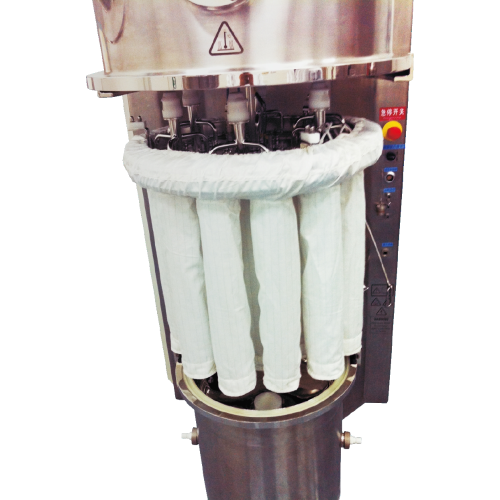
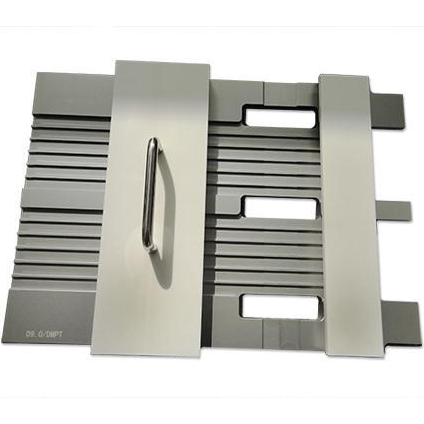
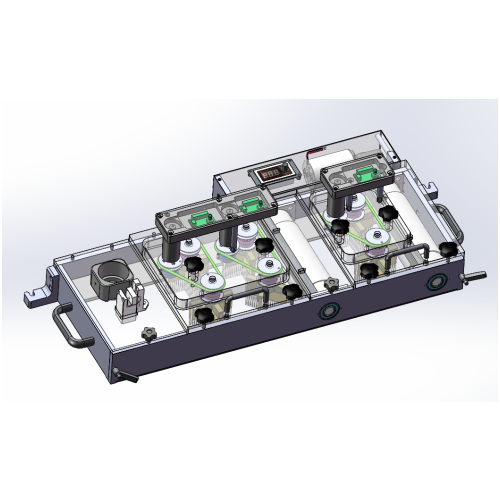
Tooling design and manufacturing sits at the heart of modern industrial production. It refers to the complete process of engineering, prototyping, and producing the tools, dies, molds, jigs, and fixtures that make mass production possible. Without precise tooling design and manufacturing, factories could not consistently produce parts that meet tight dimensional tolerances, surface finish requirements, or structural integrity standards. The discipline draws on mechanical engineering, materials science, computer-aided design, and advanced machining to deliver tools that perform reliably across thousands or even millions of production cycles. At its core, tooling design and manufacturing begins with a thorough analysis of the end product. Engineers study part geometry, material properties, production volume targets, and quality benchmarks before selecting the appropriate tooling strategy. This upfront engineering work determines whether a stamping die, injection mold, casting tool, or composite layup fixture is the right solution. Once the concept is validated, designers use CAD and CAM software to model every component of the tool, simulate stress and thermal behavior, and generate the machining paths that CNC equipment will follow. Modern tooling design and manufacturing leverages technologies such as five-axis CNC machining, electrical discharge machining, high-speed milling, and additive manufacturing for rapid prototyping. These capabilities allow toolmakers to achieve micron-level accuracy on complex three-dimensional surfaces. Hard coatings, heat treatment, and surface finishing processes extend tool life and reduce downtime on the production floor. Industries that depend on tooling design and manufacturing include automotive, aerospace, consumer electronics, medical devices, packaging, and industrial equipment. In automotive manufacturing alone, a single vehicle platform may require hundreds of stamping dies and injection molds, each engineered to exacting standards. Aerospace applications demand tooling that can hold tolerances measured in thousandths of an inch while withstanding the stresses of composite layup or precision machining. Medical device manufacturers rely on tooling design and manufacturing to produce components that meet strict regulatory requirements for dimensional accuracy and surface cleanliness. The scope of tooling design and manufacturing continues to expand as digital technologies mature. Simulation-driven design reduces trial-and-error iterations, cutting lead times and development costs. Smart tooling embedded with sensors can monitor wear in real time, enabling predictive maintenance strategies that keep production lines running at peak efficiency. As global competition intensifies, investment in high-quality tooling design and manufacturing has become a strategic priority for manufacturers seeking to improve yield, reduce scrap, and accelerate time to market.

Popular Products

Choosing the right partner for tooling design and manufacturing gives your business a measurable edge from the very first production run. Here is a straightforward look at the practical benefits you can expect when you work with a team that takes tooling design and manufacturing seriously. First, you get parts that are right the first time. When engineers invest proper effort in tooling design and manufacturing upfront, the tools they build hold the dimensions your product requires without constant adjustment. That means fewer rejected parts, less rework, and lower scrap costs. Over a production run of tens of thousands of units, even a small improvement in first-pass yield translates directly into significant savings on materials and labor. Second, you bring products to market faster. A disciplined tooling design and manufacturing process uses simulation and digital modeling to catch problems before metal is cut. Instead of discovering a design flaw after the first physical sample, your team identifies it on screen and corrects it in hours rather than weeks. Faster iteration cycles compress your overall development timeline, letting you respond to market opportunities before competitors do. Third, your tools last longer. Quality tooling design and manufacturing uses the right materials, heat treatments, and surface coatings for the specific demands of your application. A tool built to last does not wear out prematurely or require frequent repairs. That reliability reduces unplanned downtime on your production line, keeps your delivery commitments intact, and lowers your total cost of ownership over the life of the tool. Fourth, you scale production with confidence. When your tooling design and manufacturing is engineered for the volumes you actually need, you can ramp up output without worrying about whether your tools can keep pace. Properly designed tooling accommodates the thermal cycling, mechanical stress, and wear patterns that come with high-volume production, so you are not forced to retool prematurely just because demand grew faster than expected. Fifth, you gain flexibility for future changes. Good tooling design and manufacturing anticipates the possibility of product updates. Modular tool architectures allow engineers to swap out inserts or modify specific sections of a tool rather than scrapping the entire assembly when a design change comes through. That flexibility protects your tooling investment and reduces the cost of product evolution over time. Sixth, you improve worker safety and process consistency. Well-designed jigs and fixtures hold workpieces securely and repeatably, reducing the chance of operator error and workplace injury. Consistent fixturing also means that every part is machined or assembled in exactly the same orientation, which directly supports quality control and traceability requirements. Seventh, you build a stronger supply chain. When your tooling design and manufacturing is handled by a capable partner, you reduce the risk of production stoppages caused by tool failure or poor tool performance. A reliable tooling foundation gives your entire supply chain more stability, which matters enormously when your customers depend on on-time delivery. In summary, investing in professional tooling design and manufacturing is not just a technical decision. It is a business decision that pays dividends in quality, speed, cost, and resilience across the full lifecycle of your product.

Latest News

How do packaging machine components work together?

25

May

How do packaging machine components work together?

Understanding how packaging machine components interact is fundamental to running efficient, reliable production lines. Every element within a packaging system—from the feeding mechanism to the sealing unit—is engineered to perform a prec...
View More
How Does Press Tooling Design Impact Production Efficiency?

25

May

How Does Press Tooling Design Impact Production Efficiency?

In high-volume manufacturing environments, the design of Press Tooling is one of the most consequential engineering decisions a production team can make. From cycle time to scrap rate, from die longevity to operator safety, the geometry, material sel...
View More
How Does Press Tooling Quality Affect Final Product Results?

25

May

How Does Press Tooling Quality Affect Final Product Results?

In precision manufacturing, the quality of Press Tooling is one of the most consequential variables in determining whether a final product meets its dimensional, structural, and aesthetic specifications. Every stamped, formed, or punched component th...
View More
Which Materials Work Best with Blister Packing Tooling?

25

May

Which Materials Work Best with Blister Packing Tooling?

Selecting the right material for Blister Packing Tooling is one of the most consequential decisions a pharmaceutical or consumer goods manufacturer can make. The material determines not only how well the tooling performs during forming, sealing, and ...
View More

Get a Free Quote

Our representative will contact you soon.
Email
Name
Company Name
Message
0/1000

tooling design and manufacturing

Precision Engineering That Drives Consistent Quality

Precision Engineering That Drives Consistent Quality

One of the most important things a manufacturer can offer its customers is consistency. When a buyer places an order for ten thousand parts, they expect every single one to meet the same dimensional and functional specifications as the approved sample. That level of consistency does not happen by accident. It is the direct result of disciplined tooling design and manufacturing that builds accuracy into the process from the very beginning. Precision in tooling design and manufacturing starts with the design phase itself. Engineers use advanced CAD software to model every surface, cavity, and feature of the tool with exact geometric intent. They run finite element analysis to predict how the tool will deform under cutting forces or injection pressures, and they adjust wall thicknesses, support structures, and material selections accordingly. This simulation-driven approach means that the physical tool behaves the way the digital model predicted, reducing the gap between design intent and manufactured reality. On the shop floor, precision tooling design and manufacturing relies on multi-axis CNC machining centers capable of holding tolerances in the range of plus or minus a few microns. Operators use high-precision metrology equipment, including coordinate measuring machines and optical scanners, to verify every critical dimension before a tool is approved for production. Any deviation from specification is corrected before the tool ever touches a production part, which protects the customer from receiving out-of-tolerance components. The practical value of this precision is enormous. In the automotive industry, a stamping die that holds its dimensions accurately produces body panels that fit together without gaps or misalignment, which directly affects the perceived quality of the finished vehicle. In medical device manufacturing, a mold that maintains its cavity dimensions within tight tolerances ensures that every implant or instrument meets the regulatory requirements that protect patient safety. In consumer electronics, precise tooling design and manufacturing produces housings and connectors that assemble cleanly and function reliably in the hands of end users. Precision also has a financial dimension. When tools are built accurately the first time, manufacturers avoid the costly cycle of sampling, measuring, correcting, and resampling that plagues poorly engineered tooling programs. Lead times shrink, development budgets stay on track, and production launches happen on schedule. For customers, that translates into faster access to finished goods and a stronger competitive position in their own markets. Investing in precision tooling design and manufacturing is therefore not a luxury reserved for high-tech industries. It is a practical necessity for any manufacturer that wants to compete on quality and efficiency in today's demanding global marketplace.
Advanced Technology That Accelerates Development Timelines

Advanced Technology That Accelerates Development Timelines

Speed is a competitive weapon in modern manufacturing. The faster a company can move from concept to production-ready tooling, the sooner it can begin shipping products and generating revenue. Advanced technology embedded in the tooling design and manufacturing process is the primary driver of that speed, and it delivers benefits that ripple through every stage of a product's development lifecycle. The journey begins with digital design tools that allow engineers to create, test, and refine tool concepts entirely in a virtual environment. Modern CAD platforms support parametric modeling, which means that changing one dimension automatically updates all related features throughout the tool assembly. This capability dramatically reduces the time required to explore design alternatives and respond to engineering change requests. When a customer asks for a modification to part geometry, the tooling design and manufacturing team can evaluate the impact on the tool, generate revised machining programs, and communicate a revised timeline within hours rather than days. Simulation technology adds another layer of speed and confidence. Mold flow analysis software predicts how molten plastic will fill an injection mold, identifying potential problems such as weld lines, sink marks, air traps, and warpage before any steel is cut. Stamping simulation tools predict springback, thinning, and wrinkling in sheet metal forming operations. By resolving these issues in the digital domain, tooling design and manufacturing teams eliminate the expensive and time-consuming physical tryout iterations that used to be unavoidable. On the manufacturing side, five-axis CNC machining centers and high-speed milling machines execute complex tool geometries in a single setup, reducing the number of operations required and minimizing the risk of accumulated positioning errors. Electrical discharge machining handles intricate features and hard materials that conventional cutting tools cannot reach. Additive manufacturing technologies produce prototype inserts and conformal cooling channels that would be impossible to machine conventionally, further expanding the design space available to tooling engineers. The cumulative effect of these technologies on development timelines is substantial. Programs that once required six months from design kickoff to first production sample can now be completed in half that time. For customers, that acceleration means earlier market entry, faster response to consumer trends, and a shorter period during which development capital is tied up without generating returns. Advanced technology in tooling design and manufacturing is therefore a direct enabler of business agility and financial performance.
Durable Tooling Solutions That Protect Your Long-Term Investment

Durable Tooling Solutions That Protect Your Long-Term Investment

Every tool represents a capital investment, and like any capital asset, it needs to deliver reliable performance over its intended service life to justify the money spent on it. Durability is therefore one of the most commercially significant attributes of high-quality tooling design and manufacturing, and it deserves careful attention from both the toolmaker and the customer. Durability in tooling design and manufacturing begins with material selection. The right tool steel, aluminum alloy, or specialty material depends on the specific demands of the application, including the type of material being processed, the production volume, the operating temperatures, and the mechanical stresses involved. A high-volume injection mold running abrasive glass-filled polymers requires a hardened tool steel with excellent wear resistance. A prototype mold intended for a few hundred shots can be machined from aluminum, which is faster and less expensive to produce. Matching material to application is a fundamental discipline of tooling design and manufacturing that directly determines how long a tool will perform before requiring maintenance or replacement. Heat treatment and surface finishing processes extend tool life further. Through-hardening, case hardening, nitriding, and physical vapor deposition coatings all increase surface hardness and resistance to wear, galling, and corrosion. A properly treated tool surface maintains its dimensional accuracy through far more production cycles than an untreated one, which means fewer interruptions to production and lower maintenance costs over the life of the program. Design choices also play a major role in durability. Tooling design and manufacturing teams that understand wear patterns and failure modes can engineer tools with replaceable wear components in the areas most likely to degrade first. This modular approach means that when a specific section of a tool reaches the end of its service life, technicians replace only that section rather than the entire tool assembly. The cost savings compared to full tool replacement can be substantial, particularly for large and complex tooling systems. For customers, durable tooling design and manufacturing translates into production reliability. A tool that performs consistently over millions of cycles keeps the production line running, protects delivery commitments to downstream customers, and avoids the disruption and expense of emergency tool repairs or unplanned replacements. It also preserves the value of the original tooling investment, ensuring that the capital allocated to tooling continues to generate returns throughout the full product lifecycle rather than depreciating prematurely due to avoidable wear and failure.

Get a Free Quote

Our representative will contact you soon.
Email
Name
Company Name
Message
0/1000