Premium Tooling for Catalysts - Precision Manufacturing Solutions for Superior Catalyst Production

Get a Free Quote

Our representative will contact you soon.
Email
Name
Company Name
Message
0/1000

tooling for catalysts

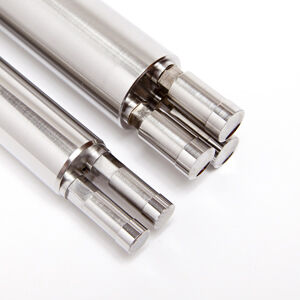
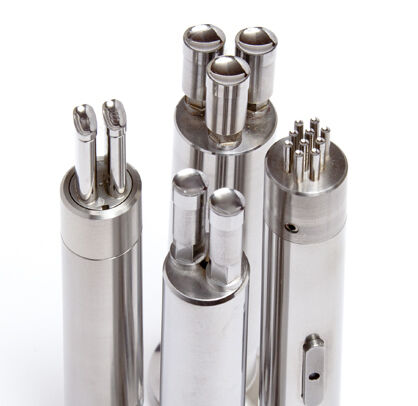
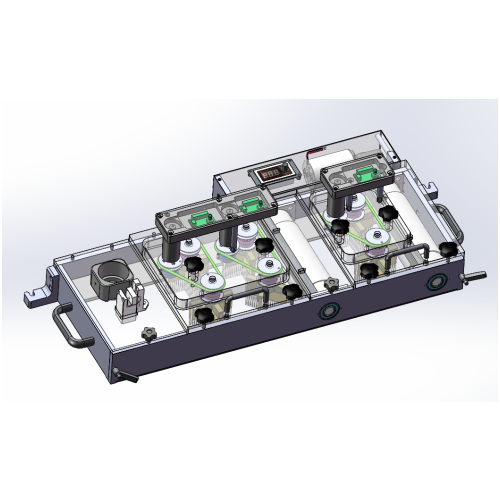
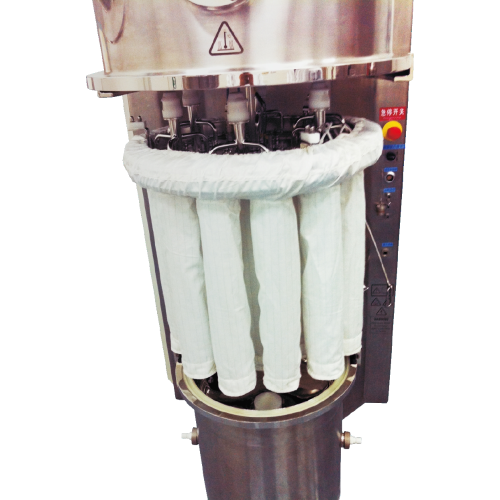
Tooling for catalysts represents a specialized category of precision equipment designed to manufacture, shape, and process catalytic materials used across chemical, petrochemical, automotive, and environmental industries. This sophisticated tooling encompasses dies, molds, extrusion equipment, pelletizing systems, and forming apparatus that transform raw catalyst materials into their final functional shapes. The main functions of tooling for catalysts include creating uniform geometric configurations such as pellets, spheres, rings, honeycombs, and extrudates that optimize surface area and flow characteristics essential for catalytic reactions. These tools enable manufacturers to produce catalysts with consistent dimensions, controlled porosity, and precise mechanical strength, which directly influence catalyst performance and lifespan. Technological features of modern tooling for catalysts incorporate advanced materials like hardened steel alloys, tungsten carbide, and specialized coatings that resist abrasion and chemical corrosion during repetitive production cycles. Many systems integrate automated feeding mechanisms, precision pressure controls, temperature regulation, and real-time monitoring sensors that ensure dimensional accuracy and repeatability. Computer numerical control technology has revolutionized tooling for catalysts by enabling complex geometries and rapid changeovers between different catalyst specifications. Applications span multiple sectors where catalytic processes are critical. In petroleum refining, tooling for catalysts produces hydroprocessing catalysts shaped as cylinders or trilobe extrudates. Automotive manufacturers rely on this tooling to create honeycomb structures for catalytic converters that reduce vehicle emissions. Chemical plants use tooling for catalysts to manufacture spherical beads for fixed-bed reactors and irregular shapes for fluidized-bed applications. Environmental remediation projects depend on specially tooled catalysts for air purification systems and wastewater treatment facilities. The pharmaceutical industry employs tooling for catalysts in producing chiral catalysts with specific configurations for drug synthesis. As global environmental regulations tighten and industrial processes demand greater efficiency, the role of precision tooling for catalysts becomes increasingly vital in delivering consistent, high-performance catalytic materials that meet stringent quality standards while optimizing production economics.

Popular Products

Investing in quality tooling for catalysts delivers substantial practical benefits that directly impact your production efficiency and bottom line. First and foremost, precision tooling ensures consistency across every production batch, eliminating the costly variations that lead to catalyst underperformance or rejection. When your tooling for catalysts maintains exact specifications run after run, you reduce waste, minimize rework, and build a reputation for reliability with your customers. This consistency translates to predictable production schedules and confident delivery commitments that strengthen your market position. Durability stands as another significant advantage of professional-grade tooling for catalysts. High-quality tools manufactured from premium materials withstand millions of cycles without dimensional degradation, spreading the initial investment across extended service lives. You avoid frequent replacement costs and the production disruptions associated with tool failures or maintenance downtime. This reliability allows continuous operation during peak demand periods when maximizing output determines profitability. Enhanced production speed represents a tangible benefit that quality tooling for catalysts brings to your operations. Optimized tool designs facilitate faster cycle times, higher throughput, and improved material flow, enabling you to produce more catalyst volume with existing equipment. This increased capacity means you can accept larger orders, enter new markets, or reduce per-unit costs through economies of scale. Flexibility in product offerings becomes achievable when you utilize modular tooling for catalysts that accommodates different catalyst geometries. Quick-change systems let you switch between pellet sizes, extrudate shapes, or tablet configurations with minimal downtime, responding rapidly to customer requirements without maintaining separate production lines. This adaptability protects your investment as market demands evolve. Quality improvements in your final catalyst products result from precision tooling for catalysts that controls porosity, density, and mechanical strength. Better catalysts perform more effectively in customer applications, leading to repeat business and premium pricing opportunities. Your customers experience longer catalyst life, improved reaction selectivity, and reduced operating costs, creating value that justifies their investment in your products. Operational safety improves with modern tooling for catalysts featuring enclosed systems, automated material handling, and dust containment that protect workers from hazardous exposures. Reduced manual intervention lowers injury risks while regulatory compliance becomes simpler. Lower maintenance requirements save both time and money since well-engineered tooling for catalysts needs less frequent servicing and simpler repairs that your existing staff can handle without specialized external support. Energy efficiency built into contemporary tooling for catalysts reduces utility consumption through optimized hydraulics, efficient heating systems, and reduced friction designs that lower your environmental footprint while cutting operational expenses. These combined advantages make tooling for catalysts a strategic investment that pays dividends through improved quality, increased capacity, reduced costs, and enhanced competitiveness in demanding markets.

Tips And Tricks

What is a mini tablet press machine and how does it work?

25

May

What is a mini tablet press machine and how does it work?

A mini tablet press machine is a compact, precision-driven piece of equipment designed to compress powdered or granulated materials into uniform tablet forms. Whether used in pharmaceutical research, nutraceutical development, or small-scale chemical...
View More
How Does Press Tooling Design Impact Production Efficiency?

25

May

How Does Press Tooling Design Impact Production Efficiency?

In high-volume manufacturing environments, the design of Press Tooling is one of the most consequential engineering decisions a production team can make. From cycle time to scrap rate, from die longevity to operator safety, the geometry, material sel...
View More
What is Blister Packing Tooling and How Does It Work?

25

May

What is Blister Packing Tooling and How Does It Work?

In pharmaceutical and consumer goods manufacturing, precision packaging is not just about aesthetics — it is a fundamental requirement for product safety, shelf life, and regulatory compliance. Blister Packing Tooling sits at the heart of this ...
View More
Which Materials Work Best with Blister Packing Tooling?

25

May

Which Materials Work Best with Blister Packing Tooling?

Selecting the right material for Blister Packing Tooling is one of the most consequential decisions a pharmaceutical or consumer goods manufacturer can make. The material determines not only how well the tooling performs during forming, sealing, and ...
View More

Get a Free Quote

Our representative will contact you soon.
Email
Name
Company Name
Message
0/1000

tooling for catalysts

Precision Engineering for Consistent Catalyst Performance

Precision Engineering for Consistent Catalyst Performance

The foundation of effective tooling for catalysts rests on precision engineering that delivers dimensional accuracy measured in microns rather than millimeters. This exacting approach matters because catalyst performance depends critically on geometric uniformity and surface characteristics that precision tooling creates. When manufacturers invest in properly engineered tooling for catalysts, they gain the ability to produce thousands or millions of identical catalyst units with specifications that remain stable throughout extended production runs. This consistency ensures that every catalyst pellet, extrudate, or formed shape possesses the same pore structure, surface area, and mechanical integrity essential for optimal catalytic reactions. Advanced tooling for catalysts incorporates computer-aided design and manufacturing techniques that translate theoretical catalyst geometries into physical reality with remarkable fidelity. Engineers analyze flow patterns, stress distributions, and material behaviors to optimize die configurations, mandrel designs, and compression profiles that shape catalyst materials without introducing defects or irregularities. Finite element analysis predicts how ceramic, metallic, or composite catalyst precursors will behave during forming operations, allowing tooling designers to compensate for spring-back, shrinkage, and compaction variables before manufacturing the actual tools. The precision achievable with modern tooling for catalysts extends beyond simple dimensional control to encompass surface finish quality that influences catalyst activation and reaction kinetics. Micro-polished die surfaces, precisely ground cutting edges, and carefully radiused corners eliminate surface imperfections that might create weak points or non-uniform coatings during subsequent catalyst preparation steps. This attention to surface detail in tooling for catalysts pays dividends when customers test catalyst samples and find performance characteristics that meet or exceed specifications consistently. Precision tooling for catalysts also enables manufacturers to achieve tight tolerances on critical parameters like pellet crush strength, which determines how catalysts withstand loading pressures in industrial reactors. Controlled compaction pressures, uniform density distributions, and consistent binder incorporation result from tooling designed with precision mechanics and robust construction. Quality control becomes simpler when tooling for catalysts produces parts within narrow statistical distributions, reducing inspection requirements and accelerating release of finished catalyst batches to customers who depend on reliable supply chains for their continuous processes.
Extended Tool Life Through Advanced Materials and Coatings

Extended Tool Life Through Advanced Materials and Coatings

The economic value of tooling for catalysts multiplies significantly when tools deliver extended service lives that maximize return on investment while minimizing production interruptions. Advanced materials science has revolutionized tooling for catalysts by introducing ultra-hard alloys, wear-resistant composites, and protective surface treatments that withstand the abrasive action of catalyst powders and the corrosive effects of chemical binders used in catalyst manufacturing. Traditional tool steels, while adequate for limited production runs, quickly deteriorate under the demanding conditions of high-volume catalyst production where abrasive ceramic particles and metal oxide powders gradually erode die surfaces and compromise dimensional accuracy. Modern tooling for catalysts employs tungsten carbide matrices that exhibit hardness values approaching that of diamond, providing exceptional resistance to abrasive wear even when processing highly abrasive catalyst formulations containing alumina, silica, or zeolite components. These carbide-based tooling for catalysts maintain sharp edges and precise dimensions through millions of forming cycles, delivering consistent product quality throughout their extended service lives. The initial cost premium for carbide tooling becomes economically justified when lifecycle calculations account for replacement frequency, production downtime, and quality consistency over multi-year operating periods. Surface engineering technologies further enhance tooling for catalysts through application of specialized coatings like titanium nitride, chromium nitride, or diamond-like carbon that create ultra-hard surface layers measuring just microns thick but providing extraordinary protection against wear and chemical attack. These coatings on tooling for catalysts reduce friction during material ejection, prevent material buildup that causes dimensional variations, and resist corrosion from moisture or acidic binders present in catalyst formulations. Coated tooling for catalysts often doubles or triples useful life compared to uncoated equivalents while maintaining tighter tolerances throughout their service period. Proper heat treatment protocols during tooling for catalysts manufacturing ensure that base materials achieve optimal hardness gradients that balance surface wear resistance with core toughness, preventing catastrophic brittle failures that could damage expensive production equipment. Through-hardening, case-hardening, and precipitation-hardening techniques create microstructures in tooling for catalysts that resist crack propagation while maintaining dimensional stability under cyclical thermal and mechanical stresses. Investment in premium materials and coatings for tooling for catalysts represents strategic thinking that prioritizes total cost of ownership over initial purchase price, delivering superior long-term value through reduced replacement frequency, lower maintenance costs, and consistent production quality that protects brand reputation.
Versatile Designs Enabling Rapid Product Changeovers

Versatile Designs Enabling Rapid Product Changeovers

Market responsiveness and production flexibility have become competitive necessities in catalyst manufacturing, making versatile tooling for catalysts essential for companies serving diverse customers with varying specifications. Traditional dedicated tooling required complete equipment shutdowns and lengthy changeover procedures when switching between catalyst geometries, creating production bottlenecks and inventory management challenges that increased costs and limited market opportunities. Contemporary modular tooling for catalysts incorporates quick-change features, adjustable components, and standardized interfaces that dramatically reduce changeover times from hours to minutes, enabling economical production of smaller batch sizes tailored to specific customer requirements. This flexibility transforms tooling for catalysts from production constraints into strategic assets that support just-in-time manufacturing philosophies and rapid response to emerging market demands. Modular die sets in tooling for catalysts allow operators to interchange forming elements while retaining base frames, mounting systems, and drive mechanisms, reducing the capital investment required to offer multiple catalyst configurations. A single press equipped with interchangeable tooling for catalysts can produce cylindrical extrudates for one customer, trilobe shapes for another, and spherical beads for a third application, maximizing equipment utilization and return on capital expenditures. This versatility proves particularly valuable when introducing new catalyst products where market acceptance remains uncertain, as tooling for catalysts with adaptable designs minimizes financial risk during product development and market testing phases. Adjustability features built into advanced tooling for catalysts permit fine-tuning of critical dimensions without removing tools from production equipment, enabling rapid optimization as material characteristics vary between lots or environmental conditions change seasonally. Micrometer adjustments to compression depths, die clearances, or extrusion gaps allow operators to maintain specification compliance despite normal variations in raw material properties, reducing scrap rates and quality excursions. Precision adjustments in tooling for catalysts also facilitate continuous improvement initiatives where incremental dimensional changes optimize catalyst performance based on customer feedback or internal testing results. Standardized mounting interfaces across tooling for catalysts families ensure compatibility with existing production equipment even as new tool designs incorporate technological advances, protecting long-term equipment investments while enabling performance improvements. This standardization philosophy in tooling for catalysts reduces training requirements since operators familiar with one tool configuration quickly master alternative setups, improving workforce flexibility and reducing errors during changeover procedures. Companies investing in versatile tooling for catalysts position themselves to capitalize on niche market opportunities, accommodate custom formulations for premium customers, and adapt quickly to regulatory changes requiring modified catalyst geometries, maintaining competitive advantages in dynamic industrial markets.

Get a Free Quote

Our representative will contact you soon.
Email
Name
Company Name
Message
0/1000